Can you really reuse metal powder?
In the additive manufacturing sector, the quality of the parts produced depends not only on the machines, but also on how metal powder is managed after printing. Automated recovery systems represent the difference between powder that is simply collected and material that is truly reusable with quality guarantees.
The closed cycle of metal powder
PowTReX systems fully automate powder recovery through closed processes that eliminate waste and reduce operator exposure.
Manual powder handling introduces variability exactly where maximum consistency is needed. Contamination, segregation, and uncontrolled exposure compromise material quality even before it returns to the production process.
PowTReX systems address this critical issue with a fully contained approach. After printing, excess powder is extracted directly from the build chamber via pneumatic transport with a controlled vacuum lance. This eliminates open handling and drastically reduces operator exposure.
- Direct extraction from the print chamber with controlled vacuum lances
- Accurate and measured dosing before transfer
- Sealed system for safe return to production
- Compatibility with most 3D printer brands
The recovered material is collected and checked, allowing accurate dosing before transfer. A single PowTReX system can integrate with multiple 3D printers, supporting growing companies that do not want to waste precious metal powders.
Advanced contamination control
Ultrasonic screening and automated processes ensure that only powder compliant with specifications returns to the production cycle.
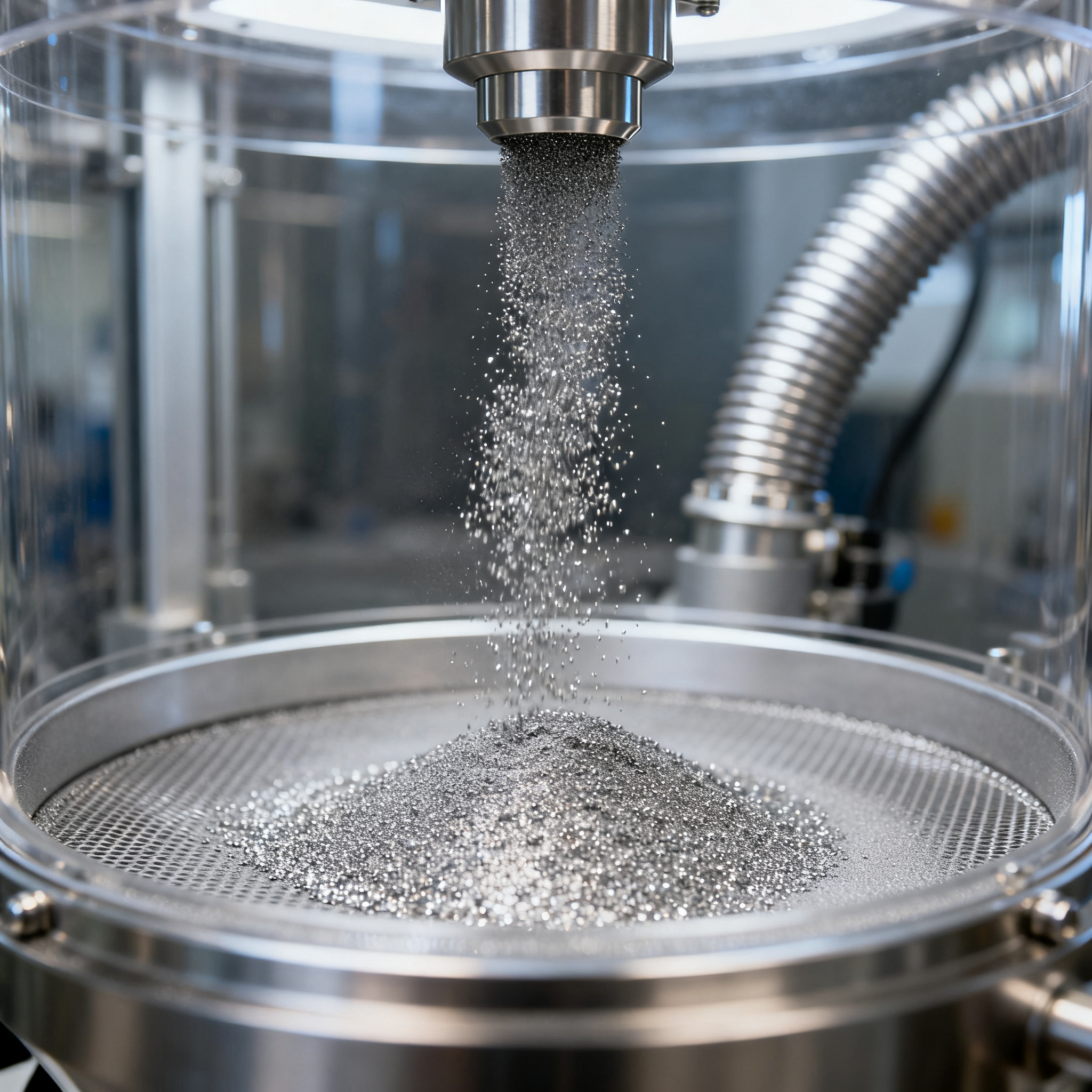
The screening phase is the heart of quality control. The recovered powder passes through an integrated ultrasonic sieving stage, where oversized particles and agglomerates generated during the printing process are reliably removed.
Only material within specifications continues in the cycle. The conditioned powder is collected in a sealed system, ready for safe reuse or reintegration into the production cycle.
Recovery process
- Extraction: Vacuum lances pick up the powder from the build chamber without openings.
- Screening: Ultrasonic sieving removes out-of-spec particles and agglomerates.
- Collection: Sealed system preserves conditioned powder for reuse.
The result is not simply recovered powder, but reusable material with total confidence. The proprietary material management technology has been validated in over 100 additive manufacturing installations worldwide.
Operational safety and industrial compliance
Closed systems and inert gas options reduce risks for operators and improve traceability of the entire process.
Protecting operators from contact with metal powders is a regulatory and operational priority. PowTReX systems are designed as closed, explosion-proof units, protecting the material from contamination and operators from exposure.
Eliminating cumbersome manual handling reduces risks and improves process repeatability. For applications requiring additional safety and control, inert gas transport options are available.
The systems are compatible with tungsten, cobalt, silver, iron, stainless steel, alumina, nickel-chromium, copper, titanium, carbide powders, and other metallic materials. Portability allows stand-alone configurations or integration into fully closed cycles.
The growth of additive manufacturing in complexity and volume makes flexibility critical. An intelligent powder management system not only improves operational efficiency but becomes essential to maintaining high quality standards in metal additive manufacturing.
Evaluate the integration of automated powder recovery solutions: you could reduce costs by 30% without compromising quality. The difference between experimental and industrial additive manufacturing also comes down to raw material control.
article written with the help of artificial intelligence systems
Q&A
Why does manual handling of metal powder compromise material quality?
Manual handling introduces variability, contamination, segregation, and uncontrolled exposure that degrade the material before reuse. These factors compromise the consistency required in the production process, making the powder less reliable for subsequent prints.
How is excess powder extracted in PowTReX systems?
The powder is extracted directly from the build chamber via pneumatic conveying with a controlled vacuum lance. This method eliminates open handling and drastically reduces operator exposure, keeping the process in a closed environment.
What is the role of ultrasonic screening in the recovery process?
Ultrasonic screening represents the heart of quality control, reliably removing oversized particles and agglomerates generated during printing. Only material that meets the specifications continues in the cycle, ensuring that the conditioned powder is truly reusable.
How do PowTReX systems ensure operator safety?
The systems are designed as closed, explosion-proof units, protecting operators from direct exposure to metal powders. The elimination of manual handling and options with inert gas conveying further reduce regulatory and operational risks.
Which materials and printers are PowTReX systems compatible with?
The systems support tungsten, cobalt, silver, iron, stainless steel, alumina, nickel-chrome, copper, titanium, carbide powders, and other materials. They are also compatible with most 3D printer brands, allowing a single system to integrate with multiple machines.