Applicazione: Production

3 hours, not 3 days: how to really optimize production?

3 hours, not 3 days: how to really optimize production?

Optimizing additive production requires a holistic vision that includes not only print time, but also preparation phases, order aggregation, and post-processing. Often overlooked, these latter stages represent the true bottlenecks. To improve efficiency and reduce delivery times from 3 days to 3 hours, it is essential to integrate the entire production flow into a system

How does the army print in mission?

How does the army print in mission?

Additive production is revolutionizing military logistics, reducing supply times and costs. The Camp Lejeune model shows how targeted training and technological integration allow for the printing of critical parts in the field, saving up to 99.81% compared to traditional methods.

Recycle to compete? The hidden advantage of high-performance polymers

Recycle to compete? The hidden advantage of high-performance polymers

Recycling high-performance polymers, such as PA12, offers significant economic and environmental benefits. Transforming waste powder into recycled filament reduces costs by up to 30% and increases independence from the supply chain. Maintaining high mechanical performance, the recycled material can be used in non-critical structural applications. A controlled process ensures

Does the factory of the future build with 3D concrete?

Does the factory of the future build with 3D concrete?

Forge I, a new factory in the United Kingdom, produces structural concrete elements via large-scale 3D printing. The project, led by Hyperion Robotics and LKAB Minerals, represents a paradigm shift towards the industrial production of complex building components, with benefits in terms of efficiency, quality control, waste reduction, and lower environmental impact. The factory is expected to

3D in studio: less than 10 minutes for a crown?

3D in studio: less than 10 minutes for a crown?

PioCreat presents at Formnext 2025 3D solutions for rapid dental production: the PioNext Mini prints crowns in 10 minutes with compact design and dual resin vat. Ideal for dental studios, it offers high precision, biocompatibility and operational flexibility, revolutionizing the digital workflow in the medical and dental field. Learn more at PioCreat.com.

Why does this resin cost 5x but print twice as much?

Why does this resin cost 5x but print twice as much?

Next-generation photopolymer resins cost more because they are formulated to emulate the properties of engineering plastics like PP or TPU, with chemical precision and control of mechanical characteristics. They are not simple liquids: each resin is designed for specific applications, ensuring quality, durability, and performance similar to injection molding. The difference in pr

20% savings with the right supply chain?

20% savings with the right supply chain?

The integrated supply chain in the metal 3D printing sector represents a key competitive advantage, with a focus on end-to-end support, traceability, and certified quality. Technology alone is not enough: reliable partners are needed to reduce costs and lead times, improving efficiency and production resilience.

Can AI read defects in LPBF metal?

Can AI read defects in LPBF metal?

An artificial intelligence model developed by KIMS and Max Planck Institute predicts the mechanical properties of metal components produced with LPBF, analyzing pore morphology without destructive testing.

Can you really 3D print the CORE One?

Can you really 3D print the CORE One?

Prusa releases the CORE One CAD files under the new open-source OCL license, which allows modifications, sharing, and internal use, but prohibits direct sale without an agreement. Discover what you can concretely do with STEP and Fusion 360 files.

90% uptime? The truth about industrial 3D printers

90% uptime? The truth about industrial 3D printers

The real uptime of industrial 3D printers exceeds 90%, with less than 73 hours of annual downtime. Metrics such as MTBF and MTTR are essential for evaluating reliability. The difference between hobby and industry lies in construction details: robust frames, mechanical auto-leveling, and automation reduce dead times. The main causes of downtime are thermal instability, mechanical wear, and human errors.

3D custom in the operating room? Here's how it really works

3D custom in the operating room? Here's how it really works

MedCAD has obtained FDA authorization for AccuStride, a system that brings personalized surgical planning for lower limbs to 3D-printed titanium guides, with delivery in 5 days. By integrating imaging, digital design, and rapid production, it reduces operating times and complications.

Does laser cladding beat hard chrome plating?

Does laser cladding beat hard chrome plating?

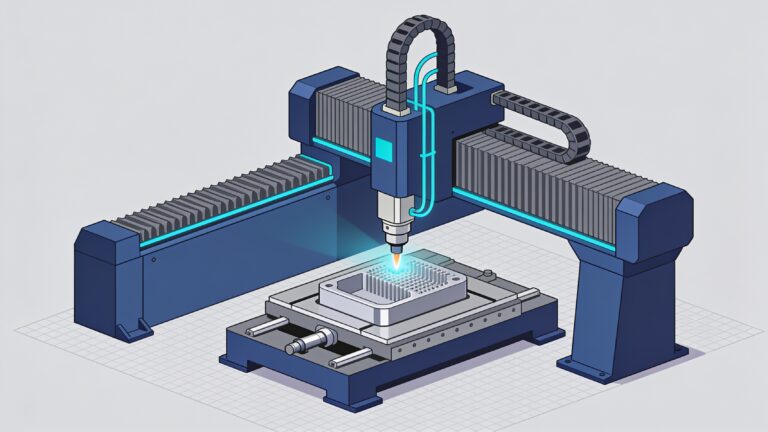
Laser cladding offers an innovative and sustainable solution against corrosion, overcoming the limits of hard chrome plating. This technology deposits resistant alloys directly onto surfaces, without toxic substances such as hexavalent chromium, ensuring a strong metallurgical bond and precise control of the layer. Compared to chrome plating, it reduces the CO₂ footprint by up to 12 times and perme

/