Tekna achieves profitability thanks to growing demand for metal powders for 3D printing
The Canadian metal powder supplier closes the second quarter in profit, marking a turning point after years of losses. Growth is driven by the aerospace sector and the transition of customers from prototyping to production.
Tekna, a Canadian company specialized in the production of metal powders for additive manufacturing, has announced positive financial results for the second quarter of 2026. The company recorded revenues of 10.6 million Canadian dollars (7.6 million USD), up 18% from the 9 million CAD of the previous year.
The most significant figure concerns profitability. Tekna closed the quarter with a net profit of 100,000 CAD (72,064 USD), reversing the loss of 3.9 million CAD recorded in the same period of 2025. This is the fourth consecutive quarter with positive adjusted EBITDA, equal to 1.4 million CAD against a loss of 2 million CAD in the previous year.
The growth engine: the Materials business
The metal powders sector represents the beating heart of Tekna's growth, with strongly expanding margins and demand supported by the aerospace and defense sectors.
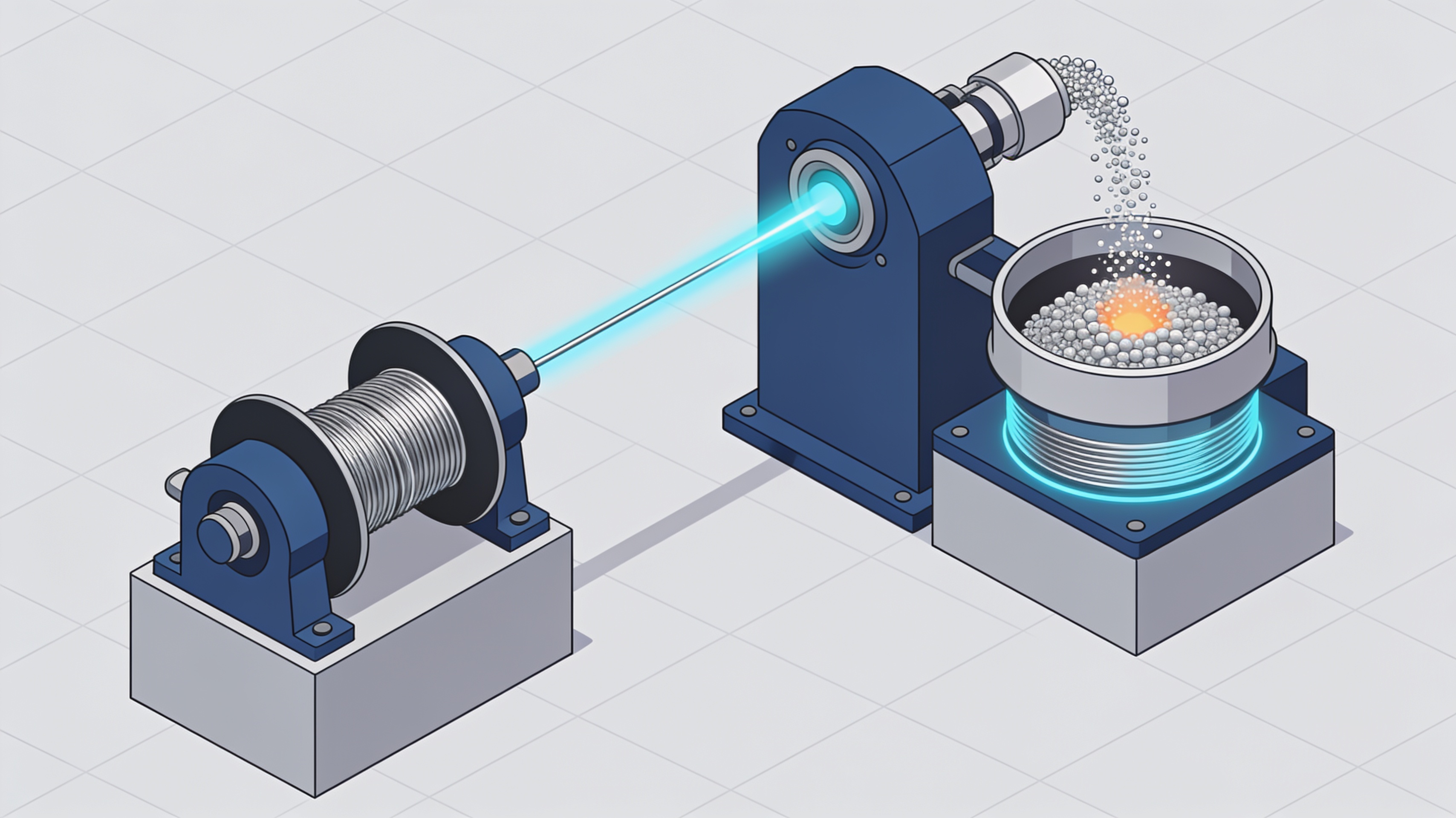
Tekna's Materials business produces high-purity spherical metal powders, including the Ti-6Al-4V (Ti64) alloy, using plasma technology originally developed at the Université de Sherbrooke. These powders find application in metal 3D printing, but also in processes such as metal injection molding (MIM), binder jetting, and hot isostatic pressing.
Materials segment revenues grew 20% in the second quarter, reaching 7.9 million CAD (5.7 million USD). The contribution margin jumped to 54% from 38% in the previous year, highlighting a significant improvement in operational efficiency.
- Total revenue: 10.6 million CAD (+18% year over year)
- Adjusted EBITDA: 1.4 million CAD (vs -2 million CAD in Q2 2025)
- Net income: 100,000 CAD (vs -3.9 million CAD in Q2 2025)
- Materials margin: 54% (vs 38% in Q2 2025)
The Materials segment contributed approximately 1.8 million CAD to the overall improvement in adjusted EBITDA of 3.4 million CAD compared to the prior year. Growth was driven primarily by demand from the aerospace and defense sectors.
From prototyping to production
The shift of customers from the research and development phase to production orders represents a turning point for Tekna's business model.
During the results conference call, CEO Claude Jean highlighted a crucial trend for the additive manufacturing industry. Customers who previously purchased Tekna powders for R&D and prototyping activities are now placing larger and repeat orders after completing qualification programs.
This transition is particularly significant. Qualifying materials for applications in the aerospace, defense, and medical sectors requires long and rigorous processes. Once completed, however, it paves the way for higher-volume and more predictable production orders.
The Systems business continues to expand
Tekna is not limited to powders: the Systems segment sells plasma equipment to universities, research centers, and industrial clients worldwide.
Tekna's Systems business markets plasma processing systems for industrial clients, universities, and research institutes. In the second quarter, the company received orders from diversified clients, including Texas A&M University for materials testing and evaluation, and a British university for a system intended for a hypersonic wind tunnel.
Tekna also received orders from Asian clients for systems used in the development of spherical metal powders. The most significant result was the largest order ever in the Systems segment, coming from an unidentified U.S. client in the critical minerals sector.
Tekna's plasma atomization technology, originally developed at the Université de Sherbrooke, enables the production of metal powders with high sphericity and purity, essential characteristics for critical applications in additive manufacturing.
Outlook for the AM industry
Tekna's results confirm the maturation of the metal additive manufacturing market, with the transition from the experimental phase to the production phase.
Tekna's return to profitability after years of losses represents a positive signal for the entire additive manufacturing supply chain. The company, founded in Canada in 1990 and controlled by Norwegian Tekna Holding ASA, is headquartered in Quebec.
The growth in demand for high-purity metal powders reflects the technological maturation of the sector. As more companies complete qualifications and move to series production, material suppliers like Tekna benefit from larger volumes and more stable revenue streams.
The aerospace and defense sectors continue to lead adoption, but diversification towards medical applications and other industrial areas suggests a broadening of the market base. For Tekna, the challenge will be to maintain high margins while scaling production to meet growing demand.
article written with the help of artificial intelligence systems
Q&A
What were Tekna's total revenues in the second quarter of 2026?
Tekna recorded total revenues of 10.6 million Canadian dollars in Q2 2026. This figure represents an 18% growth compared to the 9 million CAD from the same period last year.
How did Tekna's net income change compared to 2025?
The company closed the quarter with a net profit of 100,000 CAD, reversing the 3.9 million CAD loss recorded in Q2 2025. This result marks a significant turnaround toward profitability after years of losses.
Which sector is primarily driving Tekna's growth?
Growth is driven mainly by demand from the aerospace and defense sectors. These markets are pushing customers' transition from the prototyping phase to large-scale production orders.
What type of powders does Tekna's Materials business produce?
The segment produces high-purity spherical metal powders, including the Ti-6Al-4V alloy, using plasma technology. These powders are used in metal 3D printing, binder jetting, and metal injection molding.
How much did the contribution margin of the Materials segment grow?
The contribution margin of the Materials business jumped to 54%, compared to 38% the previous year. This increase highlights a strong improvement in operational efficiency and margin expansion.