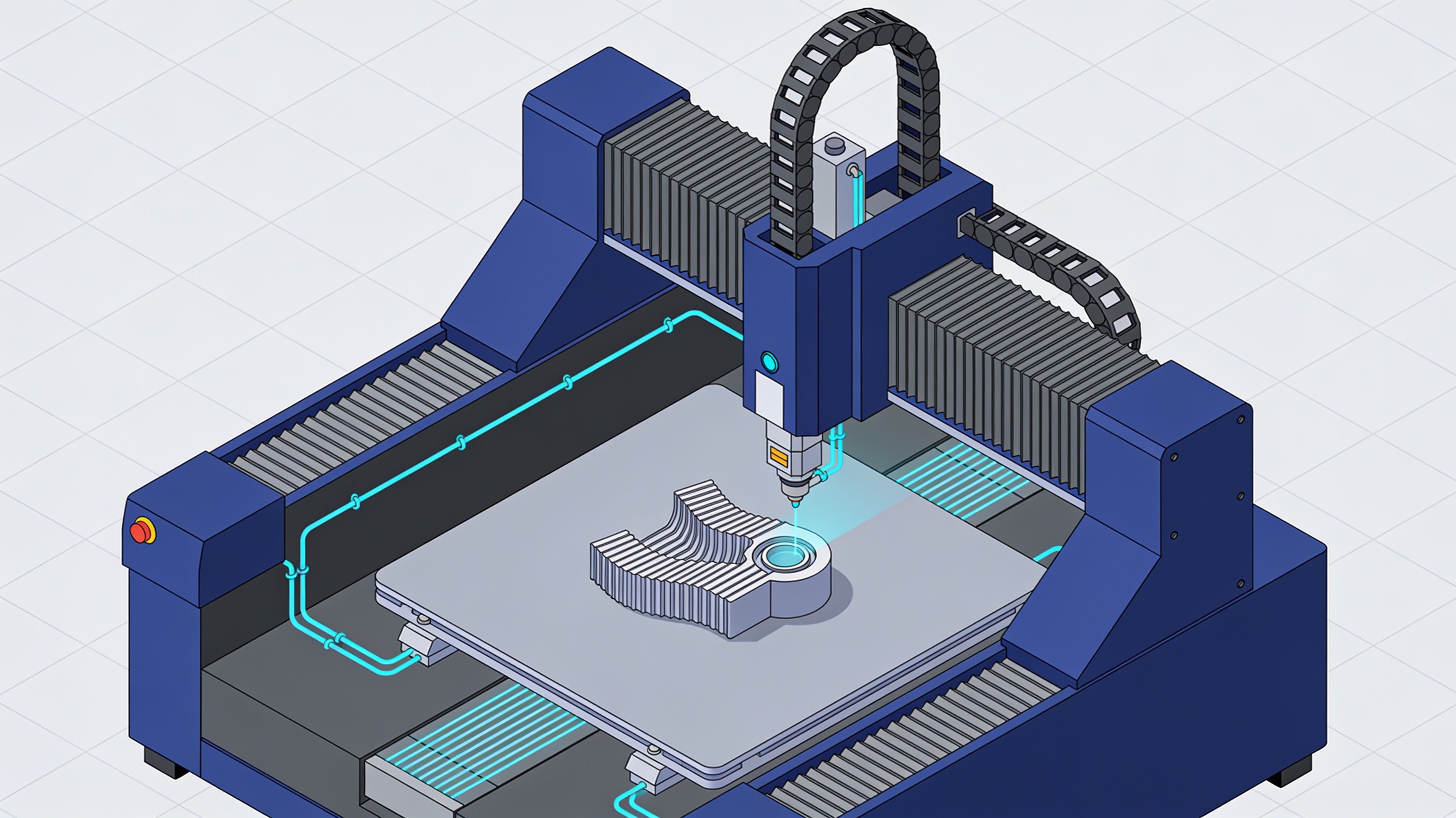
Oqton wins the ASTRO-InSPIRE challenge on deformation prediction in metal 3D printing
Oqton won the second edition of the ASTRO-InSPIRE Tech Challenge 2026, a technical competition focused on predicting and compensating for deformations in laser powder bed fusion (LPBF). The company outperformed leading competitors such as Ansys, Siemens, Dassault Systèmes, Autodesk, and Cadence Design Systems.
The results were presented on August 12, 2026, during the ASTRO-InSPIRE Tech Showcase in Destin, Florida. The event was organized by ASTRO America (Applied Science and Technology Research Organization of America) together with InSPIRE, the Institute for Strategic Partnerships, Innovation, Research and Education at Florida State University.
- Oqton wins the 2026 challenge by beating the main players in the simulation and digital manufacturing sector
- The competition evaluated solutions to predict and compensate for deformations in LPBF metal 3D printing
- L’evento mirava a distinguere strumenti di ricerca da soluzioni industrialmente applicabili
Una competizione orientata all’applicabilità industriale
*The challenge formula combined technical evaluation and production applicability, with industry experts as judges.*
La competizione adottava un formato che richiamava un confronto tra fornitori sottoposti al giudizio di esperti tecnici e rappresentanti industriali. Dietro l’impostazione accessibile si celava un programma di valutazione progettato per distinguere gli strumenti ancora confinati alla ricerca dalle soluzioni utilizzabili in ambiente produttivo.
This setting reflects a concrete need of the additive manufacturing sector. Companies are looking for software that not only accurately simulates physical phenomena, but also integrates into real production flows.
The problem of deformations in LPBF technology
*Laser powder bed fusion generates residual stresses that cause dimensional deformations, a critical obstacle for industrial adoption.*
Laser Powder Bed Fusion (LPBF or PBF-LB) produces metal components by selectively melting thin layers of powder using a laser. After each layer, the platform lowers and a system distributes new material. The process repeats until the component is complete.
This technology enables complex geometries: internal structures, cooling channels, lightweight shapes. However, during melting, the material undergoes very rapid and localized thermal cycles.
Non-uniformly heated and cooled zones generate residual stresses that cause warping, dimensional shifts, detachment from supports, or visible deformations after removal from the build plate.
The component can turn out different from the CAD model even when the machine has correctly followed the instructions. The problem is amplified with thin walls, abrupt section changes, large surfaces, insufficiently rigid supports, or geometries that accumulate heat.
Implications for the additive manufacturing industry
*The ability to predict and compensate for deformations represents an enabling factor for the adoption of LPBF in critical sectors.*
Oqton's victory in a competition that included engineering simulation giants highlights the evolution of the software market for additive manufacturing. It is no longer enough to offer advanced simulation tools: integration with production systems is needed.
Oqton has Manufacturing OS, a software system to coordinate orders, data, machines, and production activities. This integrated platform may have represented a competitive advantage in the evaluation.
The aerospace and defense sectors, where laser powder bed fusion finds application, require dimensional precision and reliability. The ability to predict deformations before printing reduces waste, development times, and post-processing costs.
Company context
*Oqton operates in a consolidating market, with recent acquisitions that have reshaped the balance.*
Hubb Global Holdings has acquired control of Oqton. The company collaborates with Fraunhofer IAPT and has acquired 3DXpert, software sold by 3D Systems in 2025.
These strategic moves position Oqton as an integrated player in additive manufacturing software. The victory at the ASTRO-InSPIRE challenge strengthens this position, demonstrating technical capabilities superior to historical competitors.
The second edition of the challenge confirms the interest of American research organizations in solutions that accelerate the industrial adoption of metal 3D printing. Future editions could focus on other critical issues of the LPBF process.
article written with the help of artificial intelligence systems
Q&A
Who won the second edition of the ASTRO-InSPIRE Tech Challenge 2026?
Oqton secured victory in the 2026 technical competition. The company outperformed leading competitors such as Ansys, Siemens, and Dassault Systèmes.
What was the main objective of the ASTRO-InSPIRE competition?
The challenge focused on predicting and compensating for deformations in Laser Powder Bed Fusion (LPBF). The event aimed to distinguish research tools from industrially applicable solutions.
Where and when were the challenge results presented?
The results were presented on August 12, 2026, during the ASTRO-InSPIRE Tech Showcase in Destin, Florida. The event was organized by ASTRO America and the InSPIRE Institute at Florida State University.
Why are deformations a critical issue in LPBF technology?
Laser fusion generates rapid thermal cycles that create residual stresses in the material. These stresses cause warping, dimensional shifts, and potential detachment from supports, hindering industrial adoption.
What was the judges' evaluation criterion in the challenge?
The competition combined technical assessment with production applicability, with industry experts serving as judges. The goal was to find software capable of integrating into real production workflows, not just simulating physical phenomena.