Michigan launches a new center for additive manufacturing, while 3D printing revolutionizes medicine and architecture
Automation Alley and Oakland University have inaugurated a center of excellence for advanced manufacturing in Michigan. Meanwhile, Israeli surgeons have saved an oncology patient with a 3D-printed sternal implant, and Austrian researchers have developed a 3D-printed ceramic wall for urban cooling.
- The Advanced Manufacturing Center of Excellence is launched in Michigan, a hub for innovation and training in AM
- Project DIAMOnD moves to the new center with over 50,000 components already produced
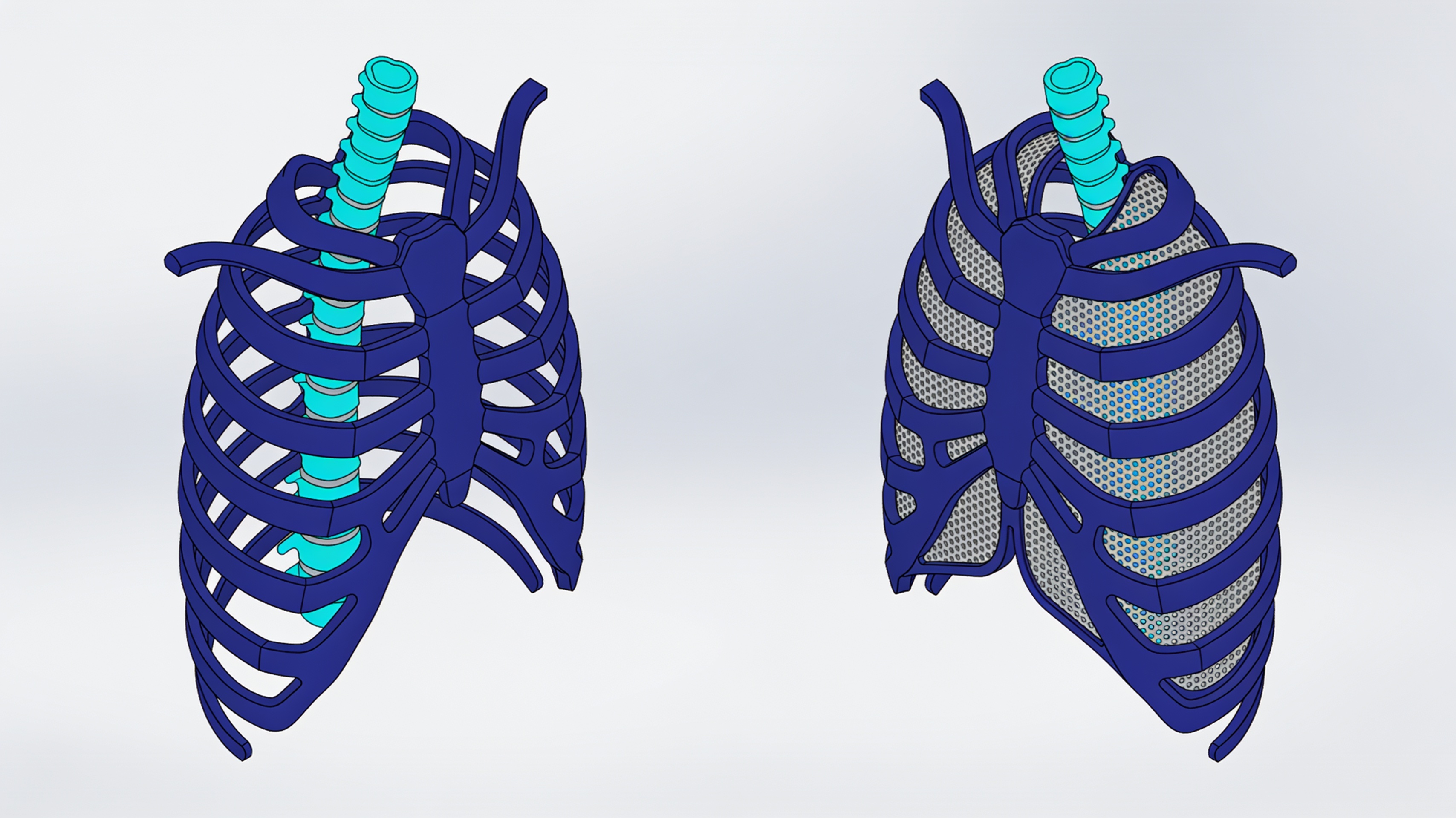
- First 3D-printed PEKK sternal implant saves patient with rare tumor
- 3D-printed ceramic wall reduces urban heat through evaporative cooling
New hub for additive manufacturing in Michigan
Automation Alley and Oakland University join forces to accelerate the adoption of additive manufacturing through a center dedicated to research, training, and technical support.
The Advanced Manufacturing Center of Excellence (CoE) represents a strategic collaboration between the advanced manufacturing accelerator Automation Alley and Oakland University, both based in Michigan. The goal is to create synergies among manufacturers, students, and researchers to accelerate innovation in advanced manufacturing.
The center combines Automation Alley's state industrial network with the university's engineering research expertise and student talent. This fusion of resources aims to transform academic research into concrete productive capabilities.
Project DIAMOnD finds a new home
Project DIAMOnD's Digital Transformation Center, inaugurated in Auburn Hills two years ago, is now moving to the university campus. Project DIAMOnD (Distributed Independent Agile Manufacturing On Demand) is one of the largest distributed additive manufacturing networks in the United States.
The network has already produced over 50,000 components, helping manufacturers adopt AM, improve production resilience, and strengthen national supply chains. CEO Pavan Muzumdar emphasized that the move is not a simple change of address.
“This positions our distributed manufacturing network alongside the research that will define the next era of Smart Product Recipes and metal additive manufacturing,” Muzumdar said. The facility will allow manufacturers to test new technologies, develop AM applications, and receive technical support and training.
3D-printed sternal implant saves cancer patient
Israeli surgeons replaced a young patient's sternum and ribs with a custom PEKK implant, demonstrating the potential of 3D printing in complex oncological surgery.
Doctors at Clalit-Beilinson Hospital in Israel faced an exceptional case. Hadas, a woman in her twenties, had what initially appeared to be a benign tumor eroding the septum.
Tests revealed a BRAF-altered mesenchymal tumor, an extremely rare type of sarcoma reported in about 20 cases worldwide. To remove it, surgeons had to excise the sternum and portions of the attached ribs.
The custom implant was made of PEKK, a high-performance engineering material that requires specific printing conditions with a heated chamber.
The team led by Yury Peysakhovich, head of thoracic surgery, created a 3D-printed sternal implant custom-made for the patient. The procedure represents a significant example of how additive manufacturing can solve complex medical challenges with personalized solutions.
3D-printed ceramic wall against urban heat
Researchers at TU Graz have developed a prototype of a porous ceramic wall that uses evaporative cooling to lower temperatures in urban areas.
The Institute of Architecture and Media at TU Graz has presented an innovative solution to combat the urban heat island effect. The research team, which includes Julian Jauk and Milena Stavric, has created a wall composed of 3D-printed porous ceramic cubes.
The structure uses evaporative cooling through a minimal surface geometry. The porous ceramic cubes allow water to evaporate gradually, absorbing heat from the surrounding environment and reducing the local temperature.
This approach demonstrates how ceramic 3D printing can contribute to sustainable architectural solutions. The ability to create complex and porous geometries with additive manufacturing opens new possibilities for urban bioclimatic design.
The prototype represents a practical application of large-scale 3D printing to address the challenges of climate change in densely populated areas.
article written with the help of artificial intelligence systems
Q&A
What is the Advanced Manufacturing Center of Excellence in Michigan?
It is a new center born from the collaboration between Automation Alley and Oakland University to accelerate innovation in additive manufacturing. The hub combines the state's industrial network with academic research to support manufacturers and students.
What is the role of Project DIAMOnD in the new center?
Project DIAMOnD is moving to the new campus, bringing one of the largest distributed additive manufacturing networks in the US, having already produced over 50,000 components. Its presence enables testing new technologies and developing AM applications directly alongside university research.
What type of medical implant was 3D printed in Israel?
Israeli surgeons created a personalized PEKK sternal implant to replace the sternum and ribs of a young cancer patient. This procedure demonstrated the potential of 3D printing to save lives in rare tumor cases.
What is the purpose of the 3D-printed ceramic wall developed in Austria?
Austrian researchers created a 3D-printed ceramic wall specifically designed for urban cooling. The structure uses evaporative cooling to effectively reduce heat in city areas.
How many components has the Project DIAMOnD network already produced?
The Distributed Independent Agile Manufacturing On Demand network has already produced over 50,000 components before its transfer to the new center. These parts have helped manufacturers improve the resilience of national supply chains.