
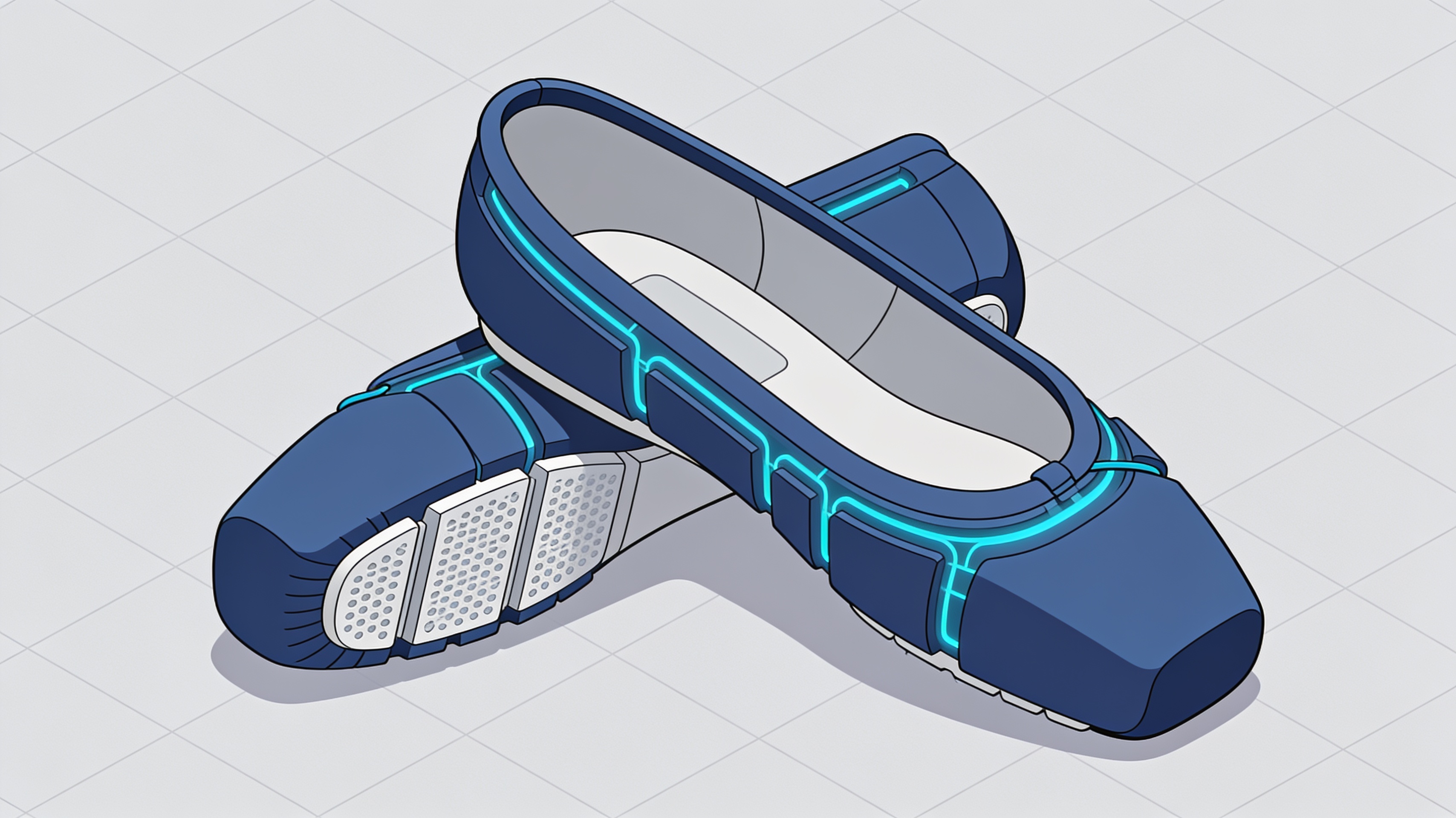
Act’ble reinvents the pointe shoe with 3D printing
A German startup applies additive manufacturing to classical ballet, creating modular pointe shoes that last longer and reduce injuries among professional ballerinas.
Professional ballerinas go through hundreds of pairs of pointe shoes every year. The German startup act’ble wants to change this scenario with 3D printing, replacing centuries of craftsmanship with a modular design that can be renewed instead of completely replaced.
- Traditional pointe shoes often last only a single day for professionals
- Act’ble uses 3D-printed TPU to create replaceable modular soles
- The segmented design stiffens only when necessary, allowing natural movement
- The hidden laces distribute the load across the entire foot, not just the toes
The problem with traditional pointe shoes
Pointe shoes have remained essentially unchanged since the 19th century, when Italian shoemakers stiffened their structure. A design that survived by tradition, not efficiency.
Pointe shoes are still largely handmade. Skilled artisans layer fabric, paper, glue, and satin around a shaped last. Each dancer must then break in, pad, and modify each pair to fit her own foot.
The shank softens quickly. For professionals, a pointe shoe often lasts only a single day. This makes them one of the most expensive and least sustainable tools in ballet, as well as contributing to chronic pain and injuries.
act’ble’s modular solution
The reinvented pointe shoe consists of three distinct parts: 3D-printed sole, knit upper, and laces. Only the sole requires frequent replacement.
The central component is a 3D-printed insole in high-performance TPU. The material was chosen to meet the specific demands of dance, combining flexibility and durability.
How the modular system works
- Segmented sole: Cuts divide the sole into segments that flex freely when the foot is planted.
- Dynamic stiffening: The segments meet and lock when the ballerina rises, stiffening under load.
- Compressive upper: The knit distributes pressure across the entire foot, not just the toes.
- Load-bearing laces: Hidden under the skin, they lift the foot and lighten the weight on the toes.
Technology and customization
The design allows natural movement when needed and rigid support when required. Customization is achieved through three lace widths.
In traditional pointe shoes, as founder Sophia Lindner explained to 3Dnatives in 2022, “a physiologically natural walk is not possible.” The segmented sole solves this problem by allowing the foot to flex normally.
The knitted leather is worn like a sock. Its compression takes pressure off the toes, distributing it over the entire foot. The laces are available in three widths: narrower laces for thinner feet, wider ones for sturdier feet.
Act’ble uses HP Multi Jet Fusion technology to produce TPU soles. This process guarantees the mechanical strength needed to bear the body weight concentrated on the toe.
Impact on sustainability and health
Replacing only the sole instead of the entire shoe drastically reduces costs and environmental impact. The design also improves the foot health of ballerinas.
The modular system makes it possible to renew the shoe by replacing only the worn sole. This approach contrasts with the traditional model, where the entire shoe is discarded after a few hours of use.
Distributing the load over the entire foot, instead of only on the toes, promises to reduce chronic pain and injuries. These problems are considered an integral part of the profession in traditional ballet.
From tradition to innovation
Act’ble represents an emblematic case of how additive manufacturing can innovate seemingly immutable sectors while maintaining the required performance.
Ballet originated in Europe between the 15th and 16th centuries. The basic construction of pointe shoes has remained virtually unchanged since the 19th century, surviving thanks to tradition rather than functional efficiency.
The German startup demonstrates that even in the most conservative sectors, 3D printing can offer concrete solutions. The combination of high-performance TPU, biomechanical design, and modularity creates a product that meets the needs of classical dance while radically innovating the very concept of the pointe shoe.
article written with the help of artificial intelligence systems
Q&A
How long do traditional pointe shoes last for professionals?
Traditional pointe shoes often last only a single day of use for professional ballerinas. This makes them one of the most expensive and least sustainable tools in the industry.
What material is the sole of Act'ble pointe shoes made of?
The inner sole of Act'ble pointe shoes is 3D-printed using high-performance TPU (thermoplastic polyurethane). This material was chosen to combine flexibility and durability specific to dance.
How does the stiffening mechanism of the modular sole work?
The sole is divided into segments that flex freely when the foot is on the ground. When the ballerina rises en pointe, the segments meet and lock, stiffening under load.
What is the function of the hidden laces in the Act'ble design?
The load-bearing laces are hidden beneath the mesh leather and serve to lift the foot. This system distributes the load across the entire foot, significantly reducing weight on the toes.
Which parts of the Act'ble shoe need frequent replacement?
In the Act'ble modular system, only the 3D-printed sole requires frequent replacement. The mesh leather and laces are durable components that do not need to be changed with every use.


