preFlight 1.3.0: new Baobab engine and advanced compatibility for supports
The preFlight slicing software has released version 1.3.0, introducing Baobab, an innovative support generation engine that promises superior print speeds with reduced material consumption. The update also brings Tree Supports compatibility with variable layer heights and improves stability and wall width controls.
Baobab: the new approach to supports
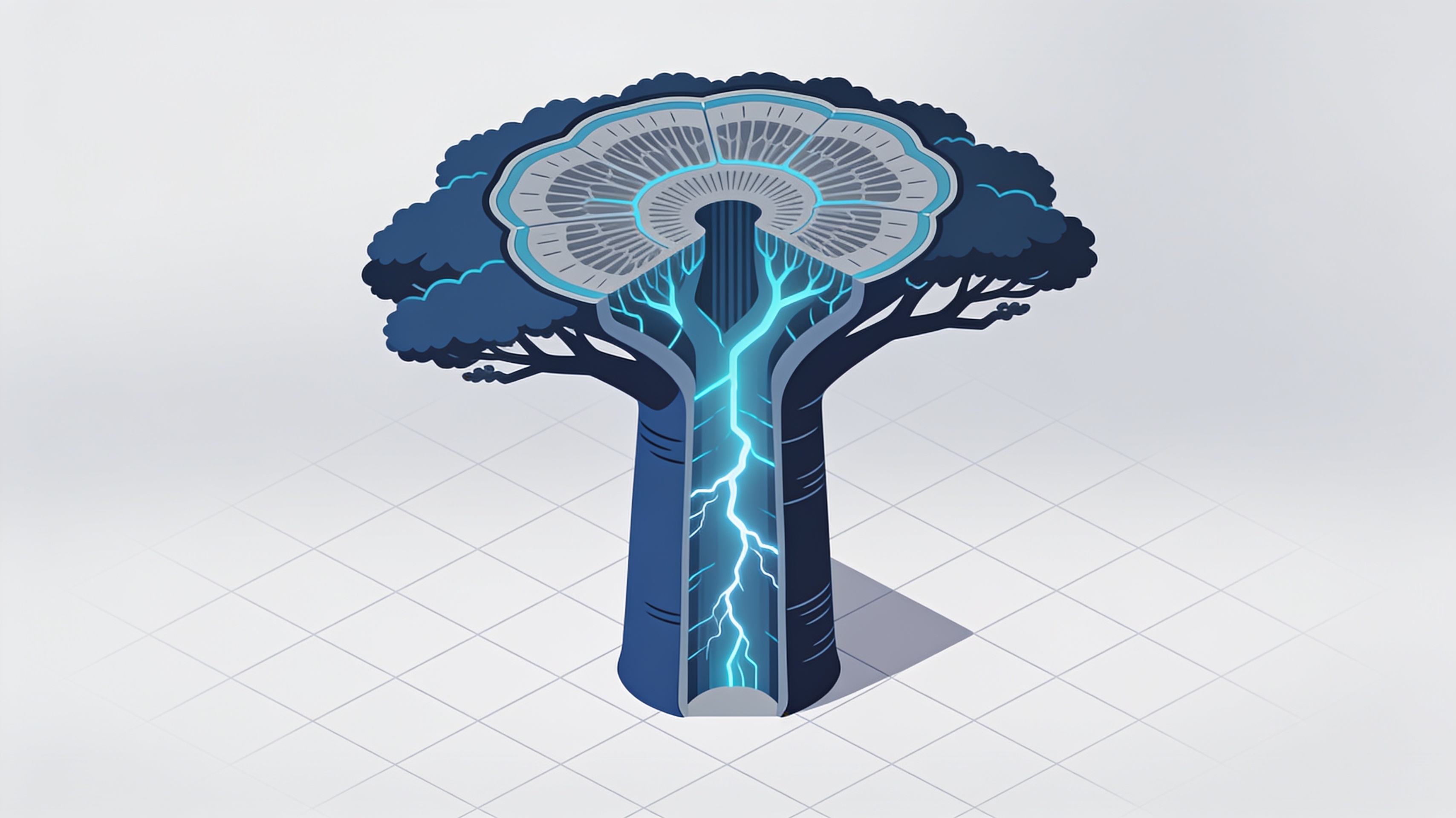
*Baobab represents a middle ground between Organic and Snug supports, combining robust trunks with expanded canopies that follow the shape of the interface.*
The Baobab engine generates wide canopies under the support interface that merge downward into thick trunks. This architecture allows faster prints than other support types, maintaining structural rigidity with minimal material.
The canopies are internally supported with Lightning infill. This keeps the structure light while the interface layers remain solid.
- Wide canopies that merge into thick trunks
- Faster printing with reduced material
- Lightning infill for lightweight structures
- Available for automatic supports or via Paint-on brush
Users can activate Baobab both for automatic generation and manually, using the dedicated enforcer in the Paint-on supports gizmo. Specific settings under “Support material” control trunk diameter, growth angles, shape, and canopy density.
Tree Supports and variable heights
*Tree Supports overcome a historical limitation by gaining full compatibility with variable layer heights.*
This integration was awaited by the user community. Only extreme variability that interface layers cannot bridge is still rejected by the system.
The compatibility extends operational flexibility for complex geometries that benefit from variable layer heights in different areas of the model.
Extended stability analysis
*Stability alerts now also work with manually placed supports, not just with automatic generation.*
The analysis considers painted enforcers, enforcer volumes, and forced first layers as valid coverage. The system only flags problematic areas not covered by supports.
Users can completely disable this feature via the existing “Alert when supports needed” preference.
Improved width control
*The Width Control system introduces real-time alerts and smarter volumetric flow behaviors.*
The Athena-specific “Maximum perimeter width” parameter has been renamed to “Maximum width”, reflecting Athena’s expansion of capabilities beyond perimeters.
Widened beads now automatically slow down to maintain the feature's intended volumetric flow when no maximum volumetric flow is configured. With a limit set, the behavior remains unchanged.
If slicing generates a wall or fill bead wider than the extruder's “Width warning max” threshold, a real-time warning is presented.
Fixes for Interlocking and Serpentine
*Fixed critical gap issues in perimeters with interlocking active and added new options for Serpentine.*
The version fixes gaps in perimeters caused by drift in Athena bead placement from the third bead onward. Suppression handling has been reworked to ensure reliable coverage with walls or fill.
The direction detection of bridges over interlocked regions now derives floating edges from slices, correcting incorrect angles. The boundary offsets for pairs of interlocking strands have been corrected.
Serpentine receives a relaxed spoke layout mode and an option for external surface loop.
Conclusions
preFlight 1.3.0 brings significant innovations in support generation and improves the overall robustness of slicing. Baobab emerges as an interesting alternative for those seeking a balance between speed and structural reliability.
article written with the help of artificial intelligence systems
Q&A
What is the Baobab engine introduced in preFlight 1.3.0?
Baobab is a new support generation engine that combines robust trunks with expanded canopies following the interface shape. This architecture ensures faster prints and optimal structural rigidity using less material.
How does the internal structure of Baobab supports work?
Baobab support canopies are internally supported with Lightning infill, keeping the structure lightweight. Interface layers remain solid to ensure printed surface quality.
Do Tree Supports now work with variable layer heights?
Yes, version 1.3.0 makes Tree Supports fully compatible with variable layer heights, overcoming a previous historical limitation. The system accepts variability except in extreme cases where interface layers cannot bridge the gap.
Does stability analysis also work with manually placed supports?
Stability alerts now also consider manually painted enforcers, enforcer volumes, and forced first layers as valid. The system will exclusively flag problematic areas not covered by any type of support.
What changes were made to width control in Athena?
The specific parameter 'Maximum perimeter width' has been renamed to 'Maximum width' to reflect the software's expanded capabilities. This change accompanies the introduction of real-time warnings and smarter volumetric flow behaviors.