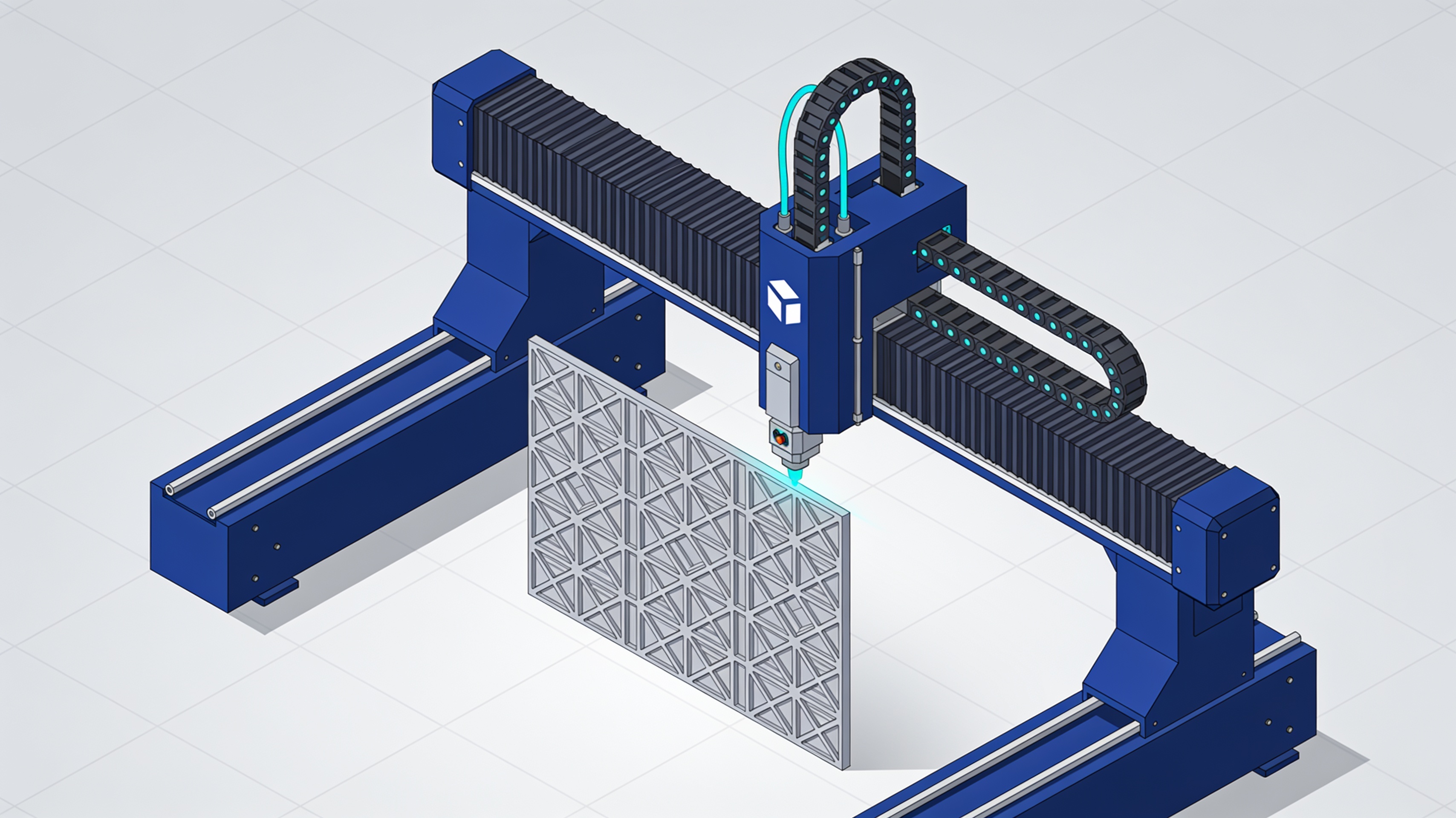
E.ON chooses 3D printing for the interiors of the new Berlin space: walls made with recycled plastic
The energy group E.ON has integrated large-format additive manufacturing into the House of New Energy project, the new exhibition center inaugurated in the historic Am Tacheles complex in Berlin. Some internal walls are made of 3D-printed panels using plastic from post-consumer waste.
The implementation was entrusted to Aectual, a Dutch company specialized in the use of large-format 3D printing for architecture and interior design. The project represents an application case in which architectural customization, digital production, and material recovery are addressed in an integrated manner.
- E.ON uses 3D-printed panels with recycled plastic for the House of New Energy in Berlin
- Aectual has developed large-format walls starting from the corporate logo transformed into three-dimensional geometry
- The project integrates architectural customization, digital production, and material circularity
The context: House of New Energy in the heart of Berlin
E.ON's new space stands out from traditional representative offices, presenting itself as an exhibition center dedicated to energy transformation.
The House of New Energy occupies a position in the Am Tacheles area, one of the symbolic places of the urban transformation of the German capital. E.ON conceived the space to host exhibition areas and installations dedicated to the functioning of the energy system.
The topics addressed include electrification, digitalization of networks, energy flexibility, and new infrastructures. The stated goal is to make understandable processes that normally remain hidden behind infrastructures and technological systems.
The overall interior design was entrusted to French designer Philippe Nigro. Among the central elements is also The Heart, an installation developed by American architect Jenny Sabin.
From the logo to three-dimensional geometry
The design of the 3D-printed walls does not start from a random decorative choice, but from E.ON's graphic identity.
Aectual used the dot in the E.ON logo as the initial element. The shape was enlarged, transformed into a three-dimensional element, and repeated through a continuous geometric system.
The result is a surface composed of cells and openings that produces variable visual effects depending on the lighting and the point of view. The structure evokes concepts associated with the energy group's activity: networks, connections, cables, and energy flows.
Large-format 3D printing allows the creation of customized architectural panels without the need for molds or dedicated equipment, reducing production times and costs for complex geometries.
Three aspects in a single project
E.ON and Aectual have sought to integrate dimensions that are normally addressed separately in architectural projects.
The project combines architectural customization, digital production, and material recovery at the end of the use cycle. The use of plastic from post-consumer waste represents a distinctive element compared to conventional applications of 3D printing in architecture.
The choice of additive manufacturing allows the creation of complex geometries without constraints tied to molds or traditional machining. The panels can be designed digitally and produced on demand, reducing waste and production times.
Aectual and 3D printing for architecture
The Dutch company has specialized in the application of large-format additive manufacturing to architectural and interior design projects.
Aectual, based in Amsterdam, develops solutions for architecture, interior design, and installations using large-format 3D printing technologies. The company positions itself in the segment of architectural-scale applications, where component sizes and performance requirements differ significantly from prototyping or the production of small objects.
The Berlin project represents an application case in which the technology is used not only for aesthetic customization, but also to integrate aspects of sustainability through the use of recycled materials.
article written with the help of artificial intelligence systems
Q&A
Who created the 3D-printed walls for E.ON?
The project was entrusted to Aectual, a Dutch company specializing in large-format 3D printing for architecture and interior design.
What material was used for the wall panels?
The panels were 3D-printed using plastic from post-consumer waste, thereby integrating the principle of material circularity.
What inspires the geometric design of the walls?
The design originates from the dot in the E.ON logo, which was enlarged and transformed into a three-dimensional element repeated in a continuous system.
Where is the new House of New Energy hub located?
The exhibition center is located in the historic Am Tacheles complex in the heart of Berlin, an area symbolizing the urban transformation of the German capital.
Which energy topics are explored in the new E.ON space?
The space addresses topics such as electrification, grid digitalization, energy flexibility, and the development of new infrastructure.