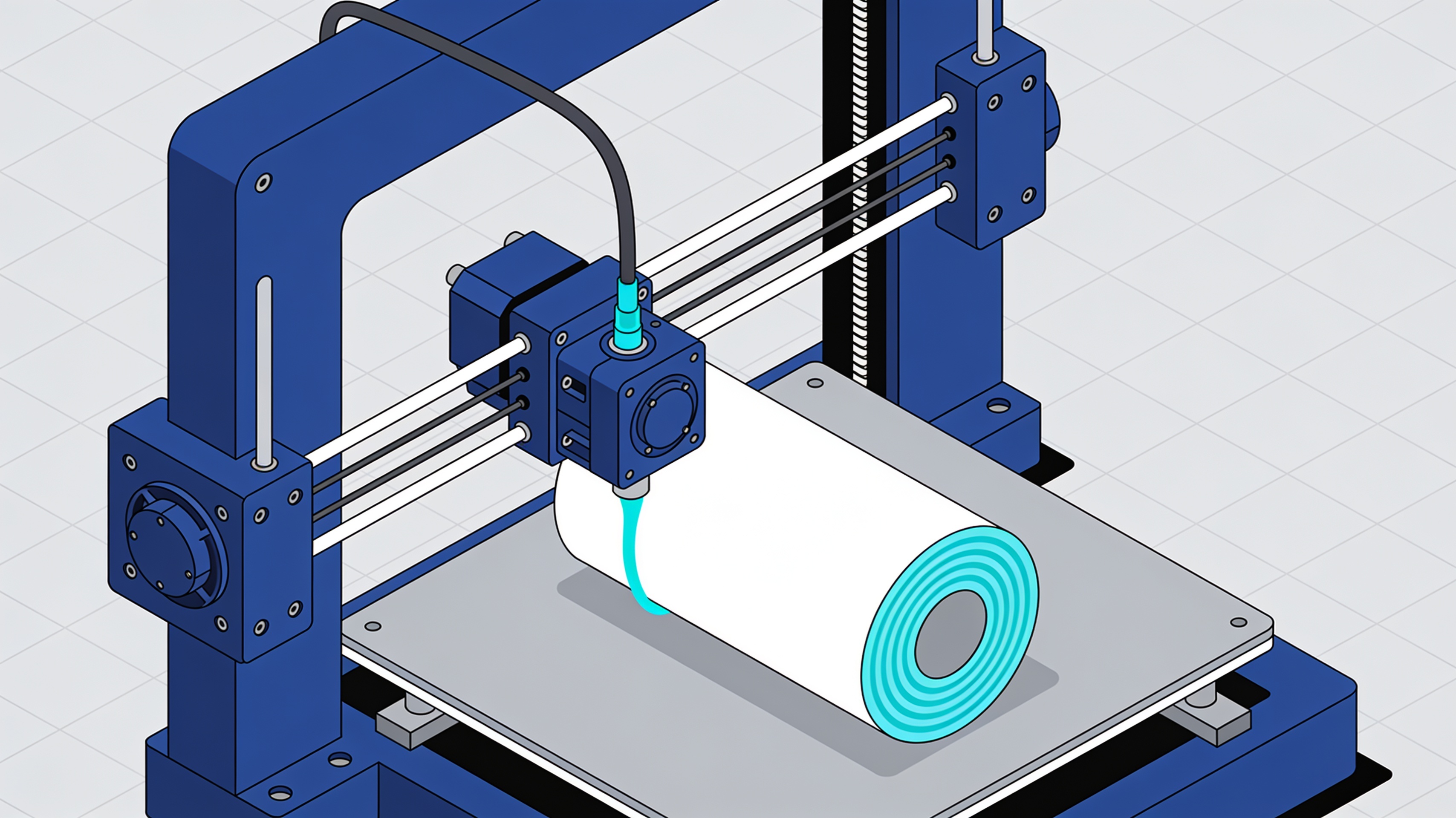
California amends controversial AB 2047 bill on 3D printers
The California bill AB 2047, aimed at preventing 3D printing of weapons, has been significantly modified after weeks of strong opposition. The new provisions eliminate strict deadlines and delegate the definition of technical standards to ASTM International.
The original goal of the measure was to require manufacturers to equip 3D printers sold in California with detection software capable of blocking the production of weapons. However, the concept proved technically impractical from the start.
The technical problem behind the bill
*The initial proposal presented insurmountable technical issues related to the impossibility of distinguishing an object's intent from its geometry.*
The proposed automatic detection system cannot work for fundamental reasons. How to distinguish a replica of a weapon from a functioning weapon? How to differentiate a barrel from a simple tube?
Implementation would require all 3D printers to be constantly online. Print files would need to be sent to an external service for verification, constituting a serious violation of privacy and intellectual property.
The central problem concerns the intended use of a component, not its geometric shape. No algorithm can determine with certainty whether an object will be used as a weapon or for legitimate purposes.
The opposition and the legislative path
*Despite dozens of opposing testimonies and detailed technical explanations, the bill passed the preliminary committees.*
David Tobin led the campaign against AB 2047, coordinating opposition during the hearings. At the last committee meeting, dozens of experts testified against the measure.
The members of the final committee nevertheless approved the passage to the California Senate. The decision, however, included the wording “with amendments,” without specifying its content during the session.
The substantial changes introduced
*The amendments radically transform the bill, eliminating direct obligations and fixed deadlines.*
California no longer directly orders the DOJ to invent a weapons detection standard. The measure now awaits ASTM International to first develop an industrial standard.
ASTM International is an external organization that develops industrial standards in numerous sectors. It currently does not have any standard related to weapons detection in 3D printing.
- Elimination of fixed deadlines 2028-2029 for manufacturers
- Delegation to ASTM International for the development of standards
- Removal of technical specifications on the detection algorithm
- Cancellation of the $25,000 penalty
- Sunset clause on July 1, 2029
The new activation mechanism
*The bill enters a conditional waiting phase, with an automatic sunset clause.*
If ASTM International develops a relevant standard, the California DOJ will have two years to develop regulations based on it. This shifts technical responsibility from the government agency to a specialized organization.
However, there is a safeguard clause. If by July 1, 2029, ASTM has not developed any standard, the DOJ does not need to wait any further and the bill will not be activated.
What was removed
*The amendments removed all the most controversial and technically specific elements of the original text.*
The section that provided detailed explanations on how the detection algorithm works was completely removed. The recommendations on implementation methods have also disappeared.
All lists of specific 3D printer models have been removed from the text. The provisions on civil enforcement, including the $25,000 penalty, no longer appear in the amended version.
Future perspectives
The bill now passes to the California Senate for the final vote. The amended version represents a compromise that implicitly acknowledges the technical issues raised by opponents.
It remains to be seen whether ASTM International will decide to develop standards in this area. The organization operates on a consensus basis with the industry, making the adoption of technically impractical standards unlikely.
article written with the help of artificial intelligence systems
Q&A
What key changes were made to bill AB 2047?
The amendments remove the rigid deadlines previously imposed on manufacturers for 2028 and 2029. Furthermore, the measure no longer directly orders the DOJ to create a standard, but instead awaits the development of industry standards by ASTM International.
Why was the proposed automatic detection system technically unfeasible?
The system could not distinguish an object's intended use from its simple geometry, such as differentiating a gun barrel from a common pipe. Additionally, it would require all printers to be online to send files to external services, violating privacy and intellectual property.
What role does ASTM International play in the new provisions of AB 2047?
ASTM International is the external organization tasked with developing any industry standards for weapon detection in 3D printing. Currently, the entity has no specific standards related to this issue.
Who led the opposition against the original bill?
David Tobin coordinated the campaign against AB 2047, organizing testimonies during legislative hearings. Dozens of experts testified against the measure, outlining its technical flaws to the committees.
What was the original goal of the measure before the amendments?
The initial goal was to mandate manufacturers to equip 3D printers sold in California with software capable of blocking weapon production. This requirement proved unsustainable due to the technical impossibility of determining user intent via algorithms.