HyCAT: 300 km/h in 3 days?
HyCAT, a Pentagon program, accelerates hypersonic aerodynamic testing with dedicated vehicles and commercial launchers, reducing time and costs.
Innovations HyCAT, a Pentagon program, accelerates hypersonic aerodynamic testing with dedicated vehicles and commercial launchers, reducing time and costs.
Innovations 3D printing is revolutionizing the production of RF components, enabling lighter antennas and integrated EMI shielding in electronic packages. Additive technologies improve efficiency, customization, and reduce weight, while posing challenges regarding materials and repeatability.
Manufacturing New automated systems like DyeMansion's Powershot and AMT's PostPro solutions make MJF/SLS post-processing accessible to small labs, reducing costs and processing times.
Manufacturing Automating the post-processing of resin improves precision and repeatability. A modular workflow adapts each phase to the specific parameters of the material, reducing errors and manual times. The integration between the printer and washing/curing stations enables certified, traceable, and scalable flows, ideal for professional and biocompatible applications.
Manufacturing The cost reduction of key components such as lasers and light engines is democratizing additive manufacturing, allowing access to metal 3D printers under $10,000. This change is redefining market dynamics, shifting the focus from hardware to services and adaptability to specific use cases. Modularity and standardization allow new realities to com
Innovations New patented method for thermal control in metal 3D printing reduces times by up to 47% and prevents defects caused by overheating, improving quality and repeatability.
Manufacturing Scalable Motion Control for Industrial 3D Printers: modular architecture enabling reuse, upgrades, and flexible adaptation to different mechanical configurations. Dyze Design's Aurora system with two-stage feedback for greater precision and responsiveness. Benefits: cost reduction, targeted maintenance, and gradual integration.
Innovations Autonomous warfare requires integrated multi-domain systems, not just drones. The US DAWG program invests billions in sacrificial, modular platforms produced locally with technologies like 3D printing. The objective is to create rapid, scalable, and interoperable defensive capabilities, supported by advanced commands like SAWC. Priorities: distributed production, reduced costs, rapid qualification.
Innovations Additive manufacturing is transforming sectors such as aerospace and healthcare, where complex geometries and customizations offer tangible structural and economic advantages, confirming the mechanism of creative destruction.
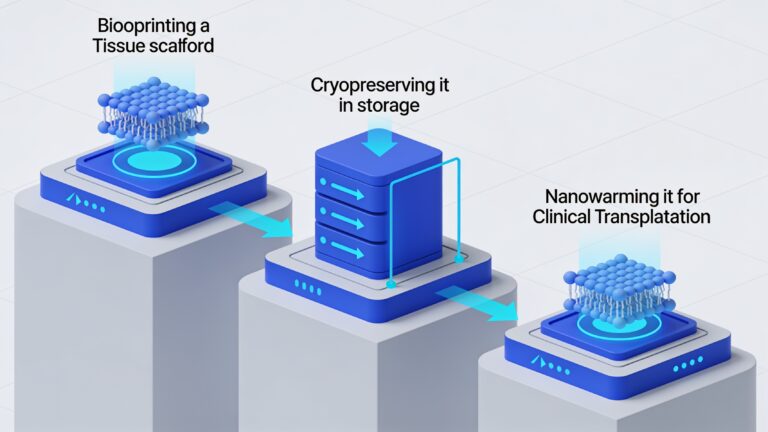
Innovations 3D bioprinting uses 15% GelMA and 0.5% LAP to create precise and reproducible tissue models. Photopolymerization at 405 nm and low/intermediate speed printing ensure high cell viability. The use of viscoelastic supports such as Pluronic allows for complex geometries without cell damage. Modular systems such as MagMix easily integrate existing platforms, improving
Manufacturing Metal 3D printing in space is still experimental. Suborbital experiments show potential but last only a few minutes, insufficient for complex processes. The first metal objects have been produced on the ISS, demonstrating long-term feasibility. However, challenges such as thermal control, power supply, structural integration, and material quality are slowing down the application
Manufacturing 3D simulation is essential to prevent defects in metal printing, reducing costs and production times. Tools like PanX allow for predictive process optimization, improving quality and efficiency.