Settore Industriale: Defense

Industrial 3D Printing: Contract Clauses at Risk and How to Avoid Them

Industrial 3D Printing: Contract Clauses at Risk and How to Avoid Them

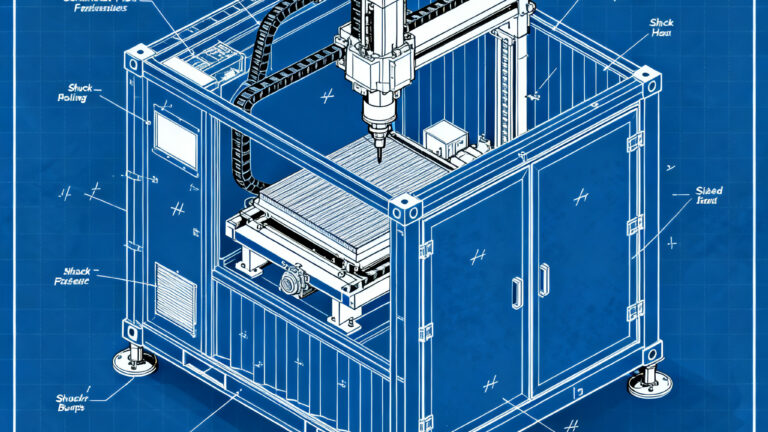
Industrial 3D printing presents often underestimated contractual risks, with clauses that unilaterally shift liability and costs onto clients. Key points include: GPS tracking, geographic limits, training obligations, vague definitions of “failure”, and choice of jurisdiction. It is essential to negotiate fair contracts to avoid legal constraints and ensure safe operations.

How Energy-Absorbing Metamaterials Are Revolutionizing Structural Safety

How Energy-Absorbing Metamaterials Are Revolutionizing Structural Safety

Titanium metamaterials, thanks to their nature-inspired geometric structure realized with SLM 3D printing, absorb energy more efficiently and predictably than traditional materials. Designed to distribute stresses homogeneously, they offer a stable stress plateau during deformation, ideal for structural safety applications in the aerospace field

Alloy Evolution: How high-entropy refractory alloys are redefining the aerospace industry

Alloy Evolution: How high-entropy refractory alloys are redefining the aerospace industry

High-entropy refractory alloys are revolutionizing aerospace thanks to superior properties at extreme temperatures. Compared to traditional Inconel, they offer greater strength, lower weight, and better performance in applications such as combustion chambers, nozzles, and hypersonics. RCCAs, with disordered BCC structures, exceed melting and corrosion limits, opening up new possibilities for

New Era of Governance: The Evolution of Leadership in the Additive Manufacturing Industry

New Era of Governance: The Evolution of Leadership in the Additive Manufacturing Industry

The Additive Manufacturing Alliance, born from the union of Leading Minds and AM I Navigator, promotes the industrial integration of additive manufacturing through structured governance, standardization, and operational support.

Defensive Supply Chains: How Additive Manufacturing is Redesigning Operational Resilience

Defensive Supply Chains: How Additive Manufacturing is Redesigning Operational Resilience

The war in Iran has pushed the defense sector to rethink supply chains, focusing on additive manufacturing for greater flexibility and resilience. Advanced technologies and partnerships between government and startups enable the production of critical components in record time, reducing dependence on foreign suppliers. Examples like Ursa Major and the Draper engine show how it is possible

Additive Manufacturing: How Market Consolidation Redesigns Financial Strategy in the Sector

Additive Manufacturing: How Market Consolidation Redesigns Financial Strategy in the Sector

The additive manufacturing sector is experiencing a shift: from growth based on volumes to a strategy focused on margins, vertical specialization, and operational optimization. Companies like Materialise demonstrate how consolidation and attention to profitability, rather than expansion, can guarantee positive cash flows and solid financial positions, even

Press TCT 2026: new frontiers of industrial additive manufacturing

Press TCT 2026: new frontiers of industrial additive manufacturing

The TCT Awards 2026 highlight the growing role of additive manufacturing in strategic sectors such as aerospace, defense, and automotive, with projects that integrate optimized structures, advanced materials, and cross-sector collaborations.

Hybrid Metal-Polymer FDM Extrusion: How It Works and What Are Its Industrial Applications

Hybrid Metal-Polymer FDM Extrusion: How It Works and What Are Its Industrial Applications

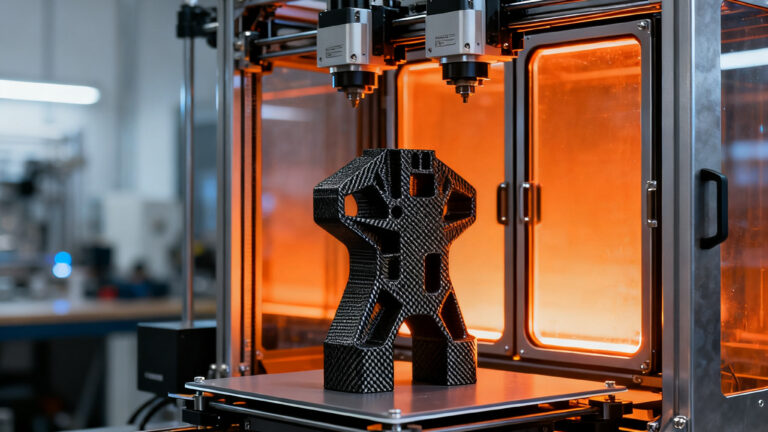
Hybrid metal-polymer FDM extrusion allows printing parts with metallic properties using composite filaments, without complex post-processing. It combines ease of use and safety, reducing costs and production times. Ideal for rapid prototyping and production of complex metal components in sectors such as aerospace, automotive, and tooling.

Additive Manufacturing for Hypersonic Vehicles: How 3D Printing is Changing the Aerospace Game

Additive Manufacturing for Hypersonic Vehicles: How 3D Printing is Changing the Aerospace Game

3D printing is revolutionizing the development of hypersonic vehicles, reducing costs and production times. Programs like the Pentagon's HyCAT focus on rapid and reusable test platforms, such as Hypersonix's DART AE demonstrator, entirely 3D printed. Additive manufacturing allows for complex geometries and the use of advanced materials resistant to high temperatures, accelerating

HP MJF Technology in Industrial Services: How to Implement It for Resilient and Responsive Production

HP MJF Technology in Industrial Services: How to Implement It for Resilient and Responsive Production

HP MJF Technology revolutionizes industrial production, enabling flexibility, lead time reduction, and digital warehousing. Ideal for sectors such as aerospace, defense, medical, and data centers, it allows for on-demand production of custom components, improving supply chain resilience and reducing costs. Integration with traditional processes and the use of advanced materials make

Titanium Recycling Rewrites the Rules of Safety in US Supply Chains

Titanium Recycling Rewrites the Rules of Safety in US Supply Chains

Titanium recycling is strengthening the security of US supply chains, reducing dependence on foreign suppliers. IperionX, with its closed-loop model, produces recycled titanium for the defense sector, improving efficiency and strategic self-sufficiency.

Additive Manufacturing Rewrites the Rules of the Supply Chain in Defense: 6K and AGF Defcom Sign for Productive Sovereignty

Additive Manufacturing Rewrites the Rules of the Supply Chain in Defense: 6K and AGF Defcom Sign for Productive Sovereignty

The defense industry is betting on production self-sufficiency with 3D printing and material recycling. The partnership between 6K Additive and AGF Defcom introduces US-made metal powder for defense components, reducing waste and external dependencies. A circular system based on waste recycling lowers costs and environmental impact, responding to national security needs and to

/