Settore Industriale: Defense

How Large-Scale Directed Energy Deposition Works: Advanced Melt Pool Control and Precision in Deposition

How Large-Scale Directed Energy Deposition Works: Advanced Melt Pool Control and Precision in Deposition

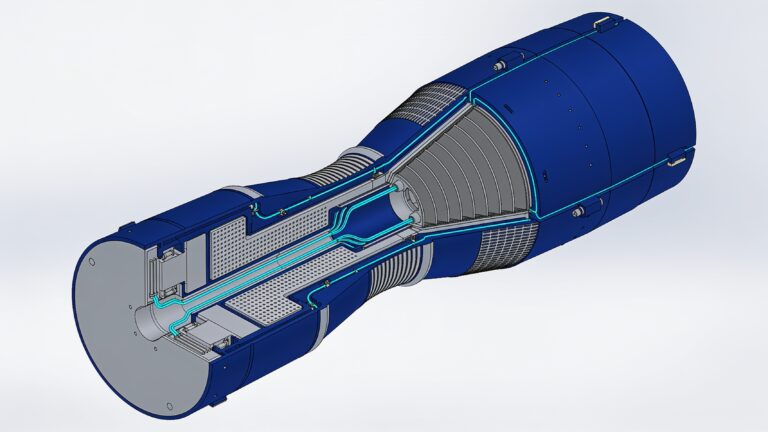
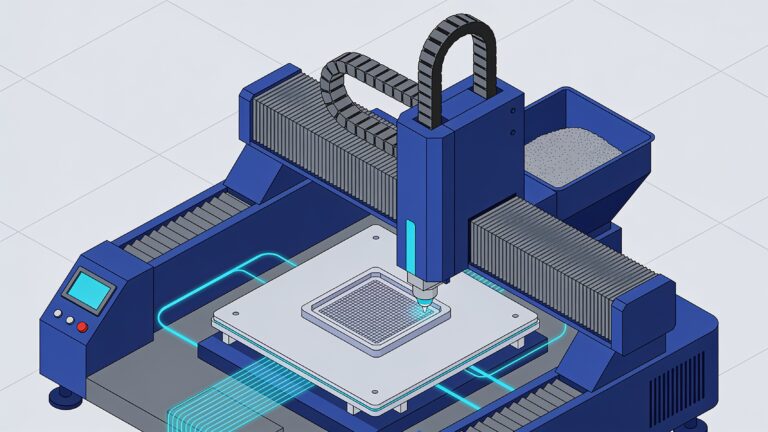
Large-scale Directed Energy Deposition utilizes real-time melt pool monitoring, targeted deposition, and dynamic modeling to ensure precision, metallurgical quality, and thermal control during the production and repair of large metal components.

How In-Process Metrology Works in Metal Additive Manufacturing

How In-Process Metrology Works in Metal Additive Manufacturing

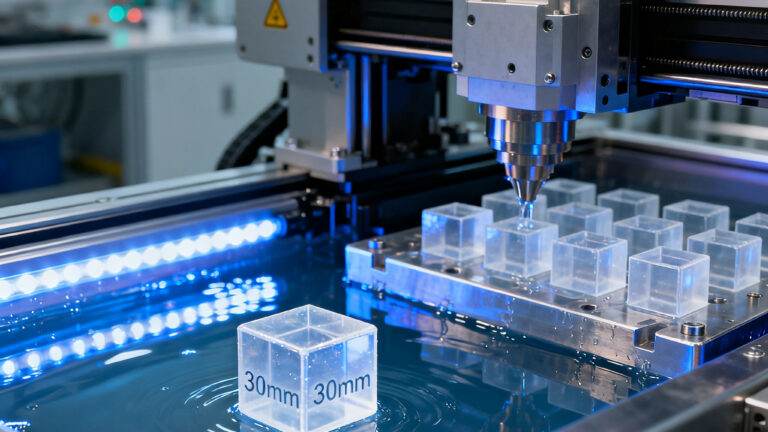
In-process metrology in metal additive manufacturing enables precise measurement during production, ensuring repeatable and scalable quality. Unlike traditional monitoring, it provides quantitative and traceable data, reducing the reliance on costly post-process inspections. Technologies such as optical fringes allow for real-time 3D measurements, improving affi

Why the Industry is Finally Adopting Large-Scale 3D Printing

Why the Industry is Finally Adopting Large-Scale 3D Printing

In 2025-26, 3D printing moves beyond experimentation: aerospace, medical, automotive, and defense integrate it into main lines, driven by investments, geopolitics, and reliable standards. Market from 40 to 250 billion by 2035: those who train and scale now will lead the manufacturing of the future.

Beyond Print Time: A Playbook for Integrating Production Planning in Industrial-Scale Additive Manufacturing

Beyond Print Time: A Playbook for Integrating Production Planning in Industrial-Scale Additive Manufacturing

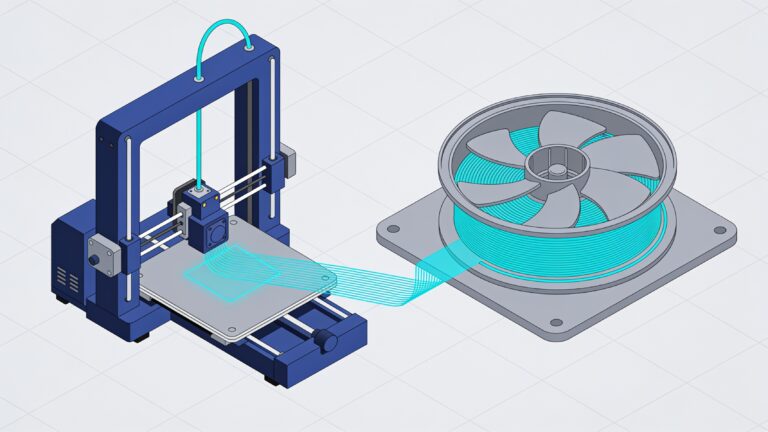
To scale additive manufacturing, end-to-end planning is needed: integrate printing, post-processing and the supply chain, monitor flows and bottlenecks, use specific software and build repeatability on data and standards, not just on machines.

New Industrial Automation Technologies Presented at TechManufacturing 2026 Fair

New Industrial Automation Technologies Presented at TechManufacturing 2026 Fair

Formnext 2026 and major fairs show mature additive manufacturing: large parts, AI, IoT, and concrete cases in aerospace, healthcare, and defense for productivity and certain ROI.

The Expansion of 3D Printing in Industrial Applications: Technologies, Materials, and Advanced Use Cases

The Expansion of 3D Printing in Industrial Applications: Technologies, Materials, and Advanced Use Cases

Industrial 3D printing grows beyond 20% annually, moving from 40 to 250 billion dollars by 2035. Automation, aerospace, and defense adopt it for critical parts, cutting costs and times. Challenges: scalability, regulations, skills.

Advanced Training in Industrial Additive Manufacturing: Future Skills for Production 4.0

Advanced Training in Industrial Additive Manufacturing: Future Skills for Production 4.0

The lack of skills is slowing the growth of additive manufacturing: universities, industry, and certifications converge to rapidly train 4.0 professionals.

New EU Directives on Industrial Product Safety: Impact on the Manufacturing Sector

New EU Directives on Industrial Product Safety: Impact on the Manufacturing Sector

The EU pushes for shared standards for autonomous systems and additive manufacturing: rigorous qualification, traceability, and ISO/AS certifications to accelerate industrial adoption and reduce risks.

Underwater 3D Printing: New Technologies for Marine Exploration and Conservation

Underwater 3D Printing: New Technologies for Marine Exploration and Conservation

Cornell prints 3D concrete on the seabed using marine sediments: lower costs, zero transport, autonomous robots and reduced environmental impact for sustainable infrastructure.

New Frontiers of Industrial 3D Printing: Composite Materials and Multi-Material Additive Production

New Frontiers of Industrial 3D Printing: Composite Materials and Multi-Material Additive Production

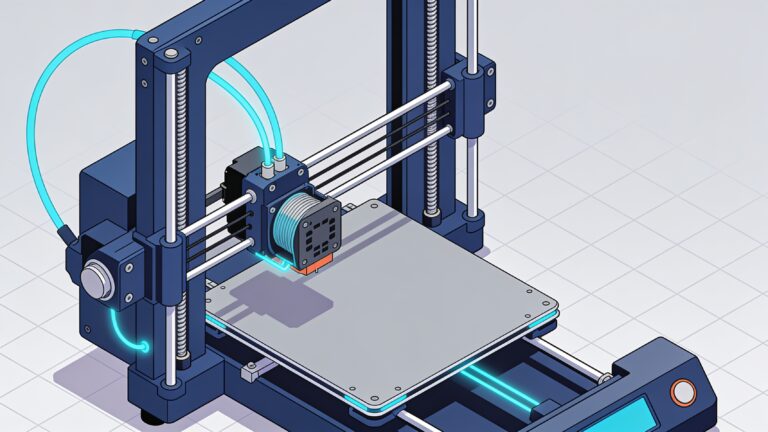
Multi-material 3D printing: a single part with rigid, flexible, conductive zones. Innovations from Bambu to Stratasys, automotive-aerospace applications, open-source software, and US investments toward mass production.

Metal Additive Manufacturing in the Aerospace and Defense Industry: Advanced Technologies and Critical Applications

Metal Additive Manufacturing in the Aerospace and Defense Industry: Advanced Technologies and Critical Applications

Metal additive manufacturing is now essential in aerospace and defense: lightweight alloys, DMLS/EBM/FFF processes and increasingly stringent certifications reduce weight, times and costs, but powder qualification and supply-chain remain the main challenges.

New Advances in Metal 3D Printing: Market Expansion Towards 2026

New Advances in Metal 3D Printing: Market Expansion Towards 2026

The metal 3D printing market is projected to grow by 251% in 2025, driven by aerospace, defense, and China. New PBF and FFF technologies make production more accessible, efficient, and sustainable. Forecasts: $170-250 billion by 2035.

/