Applicazione: Prototyping

Why does this resin cost 5x but print twice as much?

Why does this resin cost 5x but print twice as much?

Next-generation photopolymer resins cost more because they are formulated to emulate the properties of engineering plastics like PP or TPU, with chemical precision and control of mechanical characteristics. They are not simple liquids: each resin is designed for specific applications, ensuring quality, durability, and performance similar to injection molding. The difference in pr

Why is your 3D printer making noise?

Why is your 3D printer making noise?

The noise from 3D printers mainly comes from stepper motor vibrations during movement. To reduce it, acoustic insulation is not enough; it is necessary to intervene on motor control, acceleration, and feedback. Techniques like input shaping allow vibrations to be prevented at the source, improving both noise and print quality. Good tuning of the parameters d

Can you really 3D print the CORE One?

Can you really 3D print the CORE One?

Prusa releases the CORE One CAD files under the new open-source OCL license, which allows modifications, sharing, and internal use, but prohibits direct sale without an agreement. Discover what you can concretely do with STEP and Fusion 360 files.

Mix colors without threads? Here's how

Mix colors without threads? Here's how

The new color mixing tool in Bambu Studio allows you to obtain infinite shades by combining different filaments without physical fusion, leveraging the controlled alternation of layers. Through the Add Mixed Filament function, it is possible to create custom gradients with a few spools, ideal for visual effects and soft gradients. The result depends on the Transmission Distance and the geometry

Touch keys in 3D printing? Here's how to do it

Touch keys in 3D printing? Here's how to do it

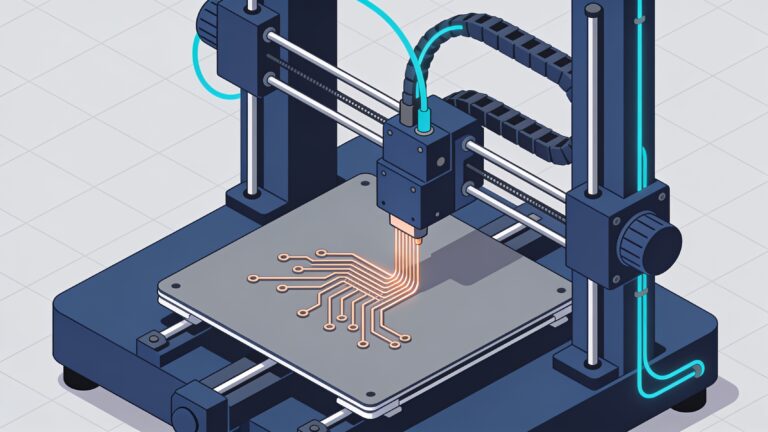
Here's how to integrate touch keys into your 3D printed objects using self-adhesive copper tape and scheduled pauses during printing. Working capacitive sensors are created with simple measures: three-layer depth positioning, holes for electrical connections, and post-print soldering. An economical and accessible solution for integrated touch interfaces.

How to print 1000°C of competitive advantage?

How to print 1000°C of competitive advantage?

Additive manufacturing offers competitive advantages in automotive and motorsport, reducing development times and optimizing components. Technologies like SLS, binder jetting, and PBF allow on-demand production, weight reduction, and greater strength. Practical cases demonstrate the effective integration of 3D printing without disrupting existing production lines.

Low-cost precision? Here are the real trade-offs

Low-cost precision? Here are the real trade-offs

Desktop 3D printing today offers industrial-grade precision at contained costs, but with limits on scale and speed. Solutions like the microArch S150 and its Ultra upgrade balance precision and throughput for R&D and pilot production. Entry-level post-processors like the M4 Basic improve finish, albeit with dimensional limits. The right choice depends on the specific use case.

Which toolchanger wins in speed and precision?

Which toolchanger wins in speed and precision?

Snapmaker with SnapSwap system stands out for speed, precision, and waste reduction in multicolor 3D printing. Thanks to kinematic couplings and dedicated hotends, it offers fast changes, high repeatability, and less downtime compared to traditional filament change systems. Ideal for complex productions with frequent color changes.

Why is the 3D market split into two?

Why is the 3D market split into two?

The 3D market is splitting: on one side entry-level systems under $2,500 are growing over 30%, on the other high-end industrial platforms are struggling. Three sectors are driving demand: aerospace, defense and healthcare. China records strong increases in metal PBF. Business models are differentiating: providers are targeting specific segments to stay competitive. Future growth

3D Printing at School Without Uncertainties?

3D Printing at School Without Uncertainties?

3D printing in schools can be inclusive and scalable if well planned. Simple models, materials like PLA, and collaboration with teachers allow for optimizing production and educational impact, avoiding waste and overloads. Starting with pilot projects and scaling gradually is the key to success.

Sensors that sense without electronics?

Sensors that sense without electronics?

Bio-inspired soft sensors represent an engineering revolution: the material structure itself becomes the true sensor, generating electrical signals without electronic components. Thanks to porous and anisotropic microarchitectures, these smart materials convert mechanical stimuli into electrical responses by leveraging natural physical phenomena, such as streaming potential. Studies inspired by the spines

3D Printer Upgrades: What Real Value?

3D Printer Upgrades: What Real Value?

Upgrades for desktop 3D printers can improve quality and versatility, but they must be chosen carefully. Always verify mechanical, electrical, and firmware compatibility before purchase. Prioritize high-impact modifications like heated beds, hardened nozzles, and direct extruders, suitable for the materials you use. Start with simple upgrades like the PEI bed or filament sensors, then move on

/