Applicazione: Prototyping

How the Soft Optical SOLen Sensor Works in Medical Applications

How the Soft Optical SOLen Sensor Works in Medical Applications

The SOLen soft optical sensor uses light to measure deformations with high precision and stability, overcoming the limits of traditional sensors. Thanks to a 3D-printed Y-structure and a differential configuration of photoreceptors, it offers reliable measurements and is insensitive to environmental interference. Ideal for advanced medical devices, smart orthoses, and monitoring systems

Practical Guide to Using Consumer-Grade LiDAR: Tools, Workflow, and Maker vs Industrial Use Case

Practical Guide to Using Consumer-Grade LiDAR: Tools, Workflow, and Maker vs Industrial Use Case

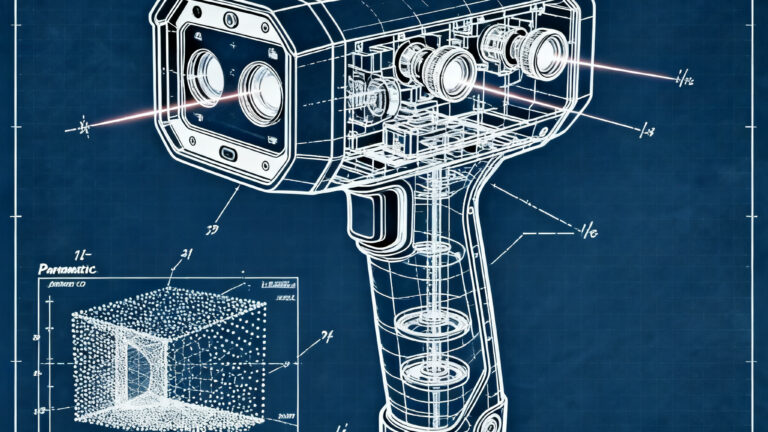
The guide illustrates the use of consumer-grade LiDAR for 3D scanning, comparing tools such as smartphones with integrated LiDAR, portable scanners like 3DMakerpro Lynx and Toucan, and practical workflows for makers and small productions. The advantages of each technology are analyzed in terms of precision, portability, and costs, with application examples in design, teaching, and prototyping

How the Mintion V1 3D Printing Filtration System Works: Complete Technical Guide

How the Mintion V1 3D Printing Filtration System Works: Complete Technical Guide

The Mintion V1 is an accessible filtration system for FFF/FDM 3D printers, designed to reduce ultrafine particles and VOCs. It uses HEPA and activated carbon filters, easily integrating into home or maker spaces. It improves air quality by reducing odors and pollutants, but requires conscious use and correct installation to maximize effectiveness.

Defensive Supply Chains: How Additive Manufacturing is Redesigning Operational Resilience

Defensive Supply Chains: How Additive Manufacturing is Redesigning Operational Resilience

The war in Iran has pushed the defense sector to rethink supply chains, focusing on additive manufacturing for greater flexibility and resilience. Advanced technologies and partnerships between government and startups enable the production of critical components in record time, reducing dependence on foreign suppliers. Examples like Ursa Major and the Draper engine show how it is possible

Safety and Standards in Post-Processing of Resins for Stereolithography

Safety and Standards in Post-Processing of Resins for Stereolithography

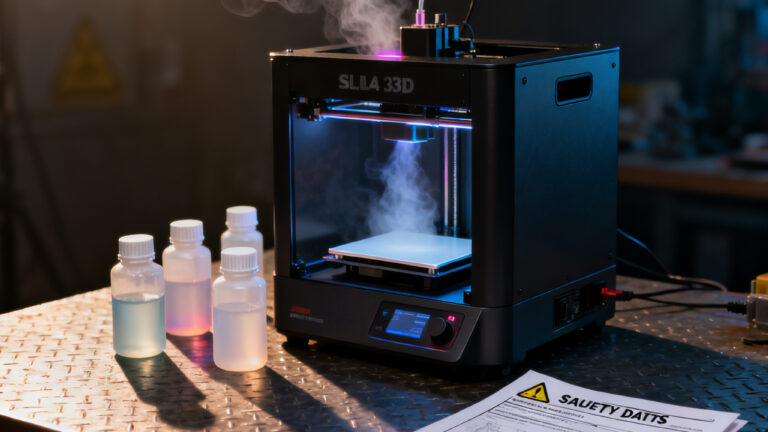
Post-processing is crucial in stereolithography to ensure safety and regulatory compliance. Stages such as washing and post-curing eliminate chemical residues and complete polymerization, ensuring mechanical properties and biocompatibility. The use of validated systems and low-risk solvents improves operational efficiency and safety.

BigRep and SEMA Garage: How 3D Printing is Revolutionizing the Automotive Aftermarket

BigRep and SEMA Garage: How 3D Printing is Revolutionizing the Automotive Aftermarket

The partnership between BigRep and SEMA Garage introduces 3D printing into the automotive aftermarket, facilitating local and customized production of aesthetic and functional components thanks to accessible technologies without direct investment.

Additive Manufacturing: How Market Consolidation Redesigns Financial Strategy in the Sector

Additive Manufacturing: How Market Consolidation Redesigns Financial Strategy in the Sector

The additive manufacturing sector is experiencing a shift: from growth based on volumes to a strategy focused on margins, vertical specialization, and operational optimization. Companies like Materialise demonstrate how consolidation and attention to profitability, rather than expansion, can guarantee positive cash flows and solid financial positions, even

PreFlight and the Architecture of the Future: A New Approach to Slicing for FFF/FDM

PreFlight and the Architecture of the Future: A New Approach to Slicing for FFF/FDM

PreFlight is a new open-source slicer for FFF/FDM developed by oozeBot, designed to overcome the architectural limitations of traditional software. With a native 64-bit architecture and modern stack (C++20, OpenCASCADE, CGAL), it aims to ensure greater reliability, precision, and scalability in professional slicing. It introduces advanced features such as Athena Perimeter Generator and Interlocking Per

Accessible LPBF: How Startups Can Produce Metal Without Costs from Industry

Accessible LPBF: How Startups Can Produce Metal Without Costs from Industry

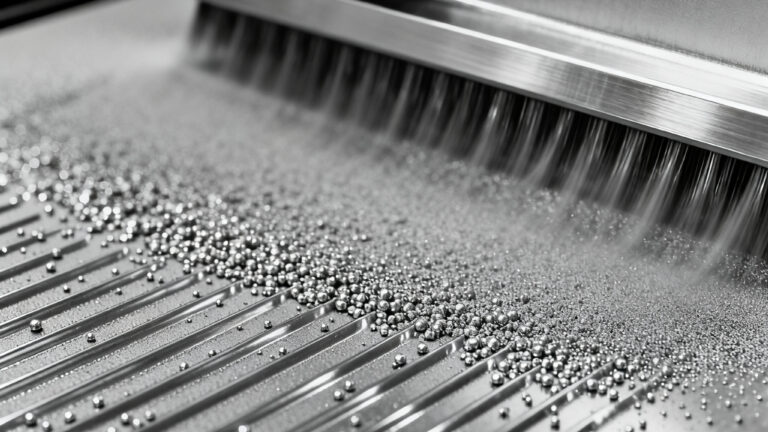
New entry-level LPBF systems, such as Metal-Base, make metal 3D printing accessible to startups and labs with costs under €10,000, thanks to innovative technologies, compact design, and open-source software.

How Color and Material Customization Works in Consumer 3D Printing

How Color and Material Customization Works in Consumer 3D Printing

Customizing colors and materials in consumer 3D printing requires technical expertise to achieve aesthetic and functional results, with technologies such as structural color and advanced mixing systems.

Hybrid Metal-Polymer FDM Extrusion: How It Works and What Are Its Industrial Applications

Hybrid Metal-Polymer FDM Extrusion: How It Works and What Are Its Industrial Applications

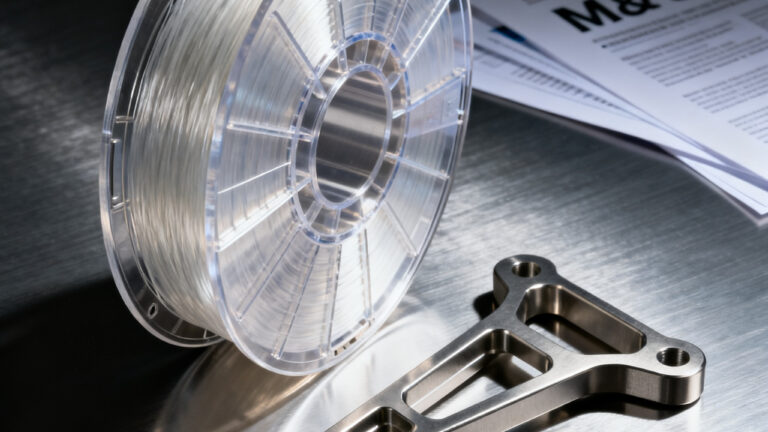
Hybrid metal-polymer FDM extrusion allows printing parts with metallic properties using composite filaments, without complex post-processing. It combines ease of use and safety, reducing costs and production times. Ideal for rapid prototyping and production of complex metal components in sectors such as aerospace, automotive, and tooling.

Additive Manufacturing for Hypersonic Vehicles: How 3D Printing is Changing the Aerospace Game

Additive Manufacturing for Hypersonic Vehicles: How 3D Printing is Changing the Aerospace Game

3D printing is revolutionizing the development of hypersonic vehicles, reducing costs and production times. Programs like the Pentagon's HyCAT focus on rapid and reusable test platforms, such as Hypersonix's DART AE demonstrator, entirely 3D printed. Additive manufacturing allows for complex geometries and the use of advanced materials resistant to high temperatures, accelerating

/