Materiale: Polymers

Direct Production of Functional Parts Without Post-Processing: Mechanisms and Advanced Technologies

Direct Production of Functional Parts Without Post-Processing: Mechanisms and Advanced Technologies

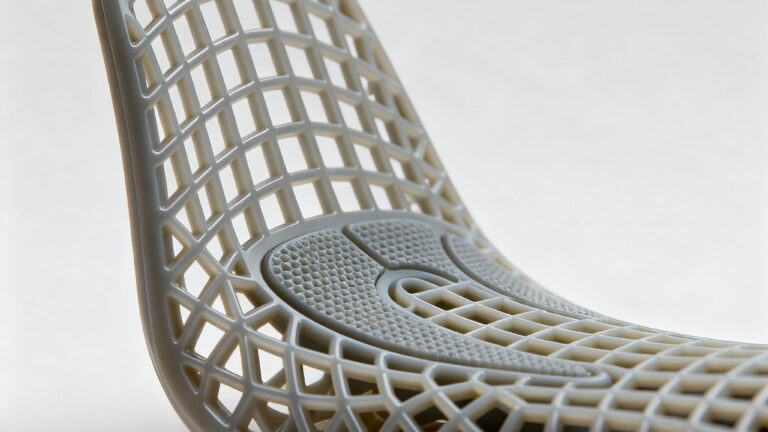
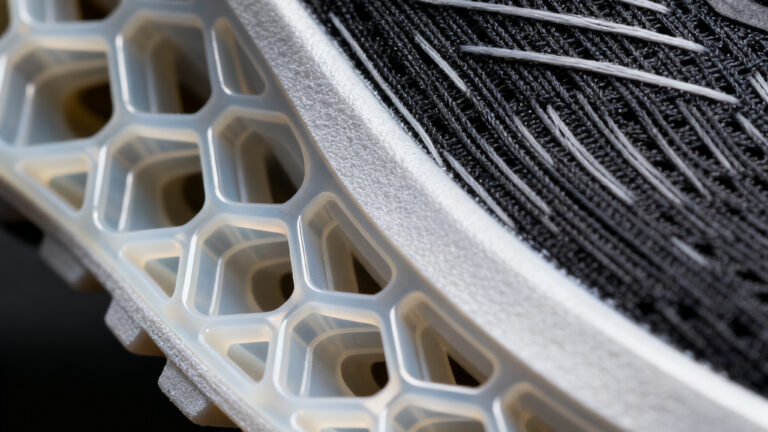
The direct production of functional parts without post-processing represents an evolution of additive manufacturing, aimed at eliminating post-printing processing stages. Thanks to advanced technologies and specialized materials, it is possible to obtain immediately usable components, reducing costs, times, and variability. Sectors such as aerospace and automotive are adopting these s

How 3D printing is revolutionizing fashionwearable: the AMISS case

How 3D printing is revolutionizing fashionwearable: the AMISS case

3D printing is revolutionizing wearable fashion, as demonstrated by the case of AMISS, an Australian brand that has integrated this technology into its creative workflow. By collaborating with Creality, AMISS has drastically reduced production times and costs, eliminating outsourcing and accelerating the creative cycle. Through a complete digital process, from design to final printing, the brand has

Medical Implants and Metal Sensitivity: Balancing Biocompatibility, Durability, and Costs

Medical Implants and Metal Sensitivity: Balancing Biocompatibility, Durability, and Costs

The choice of materials for medical implants requires a balance between biocompatibility, durability, and costs. Titanium, PEEK, and bioresorbable materials like magnesium offer different solutions with specific advantages. Innovations such as TPMS structures and AI improve bone integration and reduce surgical times. Customization allows for better results, even with higher initial costs.

Educational Robotics and Maker Approach: Practical Guide for Schools and Teachers

Educational Robotics and Maker Approach: Practical Guide for Schools and Teachers

Educational robotics and the maker approach, if integrated with a structured teaching plan, can transform learning into a practical experience. Success depends on teacher training, the appropriate choice of technologies and materials, and coherent curricular integration.

Innovative Materials for Industry 4.0: Advanced Solutions in Technical Ceramics and Reinforced Polymers

Innovative Materials for Industry 4.0: Advanced Solutions in Technical Ceramics and Reinforced Polymers

Innovative materials such as technical ceramics and reinforced polymers are revolutionizing Industry 4.0, offering high-performance solutions for sectors like automotive, aerospace, and additive manufacturing. With advanced sintering and production technologies, these materials enable complex geometries and structural applications, also thanks to specialized centers like AMPP. The implementation

Innovation in Materials and Advanced Recycling: Solutions for a Sustainable Future

Innovation in Materials and Advanced Recycling: Solutions for a Sustainable Future

Innovation in materials and advanced recycling are transforming the manufacturing industry. Arkema, with the Virtucycle® program, promotes the use of recycled polymers without compromising performance. Technologies such as chemical recycling and 3D printing with recovered powders reduce environmental impact and costs. Strategic collaborations and bio-based materials open new paths towards an econ

Additive Manufacturing in Semiconductor Packaging: The Operational Plan of XTPL and Manz Asia

Additive Manufacturing in Semiconductor Packaging: The Operational Plan of XTPL and Manz Asia

XTPL and Manz Asia collaborate to integrate Ultra-Precise Dispensing (UPD) technology into semiconductor advanced packaging processes. Thanks to this partnership, XTPL can scale the adoption of its solution without infrastructure investments, entering the Taiwanese market through a technological demonstrator. UPD technology enables sub-micron depositions of materials c

How to Create a Custom Fidget Device Business with 3D Printing

How to Create a Custom Fidget Device Business with 3D Printing

How to create a custom fidget device business with 3D printing: from idea to prototype, sales platforms, and real case studies. A growing market, ideal for those looking for a profitable activity with minimal investments.

Light Robotics and Multi-Material 3D Printing: How to Build a Soft Humanoid

Light Robotics and Multi-Material 3D Printing: How to Build a Soft Humanoid

Soft robotics and multi-material 3D printing are revolutionizing automation, enabling the creation of lightweight, flexible, and safe robots. Thanks to an innovative process developed at Harvard University, it is now possible to build soft humanoids without molds, integrating rigid and gel-like materials in a single printing process. This technology opens new avenues for applications

Cutting-Edge University Labs: How 3D Printing Transforms Research and Education

Cutting-Edge University Labs: How 3D Printing Transforms Research and Education

3D printing is revolutionizing university laboratories, integrating into teaching and research processes. A key tool for rapid prototyping, it allows students to translate theory into practice, accelerating learning. Case studies such as drones and aerospace components demonstrate the real-world application of the technology, supported by advanced motion capture systems and workflow

The 3D Printing Market Enters the Maturity Phase: Real Growth and New Regional Dynamics

The 3D Printing Market Enters the Maturity Phase: Real Growth and New Regional Dynamics

The 3D printing market reaches $24.2 billion in 2025, with a growth of 10.91%. The sector enters a maturity phase, shifting from machinery to production services. The Asia-Pacific region grows at 19.81%, while Europe and EMEA slow down. Services cover 48% of the market, highlighting an industrial conversion based on real usage and economic return.

Distributed e Gigafactory: How Integrated Production Works on an Industrial Scale

Distributed e Gigafactory: How Integrated Production Works on an Industrial Scale

Integrated production on an industrial scale is redefining the manufacturing industry through the physical and digital integration of processes. Advanced automation, data sharing, and artificial intelligence are transforming factories into intelligent, self-optimizing ecosystems, reducing times, costs, and waste.

/