Settore Industriale: Energy

How Lignosulfonate-Based Industrial Ink Works for Recycled 3D Printing

How Lignosulfonate-Based Industrial Ink Works for Recycled 3D Printing

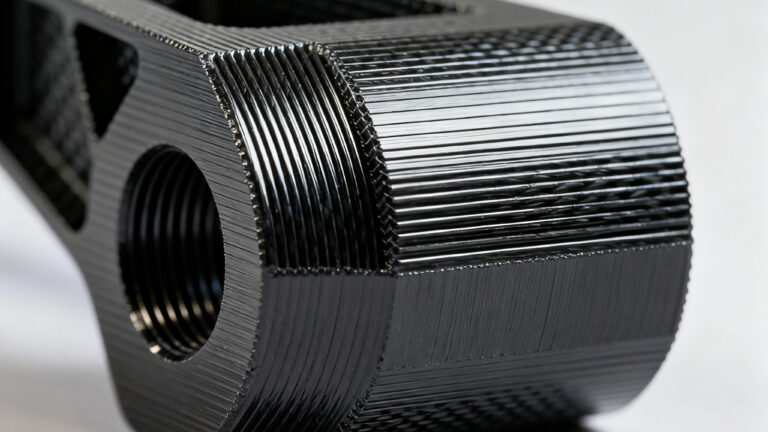
New 3D printing ink based on lignosulfonate, a by-product of the paper industry, enables room-temperature processes without solvents or post-treatments. Composed of 70% waste material, it is recyclable up to nine times while maintaining high performance, promoting a circular economy in industrial additive production.

Industrial Binder Jetting with Ceramic Slurries: Mechanisms, Criticalities, and Advantages Compared to Powder Systems

Industrial Binder Jetting with Ceramic Slurries: Mechanisms, Criticalities, and Advantages Compared to Powder Systems

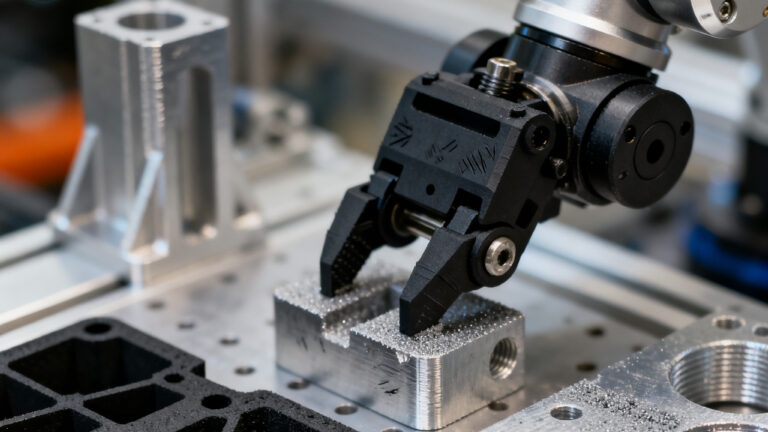
Binder jetting with ceramic slurries offers industrial advantages such as higher green density and controlled shrinkage, but requires precise management of rheology and material stability. Compared to dry powder systems, this technology allows for greater uniformity and production scalability, provided that advanced control systems and stable formulations are integrated to ensure quality and repeatability

How the PowTReX System Works for Advanced Management of Metal Powders

How the PowTReX System Works for Advanced Management of Metal Powders

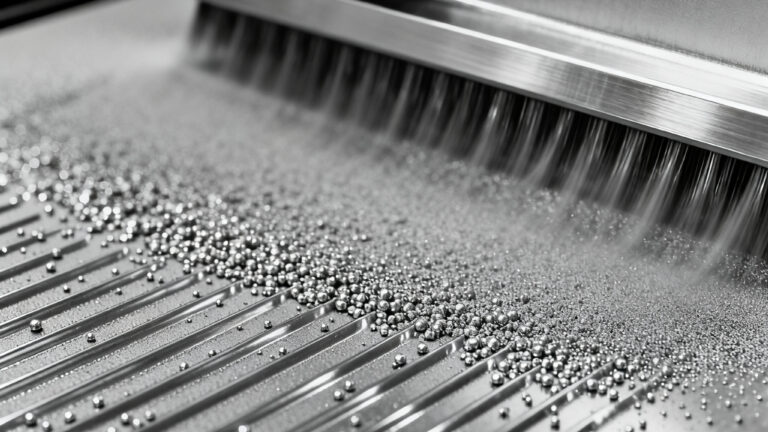
The PowTReX by Volkmann is an advanced system for the automated management of metal powders in additive production. It integrates pneumatic transport, ultrasonic sieving, and automatic recovery in a closed, explosion-proof environment, ensuring safety, material quality, and production continuity. Ideal for scalable industrial contexts and multi-supplier environments, it supports various metal allo

Smart heat exchangers: thermal efficiency comes from patents

Smart heat exchangers: thermal efficiency comes from patents

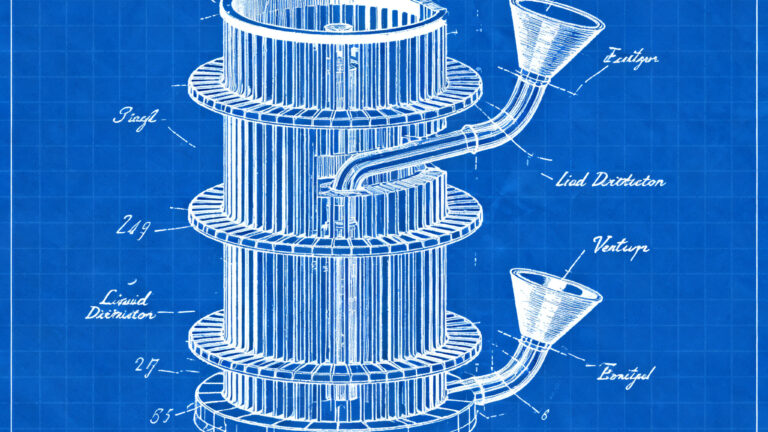
New smart heat exchangers, made with 3D printing technologies and patented, offer greater thermal efficiency without pumps or fans. Thanks to innovative geometries such as partial fins and preloaded integration in engines, weight, costs and consumption are reduced, improving reliability and facilitating assembly. Applications in data centers and aerospace confirm adva

Innovative Materials for Industry 4.0: Advanced Solutions in Technical Ceramics and Reinforced Polymers

Innovative Materials for Industry 4.0: Advanced Solutions in Technical Ceramics and Reinforced Polymers

Innovative materials such as technical ceramics and reinforced polymers are revolutionizing Industry 4.0, offering high-performance solutions for sectors like automotive, aerospace, and additive manufacturing. With advanced sintering and production technologies, these materials enable complex geometries and structural applications, also thanks to specialized centers like AMPP. The implementation

Building a Connected Industrial Ecosystem: How to Develop Strategic Partnerships with PLM

Building a Connected Industrial Ecosystem: How to Develop Strategic Partnerships with PLM

Building a connected industrial ecosystem with PLM requires strategic partnerships, clear governance, and technology integration. PLM should be viewed as a strategic approach, not just an IT tool, to optimize processes, reduce costs, and accelerate time-to-market. It is essential to align it with digital transformation, choose compatible partners, and measure results with defined KPIs.

Distributed e Gigafactory: How Integrated Production Works on an Industrial Scale

Distributed e Gigafactory: How Integrated Production Works on an Industrial Scale

Integrated production on an industrial scale is redefining the manufacturing industry through the physical and digital integration of processes. Advanced automation, data sharing, and artificial intelligence are transforming factories into intelligent, self-optimizing ecosystems, reducing times, costs, and waste.

In-Process Inspection for Metal 3D Printing: How Calibrated Measurement-Based Quality Control Works

In-Process Inspection for Metal 3D Printing: How Calibrated Measurement-Based Quality Control Works

In-process inspection based on calibrated measurements is revolutionizing quality control in metal 3D printing, replacing expensive post-production checks with precise, proactive monitoring during the process. Technologies like structured light fringe projection allow for real-time measurement of critical parameters such as layer thickness and surface roughness, mi

Ultrafast and High Precision in Industrial Additive Processes: How It Really Works

Ultrafast and High Precision in Industrial Additive Processes: How It Really Works

Industrial additive manufacturing today combines speed and precision thanks to advanced technologies such as multi-laser, AI and automated post-processing. Systems like SSLM and TVAM drastically reduce production times while maintaining high quality. High-performance materials – technical polymers, metal alloys and composites – expand applications. Automation in vapor smoothing and depowdering m

Industrial Performance Benchmarking: When 3D Printing Surpasses Traditional Manufacturing

Industrial Performance Benchmarking: When 3D Printing Surpasses Traditional Manufacturing

3D printing surpasses traditional manufacturing in terms of production times, quality, and internal defects. An EPRI project shows how convergent manufacturing reduces times from 30 months to 3 months, maintaining or improving mechanical properties. Additive manufacturing offers significant advantages for highly regulated sectors, thanks to fewer defects, more precise controls, and reduced

Post-Prototype Operational Models in the Advanced Metal Industry

Post-Prototype Operational Models in the Advanced Metal Industry

The advanced metal industry is evolving towards integrated production systems, where every stage of production collaborates in real time. Overcoming the traditional model of isolated departments, a connected architecture emerges that unifies additive, machining, heat treatment, and inspection. This approach reduces inefficiencies, improves stability and productivity, and enables a rapid response p

Sustainability in Industrial 3D Printing: Understanding Environmental and Technological Trade-offs

Sustainability in Industrial 3D Printing: Understanding Environmental and Technological Trade-offs

Industrial 3D printing can reduce environmental impact, but it requires strategic choices on materials, energy efficiency and life cycle management. Although it offers advantages such as less waste and simplification of the supply chain, the real benefit depends on sustainable feedstocks, efficient processes and recovery policies. Studies show that the use of recycled material and energy sources

/