MJF/SLS post-processing: 3 tricks for small labs?
New automated systems like DyeMansion's Powershot and AMT's PostPro solutions make MJF/SLS post-processing accessible to small labs, reducing costs and processing times.
Manufacturing New automated systems like DyeMansion's Powershot and AMT's PostPro solutions make MJF/SLS post-processing accessible to small labs, reducing costs and processing times.
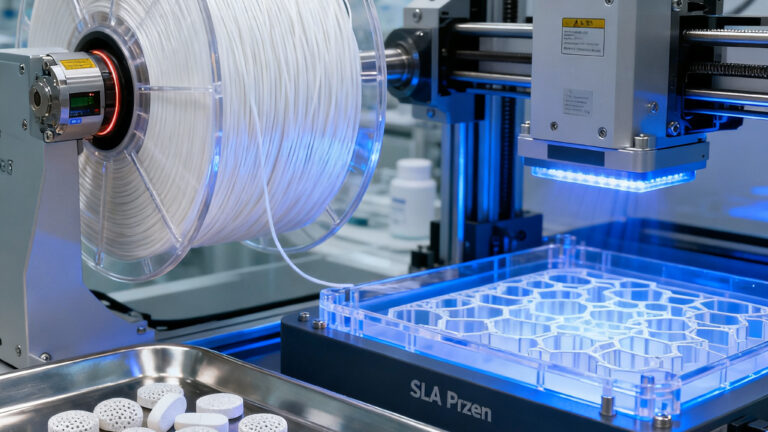
Manufacturing Automating the post-processing of resin improves precision and repeatability. A modular workflow adapts each phase to the specific parameters of the material, reducing errors and manual times. The integration between the printer and washing/curing stations enables certified, traceable, and scalable flows, ideal for professional and biocompatible applications.
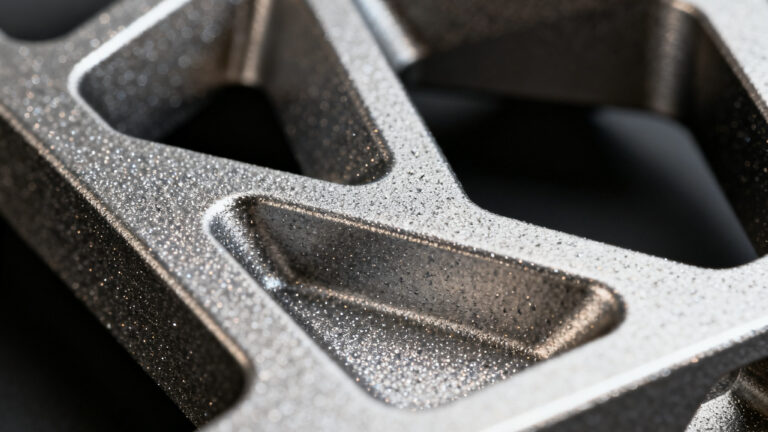
Manufacturing The cost reduction of key components such as lasers and light engines is democratizing additive manufacturing, allowing access to metal 3D printers under $10,000. This change is redefining market dynamics, shifting the focus from hardware to services and adaptability to specific use cases. Modularity and standardization allow new realities to com
Manufacturing Additive manufacturing is evolving from a prototyping tool to a concrete solution for mass production. 3D ShapeFarm positions itself in this scenario as a printing farm specialized in medium-to-large batches, offering an integrated service that includes 3D printing, assembly, and logistics. We analyze the operational model, advantages, and industrial implications.
Manufacturing Scalable Motion Control for Industrial 3D Printers: modular architecture enabling reuse, upgrades, and flexible adaptation to different mechanical configurations. Dyze Design's Aurora system with two-stage feedback for greater precision and responsiveness. Benefits: cost reduction, targeted maintenance, and gradual integration.
Manufacturing Metal 3D printing in space is still experimental. Suborbital experiments show potential but last only a few minutes, insufficient for complex processes. The first metal objects have been produced on the ISS, demonstrating long-term feasibility. However, challenges such as thermal control, power supply, structural integration, and material quality are slowing down the application
Manufacturing 3D simulation is essential to prevent defects in metal printing, reducing costs and production times. Tools like PanX allow for predictive process optimization, improving quality and efficiency.
Manufacturing Optimizing additive production requires a holistic vision that includes not only print time, but also preparation phases, order aggregation, and post-processing. Often overlooked, these latter stages represent the true bottlenecks. To improve efficiency and reduce delivery times from 3 days to 3 hours, it is essential to integrate the entire production flow into a system
Manufacturing Recycling high-performance polymers, such as PA12, offers significant economic and environmental benefits. Transforming waste powder into recycled filament reduces costs by up to 30% and increases independence from the supply chain. Maintaining high mechanical performance, the recycled material can be used in non-critical structural applications. A controlled process ensures
Manufacturing Forge I, a new factory in the United Kingdom, produces structural concrete elements via large-scale 3D printing. The project, led by Hyperion Robotics and LKAB Minerals, represents a paradigm shift towards the industrial production of complex building components, with benefits in terms of efficiency, quality control, waste reduction, and lower environmental impact. The factory is expected to
Manufacturing The integrated supply chain in the metal 3D printing sector represents a key competitive advantage, with a focus on end-to-end support, traceability, and certified quality. Technology alone is not enough: reliable partners are needed to reduce costs and lead times, improving efficiency and production resilience.
Manufacturing An artificial intelligence model developed by KIMS and Max Planck Institute predicts the mechanical properties of metal components produced with LPBF, analyzing pore morphology without destructive testing.