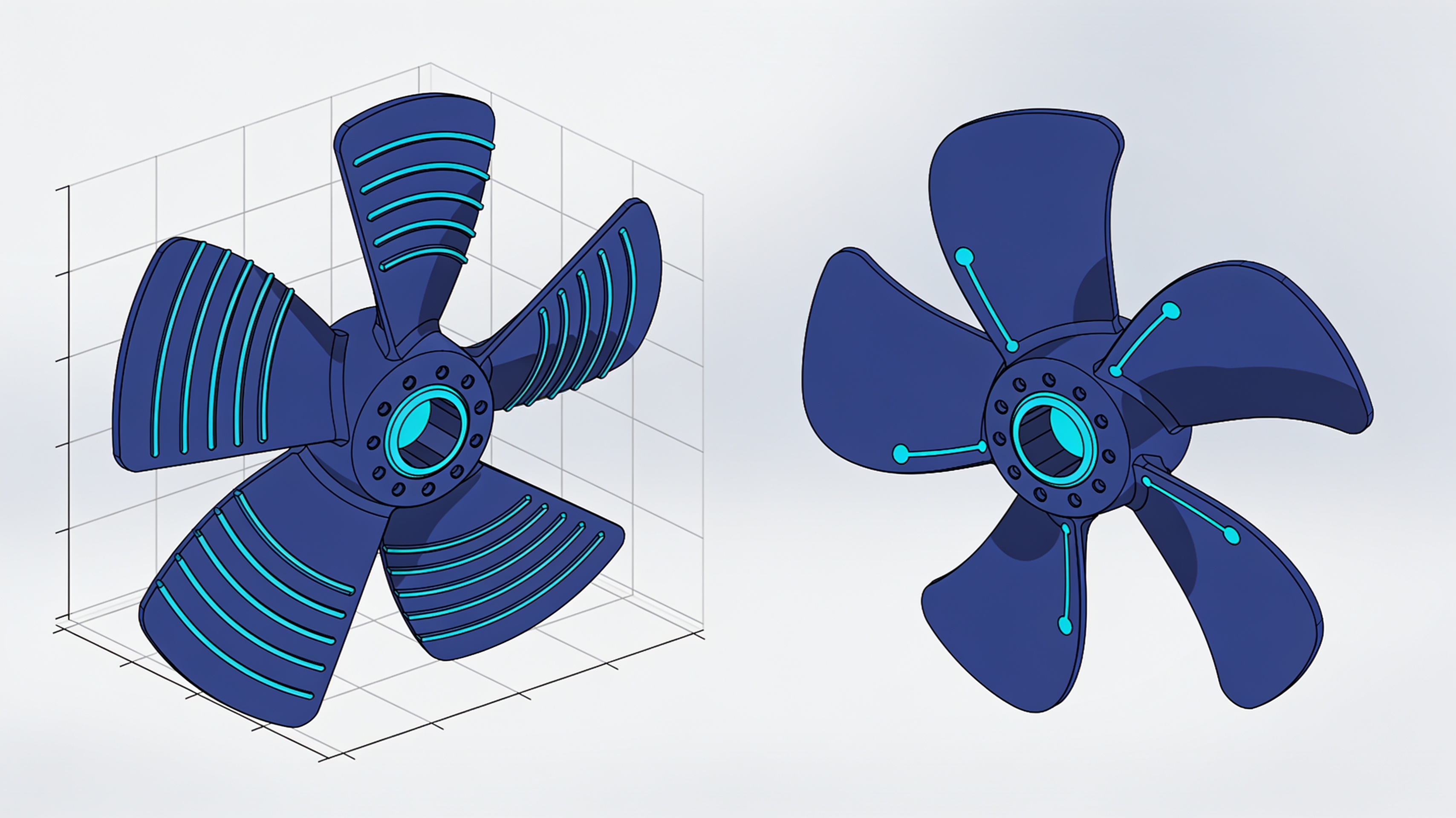
26 kg marine propeller 3D printed with WAAM: the JOME case in Dubai
JOME Engineering rebuilt a 316L stainless steel marine propeller using WAAM technology and Caracol's Vipra AM robotic platform. The component weighs 26 kilograms, measures 685 millimeters in diameter, and was produced starting from a 3D scan of the original, in the absence of technical drawings.
According to data released by Caracol in mid-October 2026, the project reportedly reduced time by 60% and costs by 40% compared with conventional casting for a single replacement part.
- 26 kg marine propeller, 685 mm in diameter, made with WAAM deposition
- Approximately 20 hours of printing, followed by machining and finishing
- Reverse engineering from 3D scan due to absence of original documentation
- Declared reduction: -60% time, -40% costs compared with single casting
The problem: no drawings available
The request arose from the need to quickly replace a propeller without technical drawings, CAD models, or available production equipment.
The geometries of marine propeller blades have curved surfaces with variation in pitch and thickness along the radius. Reconstructing them from photographs and manual measurements introduces errors that are difficult to correct.
The team therefore began with a three-dimensional scan of the original propeller. The survey made it possible to recover the shape of the blades, the geometry of the hub, and the transitions between surfaces.
The digital model formed the basis for design, material deposition, and subsequent checks. However, the scan did not eliminate the need to interpret functional dimensions and mating surfaces.
Why WAAM for this component
Wire Arc Additive Manufacturing technology uses metal wire and an electric arc to deposit overlapping beads, progressively building large volumes.
A robotic system moves the deposition head relative to the part. Unlike laser powder bed fusion, the WAAM process does not require filling a chamber with fine powder.
The technology is interesting for large metal components. The deposition speed of the blank is more important than the finish obtained directly.
WAAM surfaces are generally less precise and more irregular than those of a mechanical finishing process, making it necessary to allow for machining allowances for subsequent operations.
The project in numbers
The additive construction required about twenty hours, followed by much longer machining and finishing work.
The final part is made of 316L stainless steel. Additive construction represents only the first phase of the production process.
| Parameter | Value |
|---|---|
| Final weight | 26 kg |
| Diameter | 685 mm |
| Material | 316L stainless steel |
| Deposition time | ~20 hours |
| Declared time reduction | 60% |
| Declared cost reduction | 40% |
The percentages are supplier statements referring to the specific case, not results that can be generalized to all propellers.
Considerations on the process
The industrial case study released by Caracol and covered by the specialized press on October 15 and 16, 2026 highlights the applicability of robotic WAAM for complex spare parts in the absence of documentation.
Caracol's Vipra AM platform handled the material deposition. The project was carried out in Dubai by JOME Engineering.
The integrated approach of scanning, reverse engineering, and additive manufacturing offers a solution for out-of-production components. The need for subsequent machining remains a defining element of the WAAM process for applications with stringent dimensional requirements.
article written with the help of artificial intelligence systems
Q&A
What are the dimensions and weight of the marine propeller made by JOME using WAAM technology?
The propeller weighs 26 kilograms and has a diameter of 685 millimeters. It was made from 316L stainless steel using WAAM technology on Caracol's Vipra AM robotic platform.
Why did JOME have to reverse engineer the original propeller?
No technical drawings, CAD models, or production equipment for the original propeller were available. The team therefore performed a 3D scan to recover the shape of the blades, the hub geometry, and the transitions between surfaces.
How long did the WAAM printing of the propeller take?
The additive build took about twenty hours. This was followed by a much longer machining and finishing phase, necessary to achieve the final tolerances.
What advantages did WAAM offer compared to conventional casting in this case?
According to data released by Caracol in mid-October 2026, the project would have reduced times by 60% and costs by 40% compared to conventional casting for a single spare part.
Why is WAAM suitable for large metal components such as a marine propeller?
WAAM uses metal wire and an electric arc to deposit overlapping beads without requiring a chamber filled with fine powder. The deposition speed of the blank matters more than the finish, making it suitable for large metal parts.