Materiale: Composites

Industrial 3D Printing: Contract Clauses at Risk and How to Avoid Them

Industrial 3D Printing: Contract Clauses at Risk and How to Avoid Them

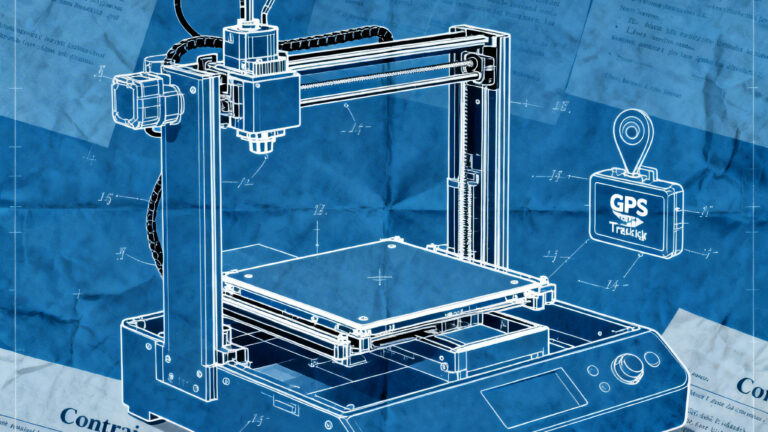
Industrial 3D printing presents often underestimated contractual risks, with clauses that unilaterally shift liability and costs onto clients. Key points include: GPS tracking, geographic limits, training obligations, vague definitions of “failure”, and choice of jurisdiction. It is essential to negotiate fair contracts to avoid legal constraints and ensure safe operations.

New Frontiers of the Workforce in Additive Manufacturing: Operational Skills at the Center of Industrial Transformation

New Frontiers of the Workforce in Additive Manufacturing: Operational Skills at the Center of Industrial Transformation

The additive manufacturing industry is evolving towards greater maturity, with a focus on specific skills, production, and customer interaction. An increasing number of professionals is changing the job market, making hiring more selective and promoting internal skill development.

Implementing Mass Customization with Additive Manufacturing: A Technical Playbook for Consumer Products

Implementing Mass Customization with Additive Manufacturing: A Technical Playbook for Consumer Products

Mass customization is now possible thanks to additive manufacturing, artificial intelligence, and parametric design. These technologies allow for the production of thousands of customized variants while maintaining efficiency and margins, overcoming the limits of traditional production. The integration of software toolchains and automated processes enables the management of variability without au

Bio-Based SLS Printing: When Sustainability Meets Technological Limits

Bio-Based SLS Printing: When Sustainability Meets Technological Limits

Bio-based materials for SLS 3D printing, such as PHB and PA11, offer more sustainable solutions but still present technological limitations compared to traditional polymers like PA12. Although they improve stiffness and thermal stability, they suffer from lower ductility, high porosity, and a narrow process window. Research continues to optimize composition and parameters, aiming for a balance between sust

Sustainable materials in action: how the industry is implementing bio-based solutions on a large scale

Sustainable materials in action: how the industry is implementing bio-based solutions on a large scale

The industry is implementing bio-based sustainable materials on a large scale, integrating responsible agricultural supply chains, technological innovation and circular economy. Projects such as Pragati, Bio.3DGREEN and Virtucycle demonstrate how sustainability and industrial performance can coexist, thanks to strategic partnerships and standardization.

How Chemical Vapor is Revolutionizing the Post-Processing of 3D Parts

How Chemical Vapor is Revolutionizing the Post-Processing of 3D Parts

Chemical vapor is revolutionizing the post-processing of 3D parts, offering smooth, waterproof, and repeatable finishes without material removal. Automated technologies like AMT PostPro eliminate production bottlenecks, reduce costs, and improve mechanical properties, making additive production scalable and certifiable for demanding industries.

BigRep and SEMA Garage: How 3D Printing is Revolutionizing the Automotive Aftermarket

BigRep and SEMA Garage: How 3D Printing is Revolutionizing the Automotive Aftermarket

The partnership between BigRep and SEMA Garage introduces 3D printing into the automotive aftermarket, facilitating local and customized production of aesthetic and functional components thanks to accessible technologies without direct investment.

Industrial Binder Jetting with Ceramic Slurries: Mechanisms, Criticalities, and Advantages Compared to Powder Systems

Industrial Binder Jetting with Ceramic Slurries: Mechanisms, Criticalities, and Advantages Compared to Powder Systems

Binder jetting with ceramic slurries offers industrial advantages such as higher green density and controlled shrinkage, but requires precise management of rheology and material stability. Compared to dry powder systems, this technology allows for greater uniformity and production scalability, provided that advanced control systems and stable formulations are integrated to ensure quality and repeatability

Press TCT 2026: new frontiers of industrial additive manufacturing

Press TCT 2026: new frontiers of industrial additive manufacturing

The TCT Awards 2026 highlight the growing role of additive manufacturing in strategic sectors such as aerospace, defense, and automotive, with projects that integrate optimized structures, advanced materials, and cross-sector collaborations.

Hybrid Metal-Polymer FDM Extrusion: How It Works and What Are Its Industrial Applications

Hybrid Metal-Polymer FDM Extrusion: How It Works and What Are Its Industrial Applications

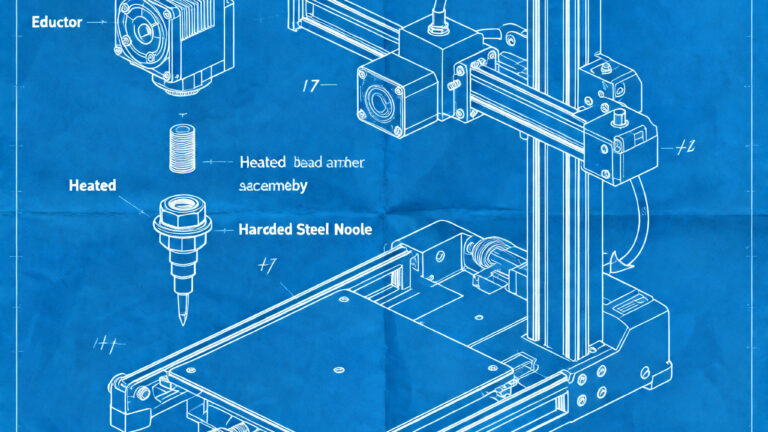
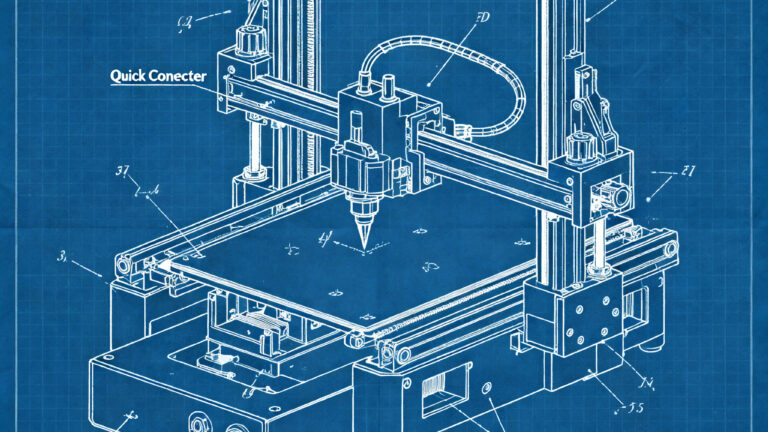
Hybrid metal-polymer FDM extrusion allows printing parts with metallic properties using composite filaments, without complex post-processing. It combines ease of use and safety, reducing costs and production times. Ideal for rapid prototyping and production of complex metal components in sectors such as aerospace, automotive, and tooling.

Additive Manufacturing for Hypersonic Vehicles: How 3D Printing is Changing the Aerospace Game

Additive Manufacturing for Hypersonic Vehicles: How 3D Printing is Changing the Aerospace Game

3D printing is revolutionizing the development of hypersonic vehicles, reducing costs and production times. Programs like the Pentagon's HyCAT focus on rapid and reusable test platforms, such as Hypersonix's DART AE demonstrator, entirely 3D printed. Additive manufacturing allows for complex geometries and the use of advanced materials resistant to high temperatures, accelerating

Direct Production of Functional Parts Without Post-Processing: Mechanisms and Advanced Technologies

Direct Production of Functional Parts Without Post-Processing: Mechanisms and Advanced Technologies

The direct production of functional parts without post-processing represents an evolution of additive manufacturing, aimed at eliminating post-printing processing stages. Thanks to advanced technologies and specialized materials, it is possible to obtain immediately usable components, reducing costs, times, and variability. Sectors such as aerospace and automotive are adopting these s

/