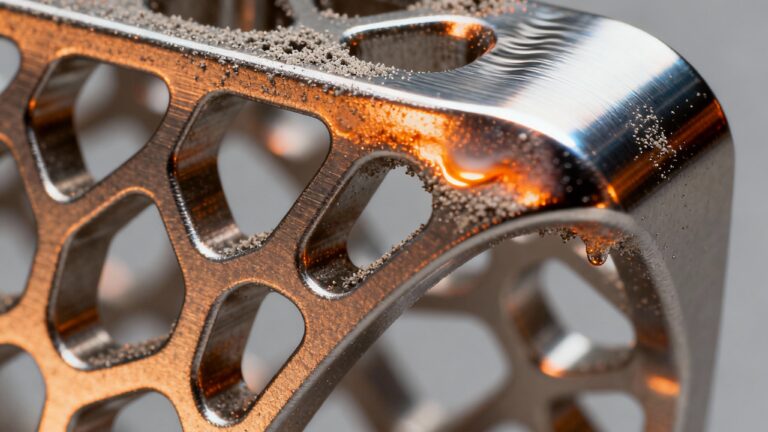
Settore Industriale: Aerospace

Metal Additive Manufacturing in the Aerospace and Defense Industry: Advanced Technologies and Critical Applications

Metal Additive Manufacturing in the Aerospace and Defense Industry: Advanced Technologies and Critical Applications

Metal additive manufacturing is now essential in aerospace and defense: lightweight alloys, DMLS/EBM/FFF processes, and increasingly stringent certifications reduce weight, time, and costs, but powder qualification and supply chain remain the main challenges.
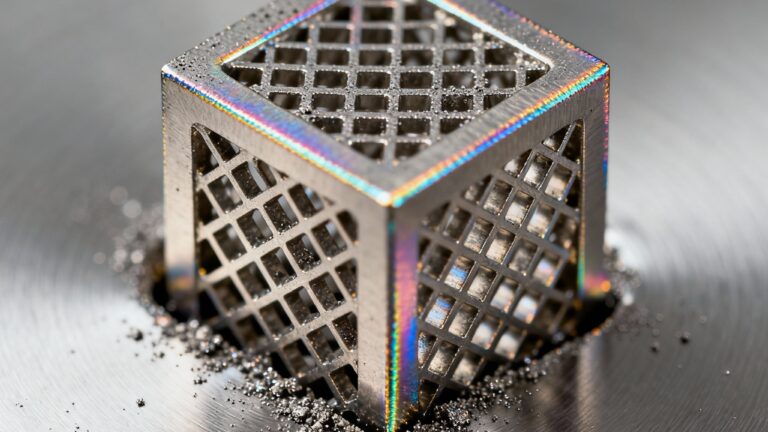

New Advances in Metal 3D Printing: Market Expansion Towards 2026

New Advances in Metal 3D Printing: Market Expansion Towards 2026

The metal 3D printing market is projected to grow by 251% in 2025, driven by aerospace, defense, and China. New PBF and FFF technologies make production more accessible, efficient, and sustainable. Forecasts: $170-250 billion by 2035.

Metal 3D Printing in Aerospace and Defense: Advanced Technologies and Critical Applications

Metal 3D Printing in Aerospace and Defense: Advanced Technologies and Critical Applications

Metal 3D printing is now strategic in aerospace and defense: advanced alloys, certified processes, closed-loop recycling, and military and space use cases are accelerating its global adoption.

Industrial Adoption and Innovation in Additive Manufacturing: Case Study on Advanced Production Solutions

Industrial Adoption and Innovation in Additive Manufacturing: Case Study on Advanced Production Solutions

Additive manufacturing 2026 is mature: advanced materials, AI and digital twin enable serial production in aerospace, automotive and medical. Challenge: scaling with cloud software, widespread skills and rigorous standards.

Automation and software development in the 3D ecosystem: tools, pipelines, and methodologies for advanced digital production

Automation and software development in the 3D ecosystem: tools, pipelines, and methodologies for advanced digital production

Automation and AI in 3D pipelines: from Ergono3D to Velo3D, printing costs and times are reduced, including qualification and cybersecurity.

Industrial Integration 4.0: Practical Cases of Adoption in Production Processes

Industrial Integration 4.0: Practical Cases of Adoption in Production Processes

Industry 4.0: 3D printing, AI, digital twin and robotics merge into open ecosystems, transforming production, supply chain and skills.

Industrial Adoption of Emerging Technologies: Market Dynamics and Implementation Strategies in 2026

Industrial Adoption of Emerging Technologies: Market Dynamics and Implementation Strategies in 2026

In 2026, additive manufacturing exits the pilot phase: aerospace, automotive, data centers, and oil & gas adopt it into true production, but slowly. The winner integrates processes, not just sells machines.

Spatial and Aerospace Integration: Advanced Technologies for Orbital Convergence

Spatial and Aerospace Integration: Advanced Technologies for Orbital Convergence

3D Printing and AI Transform Space-Aerospace Integration: Ultra-lightweight Components, Low-Cost Satellites, Multi-Orbit Antennas, and Accelerated Digital Workflows Drive Orbital Convergence.

Dust Management and Infrastructure for Metal 3D Printing: A Deep Technical Analysis

Powder Management and Infrastructure for Metal 3D Printing: An In-Depth Technical Analysis

New Metal X and Gauss MT90 technologies eliminate direct metal powder handling, reducing risks and infrastructure costs in additive manufacturing.

The Integration of Artificial Intelligence in Industrial Production Processes: Challenges and Opportunities

The Integration of Artificial Intelligence in Industrial Production Processes: Challenges and Opportunities

AI transforms engineering by shifting value from execution to strategic judgment. If the growth path for young engineers is not redesigned, there is a risk of a “skills cliff” and a dangerous concentration of responsibility.

Industry 4.0 accelerates thanks to 3D printing: concrete use cases in 2026

Industry 4.0 accelerates thanks to 3D printing: concrete use cases in 2026

3D printing drives Industry 4.0: automotive, aerospace, healthcare, and construction are adopting it for custom parts, reduced costs, and local production. Market from 40 to 250 billion $ by 2035.

Optimization of Materials and Processes in 3D Printing: Advanced Strategies for 2026

Optimization of Materials and Processes in 3D Printing: Advanced Strategies for 2026

3D Printing 2026: multi-material, Al-Fe-Mn-Ti alloys 300 °C, Voxelfill against anisotropy, CFD for optimal parameters, self-eliminating supports, Stonehenge testing, open software and sustainability.

/