
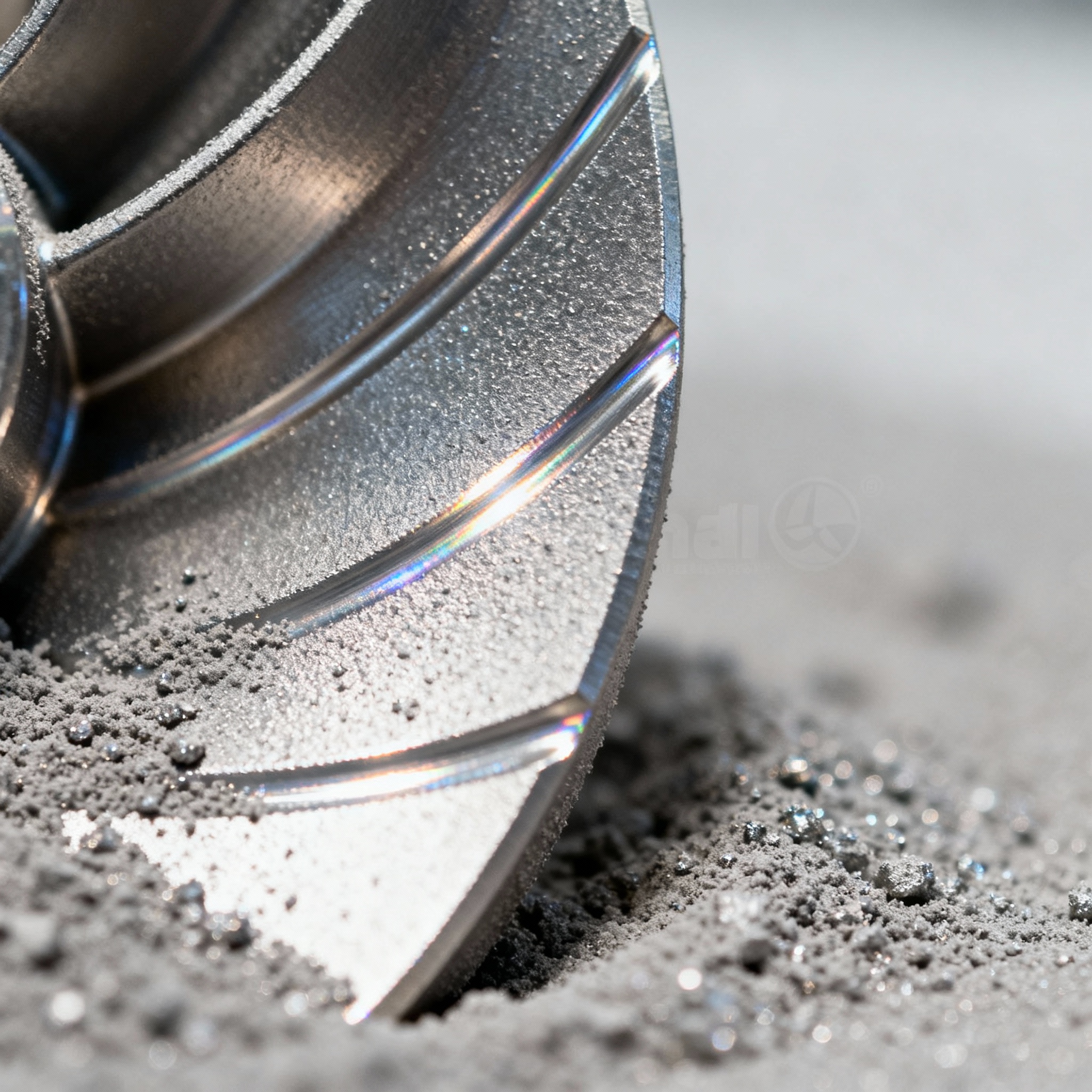
Metal 3D Printing in Aerospace and Defense: Advanced Technologies and Critical Applications
Introduction to Metal Additive Manufacturing Technologies
Metal 3D printing is consolidating its position in the aerospace and defense sectors, definitively moving beyond the prototyping phase to establish itself in real, highly demanding applications. In 2025, the geopolitical context played a decisive role in accelerating the adoption of these technologies: ongoing conflicts and growing international tensions have pushed many countries to strengthen their military capabilities, making additive manufacturing a fundamental strategic tool.
An unmistakable sign of this evolution is the approval of the National Defense Authorization Act (NDAA) in the United States, which for the first time formally recognizes additive manufacturing as critical infrastructure within the Department of Defense. This legislation establishes clear standards for security, traceability, certification, and scalability, while also prohibiting the use of additive manufacturing systems manufactured by or connected to entities from countries such as China, Russia, Iran, or North Korea.
The main technologies include laser powder bed fusion (L-PBF), directed energy deposition (DED), and metal fused filament fabrication (FFF). The latter is the most accessible and easy-to-use method, based on a three-stage process: printing with bound metal powder, washing to remove the plastic material, and furnace sintering to solidify the metal powder.
Metal Materials for 3D Printers: Properties and Selection
The selection of metal materials is a critical element in ensuring optimal performance in aerospace and defense applications. The most commonly used alloys include Ti64 titanium, 17-4 PH stainless steel, H13 tool steel, and copper, each selected based on specific application requirements.
Recent developments at Nagoya University in Japan have led to the creation of new aluminum alloys optimized for 3D printing, capable of maintaining mechanical strength and flexibility at temperatures up to 300°C. The best-performing alloy, composed of aluminum, iron, manganese, and titanium, surpasses all other 3D-printed aluminum materials, combining high-temperature strength and room-temperature ductility. This result was achieved by leveraging laser powder bed fusion, which makes it possible to “trap” iron and other elements in metastable forms impossible to obtain with conventional production methods.
The availability of high-quality metal powders is essential. 6K Additive was selected as a strategic supplier of metal powders for 3D-printed suppressors, implementing a “closed-loop” recycling program that transforms production waste into reusable metal powder through the proprietary UniMelt microwave system. TEKNA has received significant orders for Ti64 powder from U.S. defense Tier-1 suppliers, with one order representing a threefold increase over previous orders, signaling a significant increase in metal additive manufacturing in the defense sector.
Production Processes: From Design to Realization
The production process in metal additive manufacturing requires an integrated approach that starts with design optimized for additive printing. Laser powder bed fusion enables precise control of the microstructure: certain metastable phases strengthen the metal, while elements such as titanium promote finer grains and greater ductility.
In metal FFF, the process is divided into three distinct phases. During printing, metal powder is deposited layer by layer, with parts sized to compensate for shrinkage during sintering. In the washing phase, the “green” parts are immersed in a de-binding fluid that dissolves the plastic material around the metal powder. Finally, in sintering, the “brown” parts are heated in a furnace to eliminate residual binder and fully solidify the metal powder.
Design optimization for additive manufacturing requires identifying critical dimensions, maximizing contact with the build plate, reducing supports, and considering batch processing. For thicker parts, increasing surface area and hollowing out larger volumes can significantly reduce washing times. Reducing stress concentrations, balancing geometric features, and chamfering lower edges optimize the sintering process.
Qualification and Certification in Aerospace and Defense Sectors
Qualification and certification represent crucial aspects for the adoption of additive manufacturing in critical applications. The National Defense Authorization Act has redefined reliability requirements in defense, establishing that additive manufacturing is subject to clearly defined standards for safety, traceability, certification, and scalability. These measures have a direct impact on how components are designed, validated, produced, and maintained in areas such as defense, aeronautics, naval operations, and ground systems.
AS9100 certification has become an essential standard for companies operating in the aerospace sector. Fathom has transformed a major facility in Wisconsin into an operation dedicated to aerospace and defense, complete with ITAR registration and AS9100 certification, with a growing presence of metal additive manufacturing. The company uses metal 3D printing combined with in-house CNC finishing to produce components for satellites, high-altitude aircraft, UAVs, and other aerospace systems.
The Markforged FX20 prints with certified ULTEM™ material to produce flight-ready parts, while the X7 Field Edition system is designed to operate in extreme environments, going from packaging to printing in less than 3 minutes. Validation through real ballistic tests, such as those conducted by the Indian Army on 3D-printed bunkers, demonstrates the structural reliability and operational performance of these technologies.
Case Studies: Critical Components Made with Metal 3D Printing
Practical applications of metal 3D printing in the aerospace and defense sectors demonstrate the technological maturity achieved. Bend Manufacturing, a student-run enterprise operating at the Portage School of Leaders in Indiana, was commissioned by NASA to 3D print airfoils for wind tunnel models. Using a Markforged FX10 printer, the company produced the airfoils in composite-reinforced plastic filament instead of aluminum, reducing delivery times to 11% and costs by 30% compared to previous methods.
In the defense sector, the Indian Army implemented Project PRABAL (Portable Robotic Printer for Printing Bunkers and Accessories), developed in collaboration with IIT-Hyderabad. A vehicle-mounted concrete 3D printer was deployed in forward areas of northern Sikkim to build bunkers, sentry posts, and protective structures. In April, the project completed India's first 3D-printed military-grade protective structure, built at an altitude of 11,000 feet in Leh, claimed to be the world's highest-altitude 3D-printed structure.
Velo3D has entered into a Cooperative Research & Development Agreement (CRADA) with the U.S. Army DEVCOM Ground Vehicle Systems Center to develop and qualify complex additively manufactured parts and assemblies for ground combat vehicles and other military systems. Successfully qualified prototypes will be made available to the U.S. Army for insertion into the supply chain.
In the aerospace sector, multiple companies have conducted tests and validations of rocket engines by incorporating 3D-printed parts into operational systems. Examples from New Frontier Aerospace, POLARIS Spaceplanes, AVIO SpA, and Agnikul Cosmos demonstrate that additive manufacturing is now fully integrated into aerospace programs.
Technical Challenges and Innovative Solutions
Technical challenges in metal additive manufacturing require innovative solutions to ensure optimal performance. One of the main limitations is represented by the size, cost, and restrictions of large enclosed chambers in traditional systems. Lab AM 24, a South Korean company, has developed an approach based on direct energy deposition using metal wire with a portable shielding system that creates an inert environment directly at the print head. By dynamically controlling the argon flow around the deposition zone, reducing oxygen to less than 20 ppm, the system replicates the protective conditions of a chamber without the time, space, and cost penalties associated with building a complete chamber.
Aluminum presents specific challenges related to its limited high-temperature strength. Researchers at Nagoya University have overcome this problem by using laser powder bed fusion to create alloys that “trap” iron in metastable forms. This systematic approach identified elements capable of strengthening the aluminum matrix and creating protective micro- and nanostructures, improving strength and thermal tolerance without compromising printability.
Managing production waste represents another significant challenge. 6K Additive’s “closed-loop” recycling program transforms production waste, both solid and powder, into reusable metal powder through the proprietary UniMelt microwave system, ensuring a fully domestic supply chain and significantly reducing material waste and production costs.
Future Trends and Technological Developments
Future trends in metal additive manufacturing for aerospace and defense indicate continued expansion and maturation of the technology. The vision of zero-gravity 3D printing remains very much alive: after the first metal 3D printing operation in space conducted by the European Space Agency at the end of 2024, numerous additional tests were conducted in 2025 to determine which materials and processes can work effectively under microgravity conditions. Auburn University in the United States plans to 3D print semiconductors in zero gravity in 2026.
The growth of Asian manufacturers is no longer confined to the desktop market. Several companies in the region have strengthened their presence in the industrial segment, beginning to compete in technologies that until recently were dominated by a small group of Western players. A clear example is electron beam melting (EBM), a process long associated with Arcam, which now sees new entrants from Asia such as QBeam, Xi’an Sailong Metal, and JEOL. Established manufacturers such as Farsoon, E-Plus-3D, and BLT continue to strengthen their capabilities in other metal additive manufacturing technologies.
Artificial intelligence is emerging as a tool to accelerate topological optimization and weight reduction, presenting a limited number of optimal solutions that help designers more quickly achieve the best lightweighting solutions. The method developed by Nagoya University, based on established scientific principles regarding the behavior of elements during rapid solidification in 3D printing, is applicable to other metals and promises to accelerate development in various industrial sectors.
Outlook and Conclusion
Metal 3D printing in the aerospace and defense sectors has reached a technological maturity that positions it as a fundamental strategic tool for the production of critical components. The approval of the National Defense Authorization Act in the United States marks a turning point, formally recognizing additive manufacturing as critical infrastructure and establishing clear standards for safety, traceability, and certification.
Innovations in materials, such as the new high-temperature aluminum alloys developed in Japan, and in processes, such as portable shielding systems for directed energy deposition, are overcoming traditional limitations and opening up new application possibilities. Closed-loop recycling programs ensure environmental sustainability and supply chain security, elements that are increasingly critical in the current geopolitical context.
The full integration of additive manufacturing into aerospace programs, evidenced by tests on rocket engines and the production of flight-certified components, demonstrates that the technology is no longer experimental but operational. The growing presence of Asian manufacturers in the industrial segment and the expansion toward zero-gravity applications indicate a rapidly evolving sector with significant growth prospects.
For organizations operating in these sectors, the adoption of metal additive manufacturing is no longer an optional choice but a strategic necessity to maintain competitiveness, operational flexibility, and the ability to respond quickly to production needs in complex and critical environments.
article written with the help of artificial intelligence systems
Q&A
Why is the National Defense Authorization Act (NDAA) 2025 considered a turning point for additive manufacturing in U.S. defense?
For the first time, the NDAA formally recognizes additive manufacturing as critical DoD infrastructure, mandating security, traceability and certification standards and banning systems linked to adversary nations, making metal 3D printing a strategic tool for the military supply chain.
What is the main advantage of the new aluminum alloy developed by Nagoya University over conventional 3D-printed alloys?
The Al-Fe-Mn-Ti alloy retains mechanical strength and ductility up to 300 °C, outperforming other aluminum alloys. The L-PBF process “traps” iron in metastable structures that strengthen the matrix without compromising printability.
How does the closed-loop powder recycling implemented by 6K Additive work?
Solid waste and unused powders are fed into the UniMelt microwave system that rapidly melts and atomizes the material, producing reusable powder with properties identical to virgin material, cutting costs and dependence on foreign suppliers.
Which design precautions are essential to reduce defects during the sintering of metal-FFF parts?
Parts must be sized to compensate for shrinkage, maximize bed contact, hollow thick volumes to speed debinding, chamfer lower edges and balance geometries to avoid stress concentrations.
How does Lab AM 24 solve the problem of large enclosed chambers in DED processes on large structures?
It developed a portable torch with gas shielding that creates a local inert environment at <20 ppm O₂, eliminating the need for costly enclosed chambers and enabling field repair or material addition directly on site.
What are the demonstrated applications in the case study of the Indian Army’s Project PRABAL?
A vehicle-mounted concrete 3D printer built bunkers, sentry posts and protective structures at Leh (3,350 m a.s.l.), completing the first 3D-printed military structure at that altitude and validating its use in extreme environments.


