Settore Industriale: Aerospace

Additive Manufacturing for Hypersonic Vehicles: How 3D Printing is Changing the Aerospace Game

Additive Manufacturing for Hypersonic Vehicles: How 3D Printing is Changing the Aerospace Game

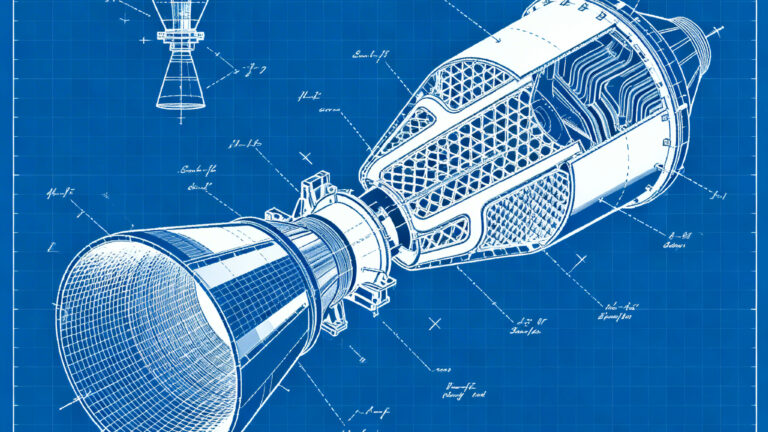
3D printing is revolutionizing the development of hypersonic vehicles, reducing costs and production times. Programs like the Pentagon's HyCAT focus on rapid and reusable test platforms, such as Hypersonix's DART AE demonstrator, entirely 3D printed. Additive manufacturing allows for complex geometries and the use of advanced materials resistant to high temperatures, accelerating

HP MJF Technology in Industrial Services: How to Implement It for Resilient and Responsive Production

HP MJF Technology in Industrial Services: How to Implement It for Resilient and Responsive Production

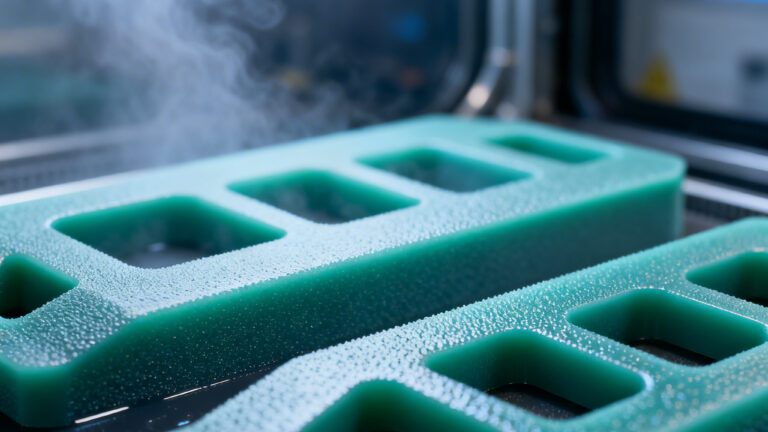
HP MJF Technology revolutionizes industrial production, enabling flexibility, lead time reduction, and digital warehousing. Ideal for sectors such as aerospace, defense, medical, and data centers, it allows for on-demand production of custom components, improving supply chain resilience and reducing costs. Integration with traditional processes and the use of advanced materials make

How to Transform Lunar Regolith into Printable Electronic Components

How to Transform Lunar Regolith into Printable Electronic Components

An ESA project studies how to transform lunar regolith into conductive materials to print electronic components in space, reducing dependence on Earth supplies.

Direct Production of Functional Parts Without Post-Processing: Mechanisms and Advanced Technologies

Direct Production of Functional Parts Without Post-Processing: Mechanisms and Advanced Technologies

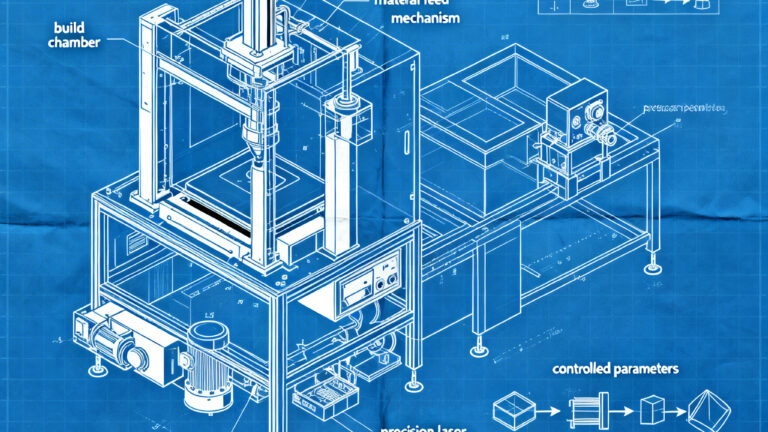
The direct production of functional parts without post-processing represents an evolution of additive manufacturing, aimed at eliminating post-printing processing stages. Thanks to advanced technologies and specialized materials, it is possible to obtain immediately usable components, reducing costs, times, and variability. Sectors such as aerospace and automotive are adopting these s

Smart heat exchangers: thermal efficiency comes from patents

Smart heat exchangers: thermal efficiency comes from patents

New smart heat exchangers, made with 3D printing technologies and patented, offer greater thermal efficiency without pumps or fans. Thanks to innovative geometries such as partial fins and preloaded integration in engines, weight, costs and consumption are reduced, improving reliability and facilitating assembly. Applications in data centers and aerospace confirm adva

Innovative Materials for Industry 4.0: Advanced Solutions in Technical Ceramics and Reinforced Polymers

Innovative Materials for Industry 4.0: Advanced Solutions in Technical Ceramics and Reinforced Polymers

Innovative materials such as technical ceramics and reinforced polymers are revolutionizing Industry 4.0, offering high-performance solutions for sectors like automotive, aerospace, and additive manufacturing. With advanced sintering and production technologies, these materials enable complex geometries and structural applications, also thanks to specialized centers like AMPP. The implementation

Cutting-Edge University Labs: How 3D Printing Transforms Research and Education

Cutting-Edge University Labs: How 3D Printing Transforms Research and Education

3D printing is revolutionizing university laboratories, integrating into teaching and research processes. A key tool for rapid prototyping, it allows students to translate theory into practice, accelerating learning. Case studies such as drones and aerospace components demonstrate the real-world application of the technology, supported by advanced motion capture systems and workflow

The 3D Printing Market Enters the Maturity Phase: Real Growth and New Regional Dynamics

The 3D Printing Market Enters the Maturity Phase: Real Growth and New Regional Dynamics

The 3D printing market reaches $24.2 billion in 2025, with a growth of 10.91%. The sector enters a maturity phase, shifting from machinery to production services. The Asia-Pacific region grows at 19.81%, while Europe and EMEA slow down. Services cover 48% of the market, highlighting an industrial conversion based on real usage and economic return.

In-Process Inspection for Metal 3D Printing: How Calibrated Measurement-Based Quality Control Works

In-Process Inspection for Metal 3D Printing: How Calibrated Measurement-Based Quality Control Works

In-process inspection based on calibrated measurements is revolutionizing quality control in metal 3D printing, replacing expensive post-production checks with precise, proactive monitoring during the process. Technologies like structured light fringe projection allow for real-time measurement of critical parameters such as layer thickness and surface roughness, mi

Ultrafast and High Precision in Industrial Additive Processes: How It Really Works

Ultrafast and High Precision in Industrial Additive Processes: How It Really Works

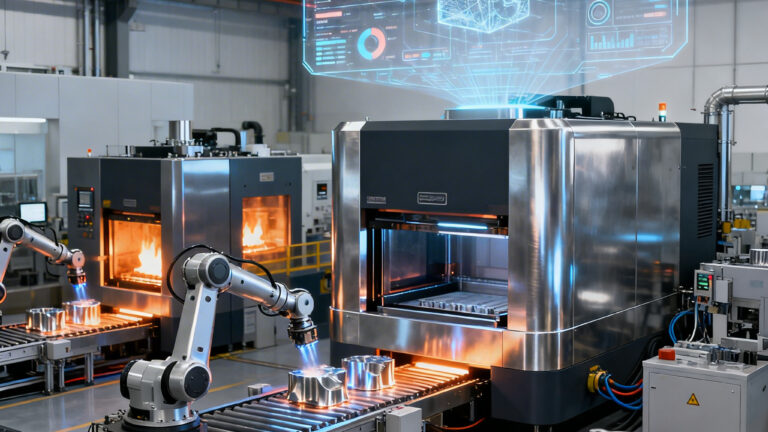
Industrial additive manufacturing today combines speed and precision thanks to advanced technologies such as multi-laser, AI and automated post-processing. Systems like SSLM and TVAM drastically reduce production times while maintaining high quality. High-performance materials – technical polymers, metal alloys and composites – expand applications. Automation in vapor smoothing and depowdering m

Post-Prototype Operational Models in the Advanced Metal Industry

Post-Prototype Operational Models in the Advanced Metal Industry

The advanced metal industry is evolving towards integrated production systems, where every stage of production collaborates in real time. Overcoming the traditional model of isolated departments, a connected architecture emerges that unifies additive, machining, heat treatment, and inspection. This approach reduces inefficiencies, improves stability and productivity, and enables a rapid response p

Sustainability in Industrial 3D Printing: Understanding Environmental and Technological Trade-offs

Sustainability in Industrial 3D Printing: Understanding Environmental and Technological Trade-offs

Industrial 3D printing can reduce environmental impact, but it requires strategic choices on materials, energy efficiency and life cycle management. Although it offers advantages such as less waste and simplification of the supply chain, the real benefit depends on sustainable feedstocks, efficient processes and recovery policies. Studies show that the use of recycled material and energy sources

/