Case Study: OEM

Diagnosing and Resolving Failures in 3D Print Post-Processing

Diagnosing and Resolving Failures in 3D Print Post-Processing

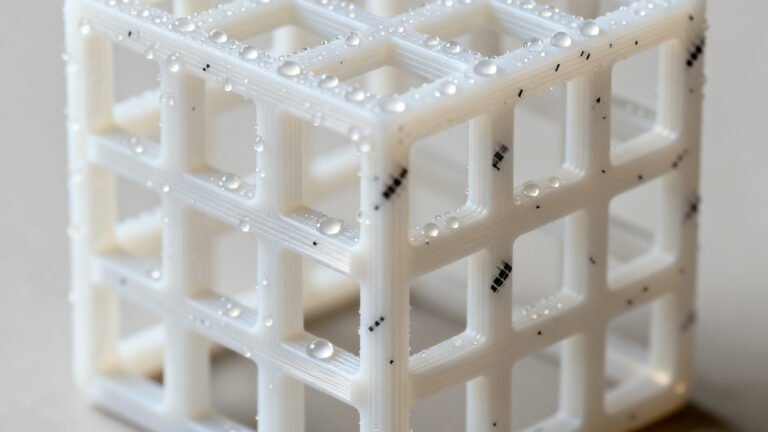
3D post-processing failures cause scrap and costs. Identifying causes (washing, curing, finishing) and applying visual/metrology diagnostics reduces errors, optimizes processes, and cuts scrap.

How Large-Scale SLA 3D Printing is Transforming Industrial Costs

How Large-Scale SLA 3D Printing is Transforming Industrial Costs

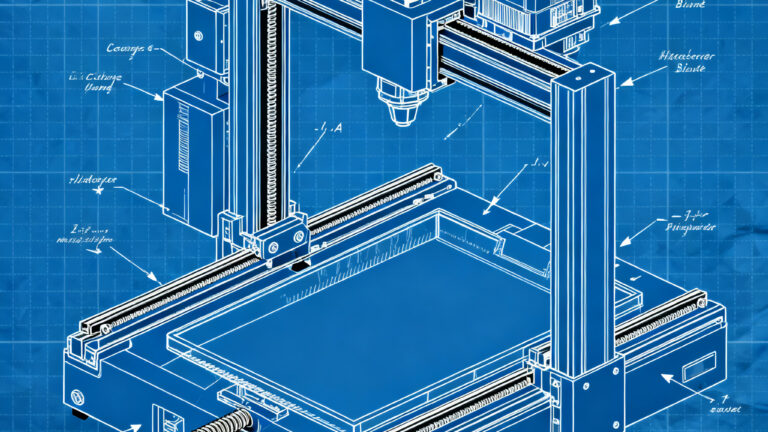
Industrial SLA 3D printing reduces costs and setup times by up to 75%, transforming tooling and prototyping in automotive and aerospace with micrometric precision and savings up to 200,000 $ per project.

The 3D Printing Revolution in the Fashion and Consumer Goods Sector

The 3D Printing Revolution in the Fashion and Consumer Goods Sector

3D printing revolutionizes fashion: rapid prototyping, custom-fit garments, and sustainable on-demand production. Challenges regarding materials and comfort remain, but the future is personalized, distributed, and zero-impact.

New Industrial Automation Technologies Presented at TechManufacturing 2026 Fair

New Industrial Automation Technologies Presented at TechManufacturing 2026 Fair

Formnext 2026 and major fairs show mature additive manufacturing: large parts, AI, IoT, and concrete cases in aerospace, healthcare, and defense for productivity and certain ROI.

The Expansion of 3D Printing in Industrial Applications: Technologies, Materials, and Advanced Use Cases

The Expansion of 3D Printing in Industrial Applications: Technologies, Materials, and Advanced Use Cases

Industrial 3D printing grows beyond 20% annually, moving from 40 to 250 billion dollars by 2035. Automation, aerospace, and defense adopt it for critical parts, cutting costs and times. Challenges: scalability, regulations, skills.

Industrial Additive Manufacturing and Automotive: Advanced Technologies for Industry 4.0

Industrial Additive Manufacturing and Automotive: Advanced Technologies for Industry 4.0

Additive manufacturing is revolutionizing automotive and heavy industry: new materials, cloud-native CAD, AI, and digital traceability enable flexible batches and resilient supply chains.

Optimization of Accessories and Post-Processing Techniques in 3D Printing

Optimization of Accessories and Post-Processing Techniques in 3D Printing

Accessories and post-processing techniques transform 3D printing into professional production: automated washing, chemical smoothing, polymerization, and coloring guarantee industrial-quality finishes on every material.

Optimization of Production Workflows in Industrial Automation: Advanced Strategies for 2026

Optimization of Production Workflows in Industrial Automation: Advanced Strategies for 2026

In 2026, industrial automation focuses on cyber-physical systems, predictive AI, digital twins, and cobots for flexible, safe, and data-driven production flows, overcoming the limitations of traditional lines.

New EU Directives on Industrial Product Safety: Impact on the Manufacturing Sector

New EU Directives on Industrial Product Safety: Impact on the Manufacturing Sector

The EU pushes for shared standards for autonomous systems and additive manufacturing: rigorous qualification, traceability, and ISO/AS certifications to accelerate industrial adoption and reduce risks.

Underwater 3D Printing: New Technologies for Marine Exploration and Conservation

Underwater 3D Printing: New Technologies for Marine Exploration and Conservation

Cornell prints 3D concrete on the seabed using marine sediments: lower costs, zero transport, autonomous robots and reduced environmental impact for sustainable infrastructure.

Metal Additive Manufacturing in the Aerospace and Defense Industry: Advanced Technologies and Critical Applications

Metal Additive Manufacturing in the Aerospace and Defense Industry: Advanced Technologies and Critical Applications

Metal additive manufacturing is now essential in aerospace and defense: lightweight alloys, DMLS/EBM/FFF processes and increasingly stringent certifications reduce weight, times and costs, but powder qualification and supply-chain remain the main challenges.

Flexible and Sustainable Materials: Innovations in Biodegradable Polymers for Industrial Applications

Flexible and Sustainable Materials: Innovations in Biodegradable Polymers for Industrial Applications

Bio-based and recycled polymers are revolutionizing the industry: LFAM and SLS enable high-performance sustainable components, but standards and precise control of material transitions are needed to scale.

/