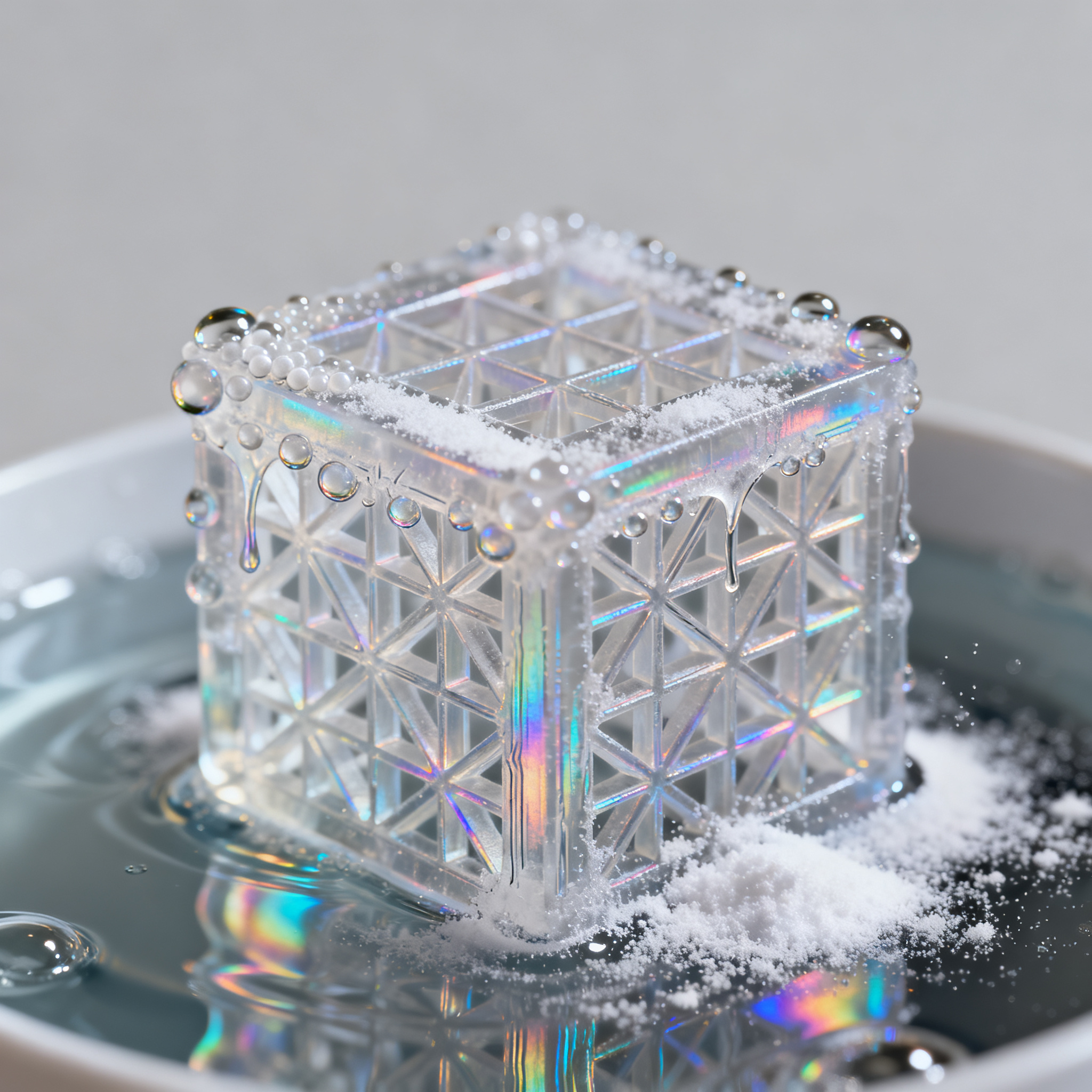
Diagnosing and troubleshooting failures in 3D print post-processing
A good 3D model can become a disaster if you do not master post-processing techniques and cannot recognize critical errors. Failures during the stages following printing represent one of the main causes of waste in additive production, with significant impacts on costs, times, and final quality. Understanding root causes and applying structured diagnostic methodologies is essential to turn every error into an improvement opportunity.
Common causes of failure in post-processing
Problems during post-processing stem from a combination of factors related to materials, machine parameters, and environmental conditions. Correctly identifying the problem category is the first step toward an effective solution.
Defects often occur during washing, polymerization, and surface finishing. For SLA technologies, the most common problems arise with isopropyl alcohol (IPA): inadequate washing times leave unpolymerized resin residues, compromising the adhesion of any coatings and causing persistent stickiness. Each resin requires specific times, and the use of contaminated or exhausted solvents drastically reduces the effectiveness of the process.
Post-polymerization presents criticalities related to temperature and exposure times. High-performance resins require additional cycles with specific heat treatments to reach optimal mechanical properties. The absence or insufficiency of this phase can generate components with lower-than-specification resistance, excessive brittleness, or deformation under load.
For FFF/FDM technologies, difficulties include support removal, which can damage surfaces, and defects emerging during mechanical or chemical smoothing. Smoothing with vapors requires precise control of temperature, time, and solvent type to avoid over-fusion or degradation of mechanical properties.
Powder technologies (SLS, MJF) present challenges in purification and cleaning via blasting. Incomplete purification leaves residual powder in cavities, while excessively aggressive parameters can ruin surface details or alter dimensional tolerances.
Diagnostic methodologies for error identification
Isolating the root cause requires a systematic approach that combines visual inspection, metrological measurements, and analysis of recorded process parameters.
Diagnostics begin with a structured visual inspection of the component. For SLA prints, sticky or matte surfaces indicate insufficient washing, while cracks or excessive brittleness suggest inadequate post-curing. In FFF prints, the presence of strings, blobs, or irregular surfaces after chemical smoothing indicates non-optimal exposure parameters.
The use of metrology tools allows for quantifying deviations from specifications. Digital calipers, micrometers, and 3D scanners verify whether deformations derive from thermal shrinkage during post-curing or from residual stresses released during support removal. For critical components, tensile or compression tests reveal whether the material properties have been compromised.
Systematic recording of parameters is fundamental for traceability. Documenting washing times, solvent concentration, number of parts processed with the same bath, temperatures, and post-curing durations creates a database that allows for correlating defects and operating conditions. Automated systems record parameters, facilitating retrospective analysis.
For powder-based technologies, the analysis of residual powder via microscopy or weighing before and after purification quantifies the effectiveness of the process. The presence of sintered powder in unintended areas indicates problems in the printing parameters rather than in post-processing, requiring an upstream analysis.
Case studies: from error to solution
Concrete examples of failures and corrective procedures demonstrate how systematic analysis transforms recurring problems into optimized processes.
Brittle SLA components: Standard resin parts were breaking during assembly. Washing was performed with contaminated IPA, used for over 70 prints. A replacement protocol was introduced every 50-60 pieces and a double-bath system: first wash in used IPA, second in fresh IPA. Failures decreased by 90%.
FFF chemical smoothing: A manufacturer obtained inconsistent results with surface overfusion. The installation of automated vapour smoothing systems with precise control of temperature, time, and concentration guaranteed repeatable results, achieving finishes similar to injection molding without degrading mechanical properties.
Aerospace SLS components: Residual powder in cavities compromised qualification tests. The adoption of combined automated blasting and purification systems, with control of pressure and flow of abrasive media, guaranteed complete cleaning even of complex geometries, preventing damage to surface details.
Thermal resins: High-performance materials did not reach heat resistance specifications. The implementation of an additional thermal cycle at controlled temperature, according to the manufacturer's specifications, allowed the achievement of the required properties for critical applications.
Conclusion
Mastering post-processing means reducing scrap rates and increasing product reliability. Understanding specific failure causes, adopting structured diagnostic methodologies, and implementing solutions based on real cases transform post-processing from a critical phase into a competitive advantage.
Apply the diagnostic methodologies illustrated to transform every error into an optimization opportunity. Systematically document parameters, implement preventive maintenance protocols for solvents and cleaning systems, and evaluate the adoption of automated solutions to guarantee repeatability and constant quality in additive production.
article written with the help of artificial intelligence systems
Q&A
What is the primary cause of scrap in additive manufacturing after 3D printing?
Failures during post-processing steps—such as washing, curing, and surface finishing—are the main source of scrap, impacting cost, lead time, and final part quality.
How can insufficient washing be recognized in an SLA print?
Sticky or cloudy surfaces show that the IPA has not fully removed the uncured resin; this compromises the adhesion of any coatings and leaves visible residue.
Why is it important to record post-processing parameters?
Logging times, temperatures, solvent concentrations, and number of parts processed lets you correlate every defect to the operating conditions, enabling retrospective analysis and full traceability.
Which measure cut fragile SLA part breakage by 90 %?
Introducing a dual IPA bath (first used, second fresh) and replacing the solvent every 50–60 parts eliminated the contamination that caused brittleness.
What does over-blasting entail for SLS or MJF parts?
Overly aggressive parameters can ruin surface details, alter dimensional tolerances, or damage finishes, driving the component out of specification.