
Flexible and Sustainable Materials: Innovations in Biodegradable Polymers for Industrial Applications
The manufacturing industry is facing a transition toward materials that combine mechanical performance and environmental sustainability. Biodegradable and bio-based polymers represent a concrete response to the challenges of the circular economy, with applications ranging from packaging to automotive, through industrial additive manufacturing.
Definition and Classification of Sustainable Flexible Materials
Sustainable flexible materials are divided into two main categories: bio-based polymers derived from renewable sources and recycled polymers obtained from industrial and post-consumer waste. Among the bio-based, the polyamide 11 (PA11) represents an emblematic case: derived from castor oil, it offers mechanical properties comparable to conventional polymers while maintaining a favorable environmental profile [2].
The program Pragati Initiative demonstrates how sustainability can extend across the entire supply chain, supporting local castor farmers to ensure responsible sourcing [2]. In parallel, recycled materials are gaining ground: the program Virtucycle focuses on the recovery of high-performance polyamides (PA11, PA12), PEBA elastomers and PVDF fluoropolymers, offering certified grades with recycled content from 30% to 95% without compromising performance [7].
The distinction between closed-loop recycling and open-loop recycling is fundamental: the former reintroduces materials into similar applications, the latter directs them to different uses, broadening the impact on global circularity [7].
Production and Processing Technologies
Large-format additive manufacturing (LFAM) is emerging as a key technology for processing sustainable polymers. These pellet-fed systems, used for molds, tooling, and large components, allow different materials to be mixed during production, optimizing costs and performance [5].
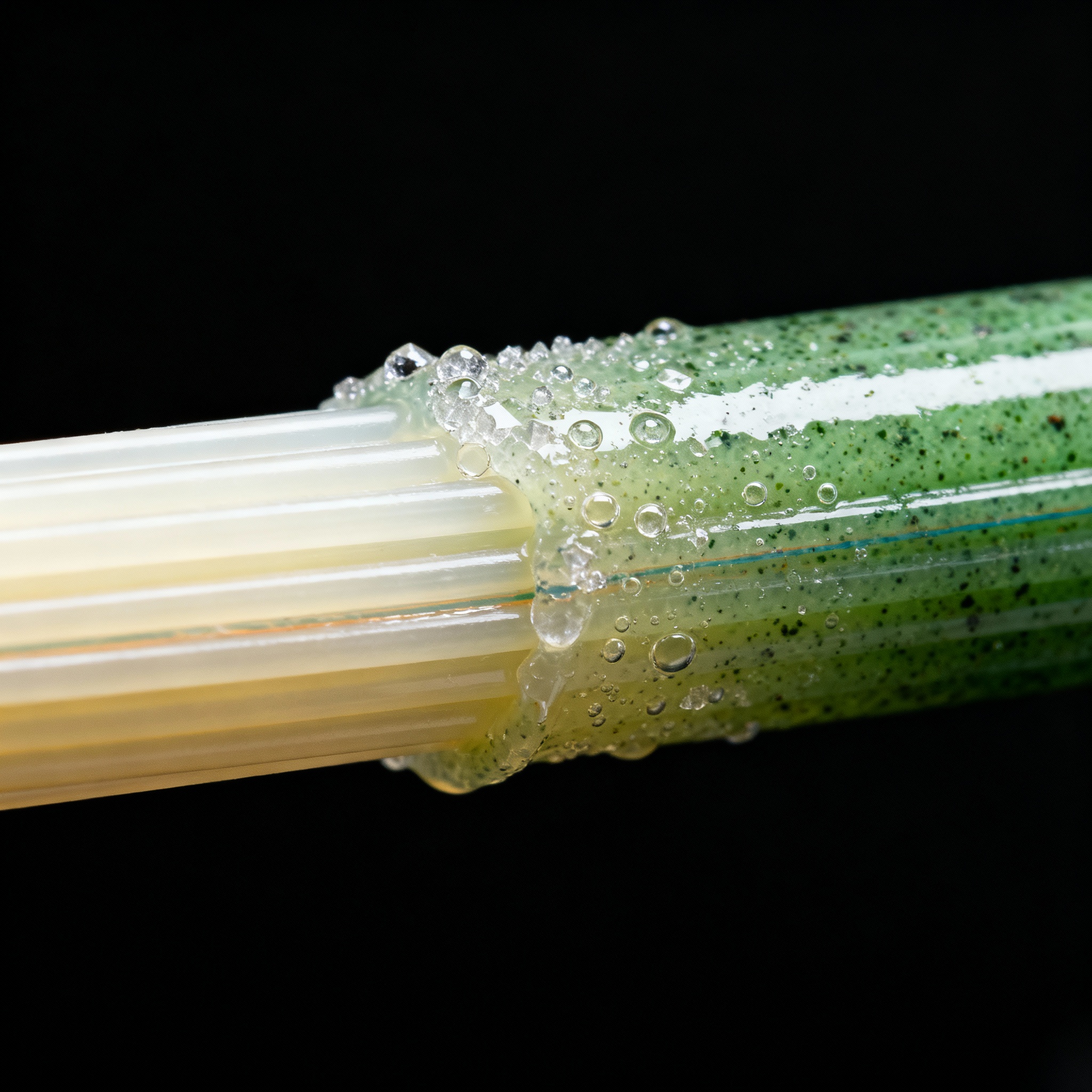
A critical challenge concerns the transition zones between materials: when switching from one type of pellet to another, the extruder does not change composition instantaneously, creating gradients that can affect interlayer adhesion, dimensional precision, and mechanical properties [5]. Research is focusing on the predictability of these transitions, making it possible to plan material changes in non-critical zones of the component [1].
Factors such as humidity, variability of pellet batches, and colorants can alter melt rheology and therefore the transition profile. Compatibility between semicrystalline and amorphous polymers, or between different fibrous fillers, may require adhesion promoters and complex thermal profiles to be maintained over large heated volumes [1].
In the field of selective laser sintering (SLS), the use of recycled powders is becoming established practice. Optimal ratios of 80% virgin powder and 20% recycled powder make it possible to maintain high quality while reducing costs and environmental impact, with accelerated print cycles thanks to optimized build volumes [9].
Mechanical and Ecological Properties
Bio-based polymers such as PA11 offer a remarkable balance between performance and sustainability. Derived from renewable raw materials, these materials have mechanical characteristics competitive with petrochemical alternatives [2].
Certified recycled grades demonstrate that it is possible to achieve properties similar to virgin materials while maintaining significant recycled content. Independent certification (such as that of SCS Global Services) ensures transparency and traceability, essential elements for industrial adoption [7].
In the context of additive manufacturing, mechanical properties depend strongly on the management of material transitions. Poorly controlled transition zones can become weak points for interlayer adhesion, compromising the structural integrity of the component [5]. The ability to predict and control these transitions therefore becomes crucial to ensuring reliable performance.
The energy efficiency of production systems further contributes to the ecological profile: printers designed with over 80% of energy dedicated directly to part production and built with recyclable materials such as aluminum represent a holistic approach to sustainability [9].
Industrial Case Studies: Packaging and Automotive
In the footwear sector, On Running has developed the first fully recyclable shoe in bio-based PA11, sold with a monthly subscription model. This application demonstrates how sustainable materials can integrate into circular business models [7].
Materialise, a leader in 3D printing for eyewear, collaborates with recycling centers to transform spent powders from additive manufacturing into pellets for injection molding, contributing to the goal of reducing carbon footprint by 50% [7]. This approach closes the loop on high-performance polymer materials, avoiding landfill disposal.
In the prototyping and small-batch production sector, the use of recycled powders in SLS has made it possible to save over 2 tons of material from landfill, nearly doubling production capacity. Applications in the recreational, automotive, and agricultural markets demonstrate the versatility of these materials, particularly when customers prioritize sustainability and low costs [9].
Large-format additive manufacturing is used in molds, tooling, and oversized components, where the ability to mix different materials enables optimizations such as rigid cores with tough surfaces, or visual indicators through color changes [5].
Technical Challenges and Future Prospects
Standardization remains an open challenge. Robust evidence is needed on adhesion between polymers, performance stability over time, post-cure behavior, and repeatability across batches [3]. The availability of biocompatible resins and qualified supply chains is essential to broaden adoption in regulated contexts.
For multimaterial additive manufacturing, slicing software must evolve to integrate composition, time, and toolpath. Gravimetric feeders and melt pressure sensors could enable control logic that reaches the target composition in a few passes, but industrial demonstrations are still limited [5].
Material compatibility represents a significant constraint: mixing semicrystalline and amorphous polymers, or different fibrous fillers, requires adhesion promoters and thermal profiles that are nontrivial to maintain over large heated volumes [1]. Batch variability of pellets and environmental factors such as humidity can alter melt rheology, complicating control of transitions.
Large-scale adoption will require concrete, verifiable data: transition lengths in meters as a function of bead size, mechanical specimens extracted across composition gradients, and microscopy showing phase distribution during transients. These data would make it possible to write operating instructions that ensure component performance [1].
Next Steps Toward the Circular Economy
The integration of sustainable materials into industrial manufacturing requires a systemic approach that considers the entire supply chain, from the cultivation of renewable raw materials to post-consumer recycling. Independent certification programs and shared qualification frameworks are creating the common language needed to accelerate adoption.
Additive manufacturing technologies, particularly large-format and pellet-fed ones, offer unprecedented flexibility in handling different materials, but they need maturation in control systems and process predictability. The ability to quantify and manage material transitions will be crucial to transforming multimaterial production from experimental to industrial.
The success of the circular economy in polymers will depend on the convergence of material innovation, evolution of production processes, and business models that enhance reuse and recycling. Current initiatives demonstrate that this convergence is already underway, with measurable economic and environmental benefits.
article written with the help of artificial intelligence systems
Q&A
What are the two main categories of sustainable flexible materials mentioned in the article?
Sustainable flexible materials are divided into bio-based polymers, derived from renewable sources such as castor oil (e.g. PA11), and recycled polymers, obtained from industrial and post-consumer waste with recycled content ranging from 30 % to 95 %.
What role does large-format additive manufacturing (LFAM) play in the use of sustainable polymers?
LFAM enables processing of blended pellets of different polymers to produce large molds and components, optimizing cost and performance; however, it requires precise management of transition zones between materials to avoid mechanical weaknesses.
How is the challenge of transitions between different materials addressed during LFAM extrusion?
Research focuses on the predictability of transitions: moisture, pellet batch variability, compatibility between semi-crystalline/amorphous polymers, and the use of adhesion promoters are studied to plan material changes in non-critical areas of the component.
Which industrial examples demonstrate the concrete application of biodegradable and recycled polymers?
On Running created a fully recyclable shoe in bio-based PA11 with a subscription model; Materialise recycles spent 3D printing powders into injection-molding pellets, cutting carbon footprint by 50 % and saving over 2 t of material from landfill.
What are the main future technical challenges for large-scale adoption of sustainable polymers in multi-material additive manufacturing?
Standardization, verified data on adhesion and long-term stability, advanced slicing software, pressure sensors and gravimetric feeders for real-time control, as well as mechanical and microscopic testing to quantify transitions and ensure industrial repeatability are needed.


