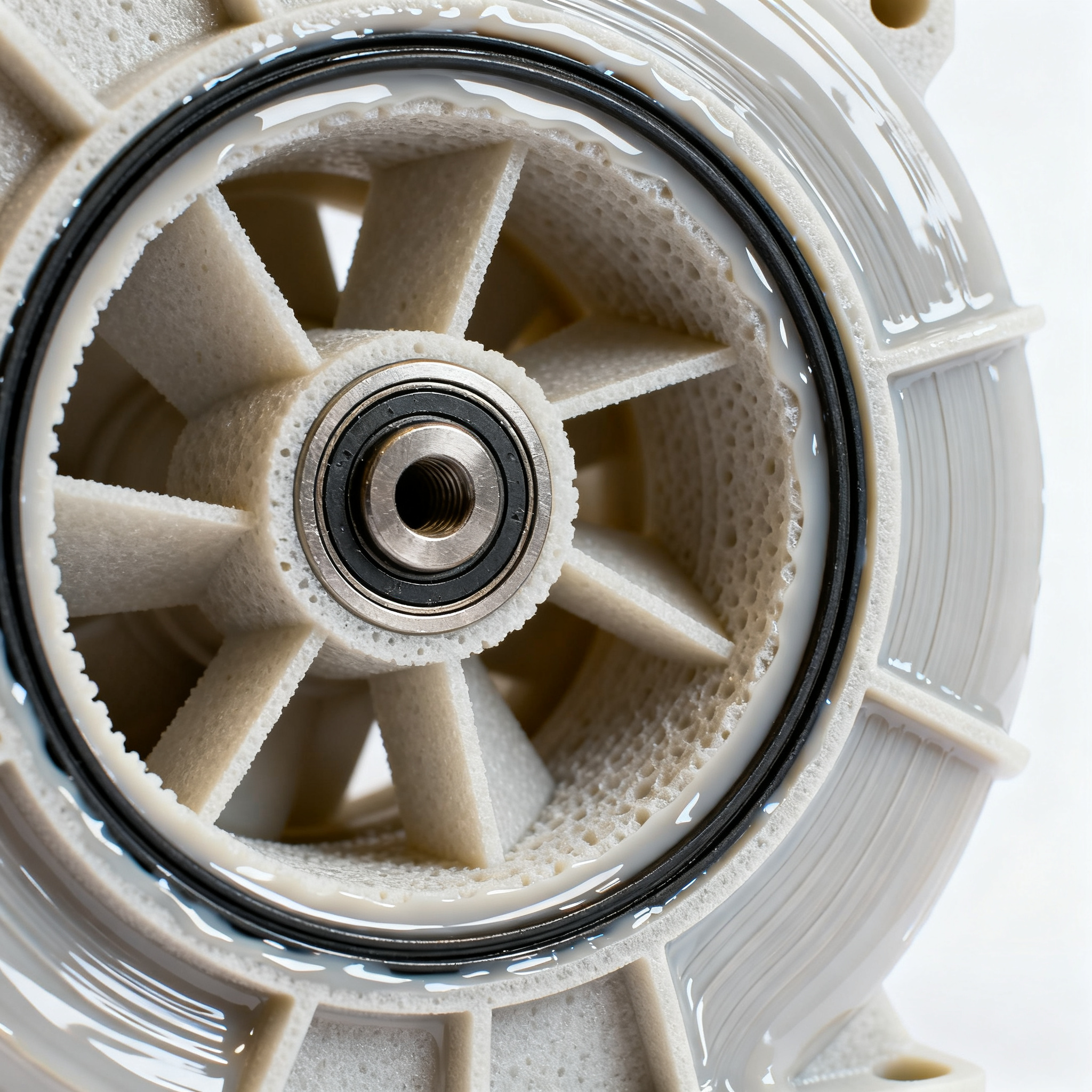
3 components, 1 pump: the trick is in the mounts?
3D printing is no longer limited to producing static objects. With targeted interventions during the process, it is possible to create complex systems such as fully functional centrifugal pumps, integrating bearings and seals while the printer works.
Print-in-Place: when printing becomes assembly
Inserting bearings, o-rings, and shafts during printing allows for reducing the number of parts and increasing the functionality of the final system.
Ben's project from Designed to Make demonstrates how a centrifugal pump can be printed in a single file. However, the process requires precise interventions during printing: a bearing is placed midway through the process, while some filament changes allow for the use of dissolvable supports in critical areas.
This technique does not strictly fall within traditional print-in-place. The advantage lies in eliminating the post-print assembly of complex mechanical components. The impeller and housing have three-dimensional curves that improve efficiency and allow for printing without external supports.
- Bearing inserted midway through the process to support the rotating shaft
- O-rings positioned to ensure fluid seals
- Dissolvable supports printed with automatic filament change
Dissolvable supports: the secret to perfect fluid seals
The choice of support material can make the difference between a leaking prototype and a functioning system.
Dissolvable supports represent the key element for creating complex internal geometries. In the case of the pump, these supports are printed in the areas where the impeller must rotate freely inside the casing. The dissolution process takes about three days but guarantees complete removal without damaging critical surfaces.
The curved geometry of the impeller and casing creates a particular challenge. If the impeller were added during printing, its top part would interfere with the print head. Dissolvable supports solve this problem by allowing the entire structure to be printed continuously.
Smart post-processing: epoxy coating and critical finishing
Targeted post-print treatment improves mechanical strength and seals, especially in high-pressure systems.
After the dissolution of the supports, the pump body is coated with epoxy resin. This coating prevents leaks and reinforces the walls, transforming a plastic prototype into a functional device. The treatment seals the microporosity typical of FDM printing.
Tests conducted by Ben showed impressive performance. Compared with previous designs used to test different impeller configurations, the monoblock pump demonstrated competitive performance in most of the measured categories.
The coating is not just aesthetic: it creates an essential waterproof barrier for systems that handle fluids under pressure, compensating for the intrinsic porosity of FDM printing.
Comparison of approaches: FDM vs alternative technologies
Every technology has distinct strengths: precision, resistance, or speed can determine the success of the project.
FDM printing with dissolvable supports offers a balance between cost and functionality for mechanical prototypes. Geometric freedom allows the creation of shapes optimized for fluid-dynamic efficiency, impossible with traditional machining.
The print-in-place approach with manual interventions requires accurate planning. The three-dimensional curve of the housing eliminates the need for external supports, but imposes constraints on the printing sequence. Every pause to insert components must be programmed at the precise layer.
Pump printing sequence
- Base and lower housing: continuous printing up to the bearing level.
- Bearing insertion: programmed pause to position the bearing and the O-rings.
- Filament change: Switch to soluble material for the pump impeller's internal supports.
- Completion: printing the top part with return to the main filament.
Printable mechanical systems: design from the first layer
Creating functional mechanical systems requires integrated design choices from the CAD modeling stage. The geometry must consider not only the final functionality but also the printing sequence and points for manual intervention.
The centrifugal pump project demonstrates how 3D printing can go beyond simple prototyping. The integration of commercial components during the process and the strategic use of soluble materials open up possibilities for complex systems that can be built without specialized equipment.
Try integrating a bearing during printing and use soluble supports: personally verify the difference between a traditional assembly and a hybrid print-in-place system.
article written with the help of artificial intelligence systems
Q&A
How is it possible to 3D print a functional centrifugal pump in a single piece?
A hybrid technique is used that involves targeted interventions during printing, such as inserting bearings and O-rings mid-process and using soluble supports in critical areas. This approach reduces the number of parts and eliminates post-print assembly of complex mechanical components.
What is the role of soluble supports in the creation of the pump?
Soluble supports allow for the creation of complex internal geometries, such as the space between the impeller and the housing, enabling the impeller to rotate freely after removal. They are printed with an automatic filament change and require approximately three days of dissolution to ensure complete removal without damaging the surfaces.
Why is an epoxy resin coating applied after printing?
The epoxy coating seals the microporosities typical of FDM printing, creating an impermeable barrier essential for systems that handle fluids under pressure. This treatment improves the mechanical strength of the walls and transforms the plastic prototype into a functional device.
At what point in the printing sequence is the bearing inserted?
The bearing is placed during a programmed pause at the precise layer, after printing the base and lower housing and before the filament change for the impeller's soluble supports. It is essential to accurately plan the intervention point to ensure the correct functioning of the system.
What advantages does the three-dimensional curved geometry of the impeller and housing offer?
The three-dimensional curvatures improve the pump's fluid dynamic efficiency and allow printing without external supports. However, this geometry imposes constraints on the printing sequence and makes the use of soluble supports necessary to avoid interference with the print head.