Applicazione: Prototyping

Light Robotics and Multi-Material 3D Printing: How to Build a Soft Humanoid

Light Robotics and Multi-Material 3D Printing: How to Build a Soft Humanoid

Soft robotics and multi-material 3D printing are revolutionizing automation, enabling the creation of lightweight, flexible, and safe robots. Thanks to an innovative process developed at Harvard University, it is now possible to build soft humanoids without molds, integrating rigid and gel-like materials in a single printing process. This technology opens new avenues for applications

Cutting-Edge University Labs: How 3D Printing Transforms Research and Education

Cutting-Edge University Labs: How 3D Printing Transforms Research and Education

3D printing is revolutionizing university laboratories, integrating into teaching and research processes. A key tool for rapid prototyping, it allows students to translate theory into practice, accelerating learning. Case studies such as drones and aerospace components demonstrate the real-world application of the technology, supported by advanced motion capture systems and workflow

The 3D Printing Market Enters the Maturity Phase: Real Growth and New Regional Dynamics

The 3D Printing Market Enters the Maturity Phase: Real Growth and New Regional Dynamics

The 3D printing market reaches $24.2 billion in 2025, with a growth of 10.91%. The sector enters a maturity phase, shifting from machinery to production services. The Asia-Pacific region grows at 19.81%, while Europe and EMEA slow down. Services cover 48% of the market, highlighting an industrial conversion based on real usage and economic return.

Distributed e Gigafactory: How Integrated Production Works on an Industrial Scale

Distributed e Gigafactory: How Integrated Production Works on an Industrial Scale

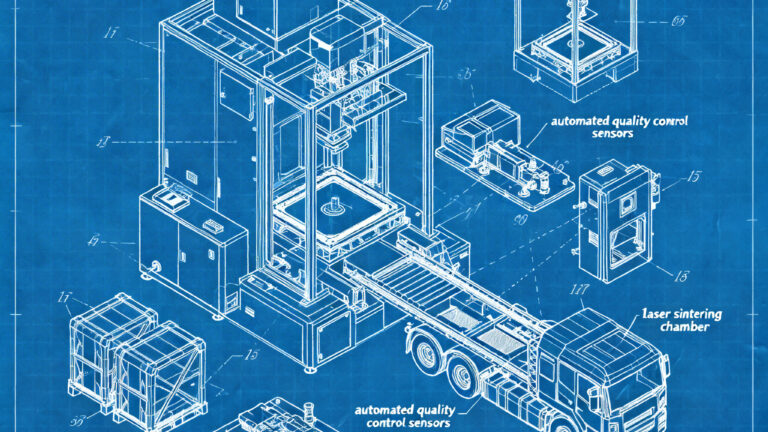
Integrated production on an industrial scale is redefining the manufacturing industry through the physical and digital integration of processes. Advanced automation, data sharing, and artificial intelligence are transforming factories into intelligent, self-optimizing ecosystems, reducing times, costs, and waste.

How 3D Printing is Transforming Dentistry: Technologies, Materials, and Clinical Applications

How 3D Printing is Transforming Dentistry: Technologies, Materials, and Clinical Applications

3D printing is revolutionizing dentistry, enabling the rapid and customized production of dental devices directly in the office. Thanks to technologies like SLA, DLP, and PolyJet and biocompatible materials, it is possible to create crowns, surgical guides, orthodontic models, and prostheses in shorter times, with greater precision and lower costs compared to traditional methods. The integr

How Additive Manufacturing is Redefining the Regional Infrastructure for Resilient Public Services

How Additive Manufacturing is Redefining the Regional Infrastructure for Resilient Public Services

Australia is using additive manufacturing to build more resilient public infrastructure, reducing dependence on foreign suppliers and strengthening local production thanks to collaborations between research, industry, and government.

Prusa PETG Ultraglow vs. Alternatives: Is it the True Leap Forward for Nighttime 3D Printing?

Prusa PETG Ultraglow vs. Alternatives: Is it the True Leap Forward for Nighttime 3D Printing?

Prusa launches PETG Ultraglow, a high-quality phosphorescent filament. Superior to glow-in-the-dark PLA for brightness and durability. Ideal for technical and safety applications thanks to the resistance of PETG and its ability to shine for a long time. Requires hardened nozzles for printing. High cost but justified for professional use.

Microscale Mechanical Analysis: How MultiScale Technology Revolutionizes Non-Destructive Testing

Microscale Mechanical Analysis: How MultiScale Technology Revolutionizes Non-Destructive Testing

Plastometrex's MultiScale technology revolutionizes non-destructive testing through microscale mechanical analysis. It enables the characterization of thin or complex components, with thicknesses up to 0.75 mm, without damaging them. Using indenters of different sizes and a spacing of 1.5 mm, it generates high-resolution maps of mechanical properties, revealing local variations invisible to the

Implementing Industrial Adoption of 3D Printing in Non-Traditional Sectors

Implementing Industrial Adoption of 3D Printing in Non-Traditional Sectors

Industrial adoption of 3D printing in non-traditional sectors, such as automation, robotics, and energy infrastructure, is growing thanks to structured operational plans. By integrating digital design, simulations, and rapid production, companies like Boston Dynamics and Siemens are optimizing products and processes, reducing costs, times, and the number of components.

How Large-Scale Directed Energy Deposition Works: Advanced Melt Pool Control and Precision in Deposition

How Large-Scale Directed Energy Deposition Works: Advanced Melt Pool Control and Precision in Deposition

Large-scale Directed Energy Deposition utilizes real-time melt pool monitoring, targeted deposition, and dynamic modeling to ensure precision, metallurgical quality, and thermal control during the production and repair of large metal components.

Post-Processing and Debinding: How Key Additive Manufacturing Technologies Work

Post-Processing and Debinding: How Key Additive Manufacturing Technologies Work

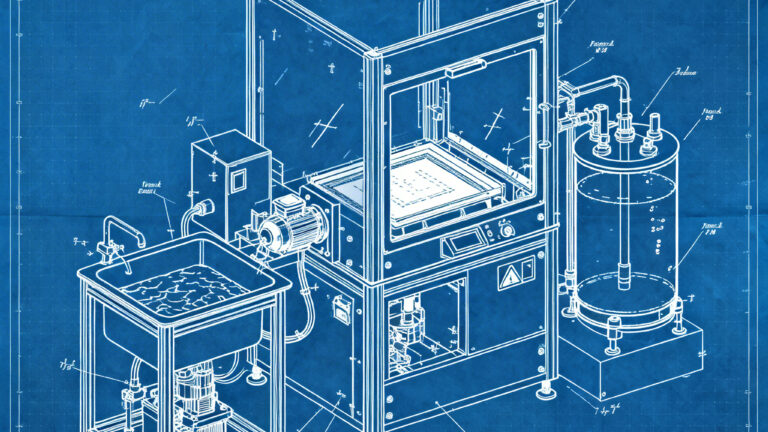
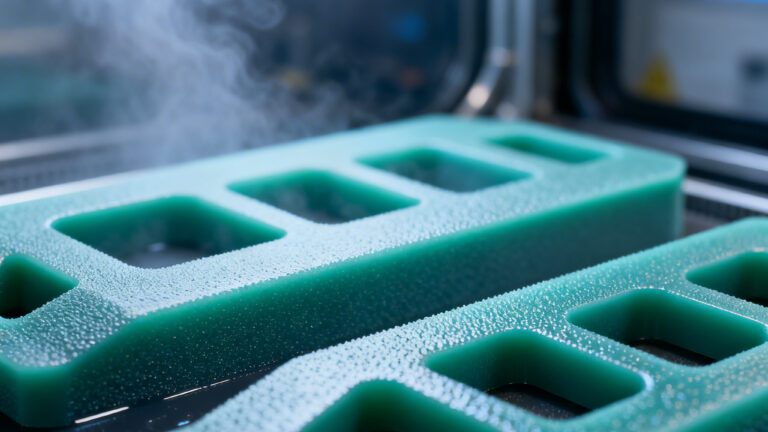
Post-processing and debinding are crucial stages in additive manufacturing that determine the quality, strength, and finish of components. Technologies such as vapor smoothing and chemical debinding improve surface and structural properties, making parts ready for industrial use.

How 3D Anatomical Models Work in Surgical Planning for Medical Education

How 3D Anatomical Models Work in Surgical Planning for Medical Education

Surgical planning with 3D anatomical models is revolutionizing medical education, offering realistic and personalized simulations for surgeon training. Thanks to multi-layer printing technology and radiological data, it is possible to faithfully recreate human tissues, allowing for simulated interventions without risk to patients. Models, used in university and cli

/