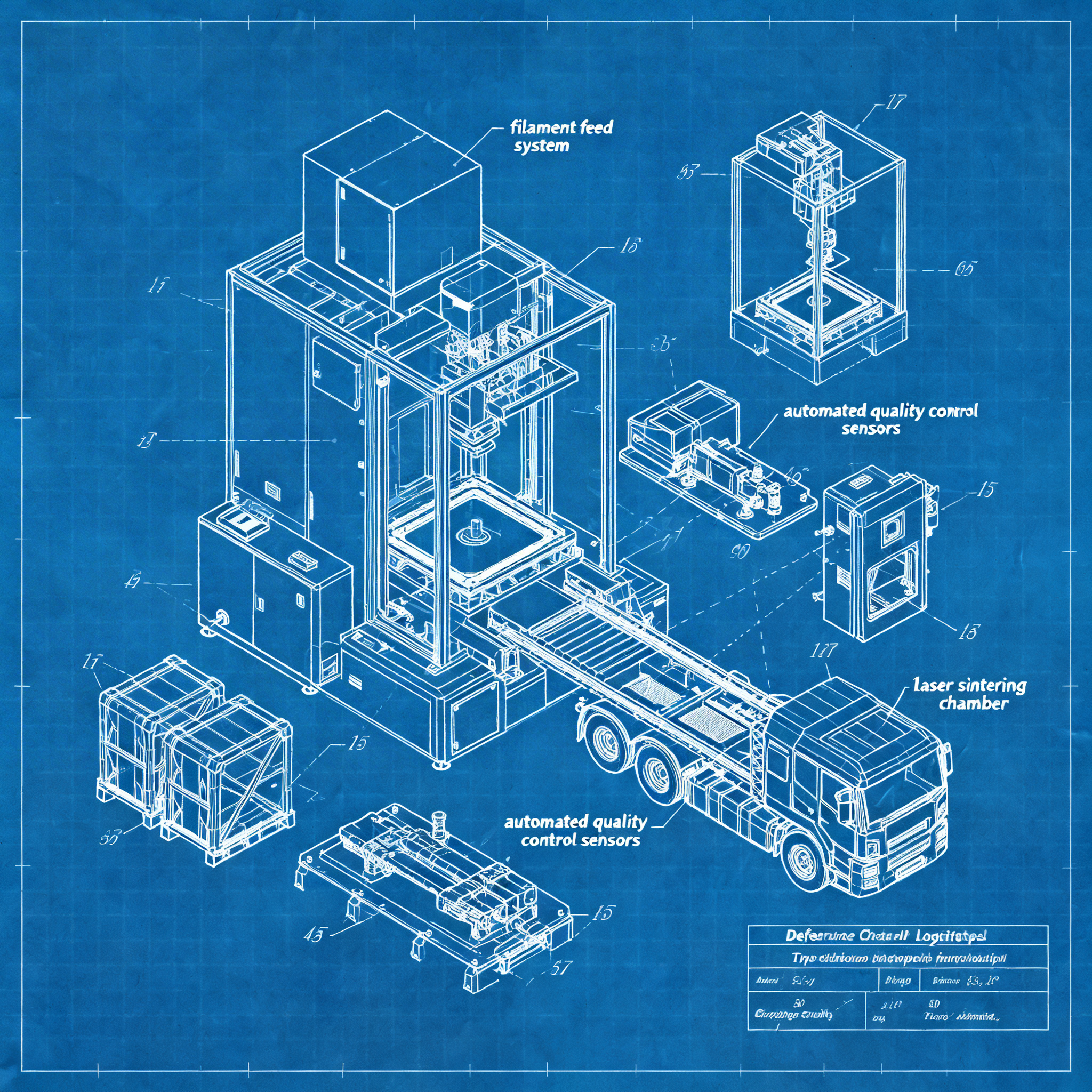
Defensive Supply Chains: How Additive Manufacturing is Redesigning Operational Resilience
The war in Iran has accelerated the adoption of flexible supply chains and advanced production technologies in the defense sector. In just two weeks of conflict, the United States consumed $5.6 billion worth of ammunition, highlighting the urgent need to radically rethink military acquisition and production models. The response comes from additive manufacturing and innovative partnerships between the Pentagon and technology startups, capable of transforming prototypes into operational systems in record time.
Operational Flexibility of Additive Manufacturing in the Defense Industry
The adoption of additive manufacturing enables armed forces to reduce dependence on external suppliers and accelerate the local production of critical components, transforming supply chain resilience into a concrete strategic advantage.
The integration of additive manufacturing in strategic sectors such as military aviation is revolutionizing the very concept of the defense supply chain. The National Institute for Aviation Research (NIAR) received $100 million from DEVCOM GVSC in 2023, demonstrating government commitment to advanced production infrastructure. This synergy between strategically critical sectors represents the key to true supply chain resilience.
The 2026 National Defense Authorization Act introduced bans on the use of exported or digitally connected additive manufacturing hardware from China, Russia, Iran, and North Korea. This move has accelerated reshoring: companies like EOS have invested $3 million in their Texas operations, expanding the metal printer assembly capacity and creating ten new jobs. The 40,000-square-foot facility in Belton, Texas, consolidates logistics and production to maximize service for North American clients and position the company for government contracts.
Military-Tech Startups and Rapid Contracts: The Ursa Major-AFRL Case
A concrete example of how partnerships between government agencies and technology companies are leading to operational solutions in record time, redefining traditional military acquisition parameters.
Ursa Major represents the benchmark model for the new generation of defense suppliers. Less than a year ago, the Air Force Research Laboratory (AFRL) awarded the company $28.6 million to continue the development of the Draper liquid engine, which had completed its first hotfire test in early 2024. The contract included work through early 2027, including an in-flight demonstration.
In less than twelve months, the Air Force has already announced the successful completion of a test flight with the Draper. As part of the Affordable Rapid Missile Demonstrator (ARMD) program, the engine reached supersonic speeds during the exercise, representing a fundamental step toward hypersonic capabilities. This constitutes the next phase of the ARMD program, as Ursa Major's plans for the Draper focus on the engine's role in powering the medium-range hypersonic missile system HAVOC, announced in February.
Brigadier General Jason Bartolomei, AFRL commander, stated: “This project demonstrates that we can transform and leverage our acquisition models to rapidly deliver critical technological advances to deter and win in a future conflict. We are not building a single missile; we are forging a new path toward an economically effective and mass-producible deterrent for the nation.”
From Prototype to Operational Experimentation: The Draper Engine Example
In less than a year, a complex technological project was integrated into an operational configuration thanks to lean processes and integrated digital infrastructures, demonstrating the feasibility of accelerated timelines.
Ursa Major CEO Chris Spagnoletti emphasized the importance of speed of implementation: the transition from contract to operational flight in less than a year represents a paradigm shift compared to traditional military development cycles. The company heavily leverages additive manufacturing in parallel with Draper, working on numerous other modular engine systems in partnership with all major branches of the U.S. armed forces and the private sector.
This modular approach based on advanced manufacturing allows for vehicles with safe, storable, and throttleable liquid engines in drastically reduced time and cost. The ability to rapidly iterate through 3D-printed prototypes and scale production without relying on long traditional supply chains represents a decisive competitive advantage in prolonged conflict scenarios.
The Ursa Major example demonstrates that technology implementation plans can go from conception to operational experimentation in timelines that would have been unthinkable just a few years ago, when military acquisition processes required decades to bring new technologies from the lab to the field.
Conclusion
Advanced manufacturing technologies not only increase speed but also the security of global defense supply chains, redefining the parameters of operational resilience.
The integration of additive manufacturing into defense supply chains is not simply a technological evolution but a fundamental strategic transformation. The ability to produce critical components locally, reduce development times from years to months, and maintain autonomy from geopolitically risky suppliers constitutes a decisive competitive advantage in the current context of global tensions.
The U.S. defense budget for additive manufacturing in 2026 is estimated at $3.3 billion, an 80% increase from 2025. This massive investment reflects the awareness that operational resilience comes through production flexibility and strategic independence.
Explore how your industry can benefit from similar models to improve resilience and production autonomy. Lessons learned from the defense sector — agile partnerships, accelerated timelines, localized production, and exploitation of advanced technologies — are applicable to any industry facing complex supply chain challenges and needing greater control over its production capacity.
article written with the help of artificial intelligence systems
Q&A
Which event accelerated the adoption of additive manufacturing in the defense sector?
The war in Iran highlighted the need for more flexible and responsive supply chains. In just two weeks of conflict, the United States consumed ammunition worth 5.6 billion dollars, pushing the Pentagon toward advanced technological solutions.
How does additive manufacturing contribute to the resilience of military supply chains?
It enables local and rapid production of critical components, reducing dependence on external suppliers. This approach transforms logistical vulnerability into a strategic operational advantage.
What is the meaning of the ban introduced by the National Defense Authorization Act of 2026?
The ban concerns the use of additive manufacturing hardware exported or digitally connected to countries such as China, Russia, Iran, and North Korea. It has pushed companies like EOS to invest in the United States to ensure compliance and security.
How has Ursa Major demonstrated the effectiveness of new military acquisition models?
In less than a year from the start of the contract with the Air Force Research Laboratory, the company successfully completed a test flight of the Draper engine. This represents a radical shift from traditional lengthy military development cycles.
What is the expected impact of additive manufacturing on the U.S. defense budget?
In 2026, the budget for additive manufacturing is estimated at 3.3 billion dollars, representing an 80% increase compared to 2025. This investment aims to strengthen production autonomy and operational resilience of the armed forces.