US Navy 3D Prints Spare Parts: Here's How
The US Navy is transforming its naval logistics through a structured framework called "material maturity." This gradual system allows for certifying 3D printed materials and integrating them into the supply chain without compromising operational safety or reliability.
The Maritime Industrial Base (MIB) program reached a significant milestone in early 2026: the first guidelines for replacing forged or cast components with additive parts. Two of the nine materials under development passed testing. A third was halted because it did not meet required performance.
- "Material maturity" framework to introduce AM without increasing risks
- First interchangeability guidelines available in 2026 for two certified materials
- 70% reduction in logistics lead times thanks to additive manufacturing integration
- Structured process: from basic mechanical testing to tolerance and defect validation
The Material Maturity Framework
A gradual system classifies and certifies AM materials through research, development, testing, and evaluation phases. The goal is to ensure that printed parts can replace legacy components without compromise.
The Navy's material maturity framework rigorously ranks every material produced with additive manufacturing. The process compares performance with traditional materials obtained through casting or forging.
The early phases focus on feasibility tests and basic characterization. Teams evaluate corrosion resistance and mechanical properties on samples and blocks. Subsequently, attention shifts to robustness: sensitivity to process variations, tolerance to defects, effects of post-processing, and long-term performance factors.
Maturation process phases
- Basic characterization: Tests on samples to establish mechanical properties and corrosion resistance.
- Robustness validation: Evaluation of process sensitivity, defect tolerance, and post-processing.
- Interchangeability: Verification that AM parts can replace legacy components without changes to fit or function.
- Logistics integration: Insertion into the official catalog without separate part numbers or additional authorizations.
From Tests to Operational Guidelines
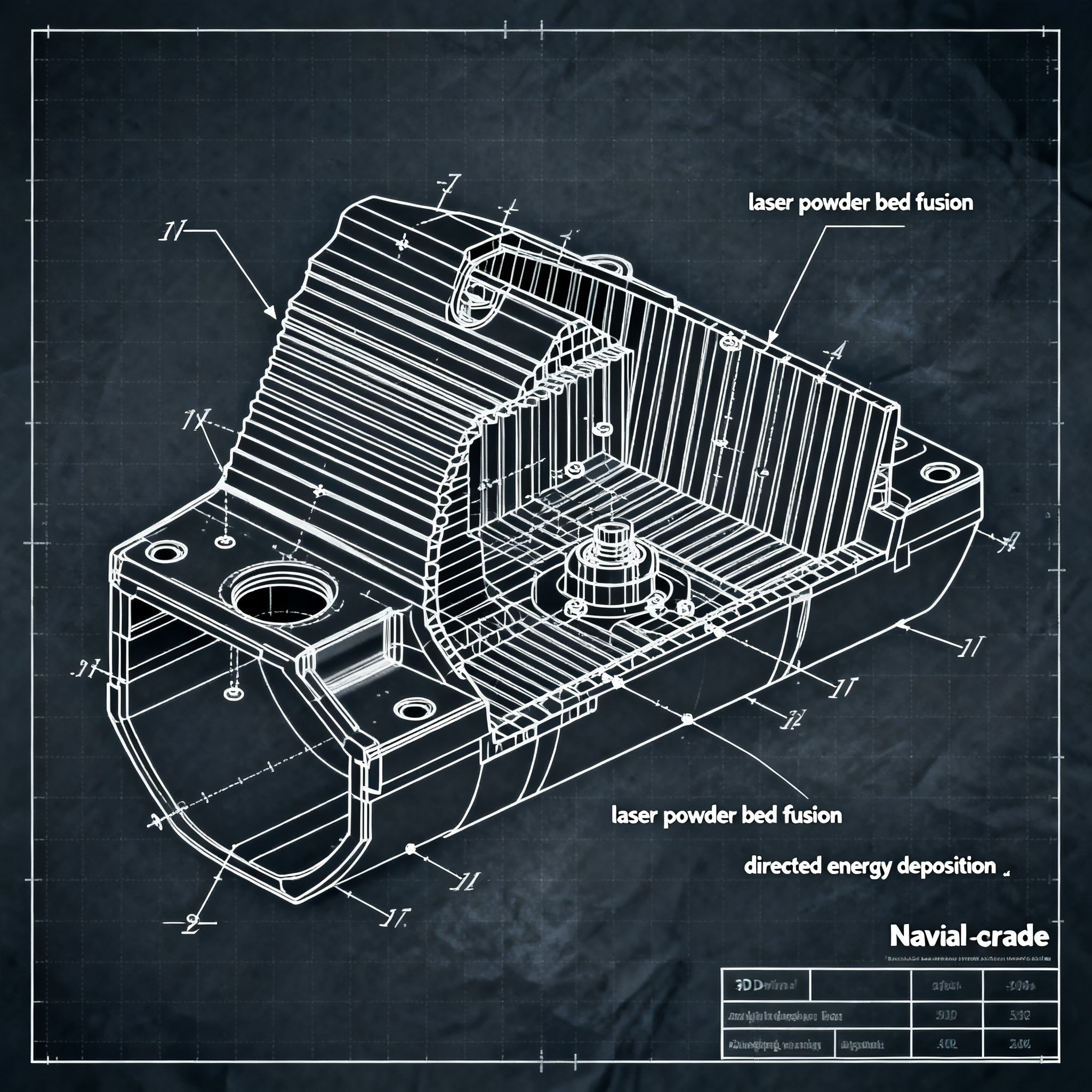
At the beginning of 2026, the Navy developed the first interchangeability guidelines for two materials: one produced with laser powder bed fusion (L-PBF), the other with directed energy deposition (DED).
Interchangeability establishes that parts produced with these materials can replace cast or forged components without affecting installation or performance. From the fleet's point of view, interchangeable parts install and operate as expected.
These parts do not require additional engineering, waivers, or separate part numbers. The framework also demonstrated where adoption must stop: a third material studied was not included in the 2026 guidelines because test samples did not consistently meet required performance thresholds.
Stopping the adoption of a non-ready material protects the fleet from premature use and signals to the industry where further development is needed. This is proof that the framework works as a safety filter.
Transformed Naval Logistics
The integration of AM into logistics depots enables faster restoration times and reduces dependence on external suppliers. The Navy declared a 70% reduction in lead times in 2025.
Interchangeability represents a transition from technical validation to operational execution. From a logistics point of view, it means that certified parts can enter directly into the fleet's supply system.
The Digital SEA platform, officially launched by Austal USA in 2026, provides a digital clearinghouse that unifies the progress made so far. Developed in partnership with Sabel Systems, C3 AI, and EdgeTI, the platform accelerates the expansion of the certified parts catalog.
Austal USA has already helped the Navy develop over 70 parts scheduled for installation on the fleet. The launch of Digital SEA is expected to further accelerate this growth, enabling new suppliers to benefit from the already validated framework.
| Appearance | Traditional logistics | With integrated AM |
|---|---|---|
| Lead time average | Over 6 months | 70% reduction |
| Supplier dependency | High | Reduced |
| Production point | Centralized | Near the point of use |
| Obsolescence management | Problematic | Digital files available |
Practical Cases By 2026
The first two certified materials will officially enter the spare parts park. One uses laser powder bed fusion, the other directed energy deposition. Both can replace forged or cast components.
The 2026 interchangeability guidelines cover specific applications validated through the material maturity framework. Certified parts do not require separate part numbers or additional approvals: they are installed like any standard component.
Nikon AM Synergy has received a FORGE contract from the Defense Innovation Unit to increase the use of metal parts on air-transported systems and replace cast components. The approach focuses on high-volume, high-criticality production, with full qualification capabilities.
The MIB program continues to work on the remaining seven materials in development. Each material follows the same structured path: characterization, robustness validation, interchangeability testing, and logistics integration.
Conclusion
The systematic approach of the US Navy to material maturity represents a replicable model for other high-reliability sectors. The framework balances innovation and operational safety through rigorous validation phases.
Success is measured not only in certified parts but also in the ability to halt adoption when materials are not ready. This rigor builds trust in the system and protects critical operations.
Do you want to understand how to integrate AM into your critical processes? Start with a structured framework like the Navy's: gradual characterization, robustness testing, and interchangeability validation before operational adoption.
article written with the help of artificial intelligence systems
Q&A
What is the objective of the 'material maturity' framework adopted by the U.S. Navy?
The objective is to gradually certify materials produced with additive manufacturing (AM) to integrate them into the naval supply chain without compromising safety and operational reliability.
How many materials were certified by the beginning of 2026 and what do they allow?
Two out of nine materials under development were certified by the beginning of 2026. They allow replacing forged or cast components without requiring additional modifications or approvals.
How does additive manufacturing contribute to naval logistics according to the article?
AM reduces logistics times by 70%, decreases dependence on external suppliers, and enables production near the point of use, improving obsolescence management.
What happens to materials that do not pass the qualification process?
Materials that fail to meet required performance standards are excluded from adoption, thus protecting the fleet from premature use and indicating to industry where further development is needed.
What is the role of the Digital SEA platform in the MIB program?
Digital SEA serves as a digital clearinghouse that unifies advances in AM, accelerates the expansion of the catalog of certified parts, and allows new suppliers to join the existing framework.