Industrial Integration 4.0: Practical Cases of Adoption in Production Processes
Industry 4.0: 3D printing, AI, digital twin, and robotics merge into open ecosystems, transforming production, supply chains, and skills.
Manufacturing Industry 4.0: 3D printing, AI, digital twin, and robotics merge into open ecosystems, transforming production, supply chains, and skills.
Manufacturing In 2026, additive manufacturing exits the pilot phase: aerospace, automotive, data centers, and oil & gas adopt it into true production, but slowly. The winner integrates processes, not just sells machines.
Manufacturing Intelligent software, low-code automation, and cloud optimize business workflows: they eliminate bottlenecks, integrate legacy systems, enable real-time monitoring, and transform measurement data into strategic insights for quality and resilience.
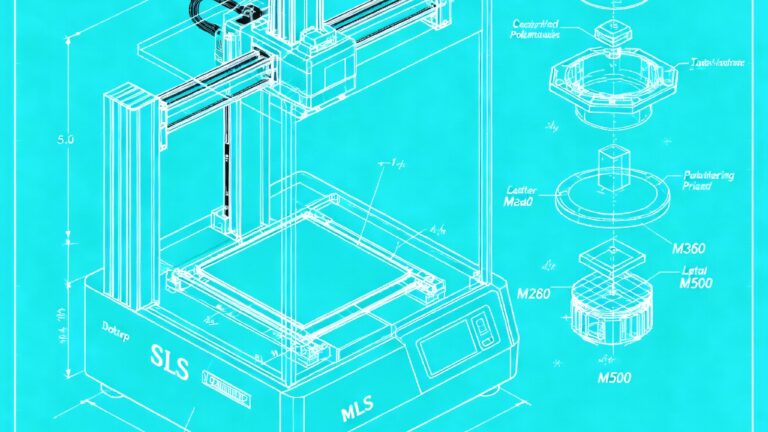
Manufacturing In 2026, desktop and industrial 3D printers will break down technical and economic barriers: low-cost SLS and metals for everyone, Industry 4.0 automation and advanced materials transform additive manufacturing into mainstream manufacturing.
Manufacturing Industry 4.0: 3D printing, rigorous qualification, and sustainability reduce the costs and times of large-scale production.
Manufacturing Quality Control 4.0: real-time 3D data, automated inspections, and the digital thread transform manufacturing, reduce rework, and make quality a competitive asset.
Manufacturing Additive manufacturing towards circularity: Arkema, Nexa3D and other players recycle powders and polymers, cut waste and costs, certify LCA, transforming waste into new products.
Manufacturing 3D printing revolutionizes luxury and automotive: Subaru produces accessories in-house, Bentley uses 3D platinum, PRO creates ultra-lightweight saddles. More sustainability, customization, and impossible design.
Innovations 2026 will be a key year for 3D printing: the AMUG in Reno (March 15-19) offers 150 technical sessions, competitions, awards, and courses on AI and industrial qualification, to update skills and build networks.
Manufacturing AI and 3D printing merge: MeshyAI and Creality democratize production, accelerate industrial repairs, and reduce waste, but require new skills and regulations.
Manufacturing Industrial 3D Printing: United Utilities cuts emissions by 50%, FieldFab prints in flight, Bath eliminates PFAS. Fast, green, on-demand solutions for water, defense, hydrogen.
Manufacturing Industrial 3D printing is mature: SLA at large scale, advanced materials, and safety standards are driving aerospace, defense, and construction. Cost reduction, digitalization, and multi-material capabilities are the keys to scaling.