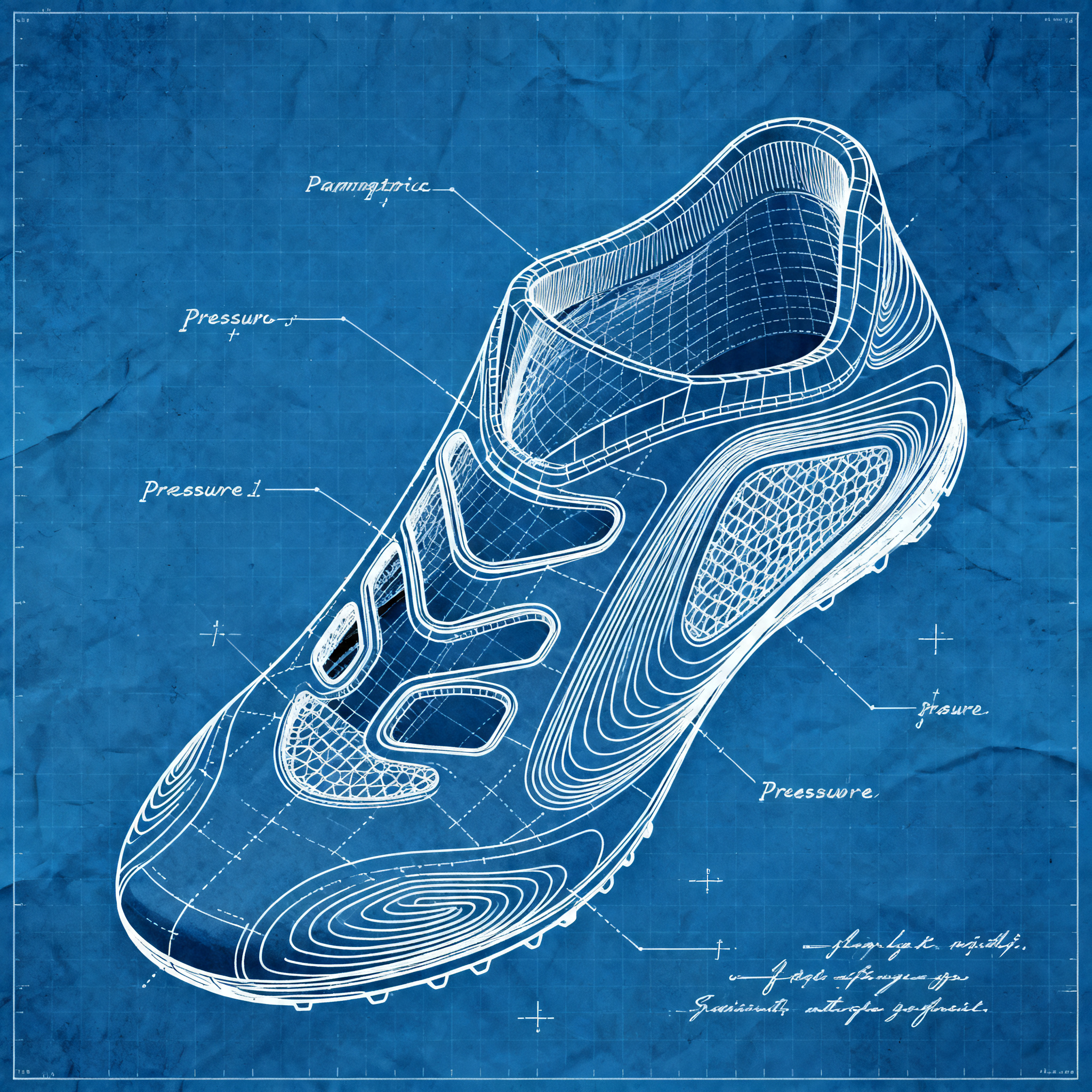
Customizing at scale? Here's how it's done in the sports industry
Large-scale customization is no longer a luxury but a necessity in the sports industry: here's how some players are turning this challenge into a competitive advantage.
Mass customized production in the sports industry is becoming a reality thanks to 3D printing. Shoes, glasses and sports equipment are now produced tailored to individual anatomy or specific contexts. This capability is not just about consumer products: the lessons learned from mass customization also have value for those producing industrial components.
- 3D printing allows sports equipment to be customized by eliminating dependence on molds
- Parametric design and AI manage thousands of variants without impacting costs
- NASCAR and other professional teams produce functional components in 4 weeks
Case studies: who is winning with customization
Analysis of real cases in which sports companies have integrated large-scale customization systems while maintaining margins and acceptable delivery times.
DI Labs and its sister company Threedom demonstrate how customization works in practice. Threedom serves the aftermarket accessories market for Jeep, while DI Labs focuses on higher volumes. Lessons learned in one business inform the other, creating operational synergies.
LEGACY MOTOR CLUB in NASCAR represents an even more extreme case. The team uses two BigRep STUDIO 24/7 printers to produce functional components that go directly onto race cars. It takes about four weeks to go from raw material to a complete car.
A concrete example: the nose ducts for the front brakes are single-use parts not practical to make in carbon. The team also prints a large plenum for cooling the gears in the rear of the car. This component cost $2,000 per unit when purchased externally. By printing it internally with high-temperature materials, the material cost was drastically reduced.
Implementation procedure
- Mechanical data collection: Acquire performance data required by the sports equipment for different functional regions.
- Parametric model generation: Create cavity and structure models based on the collected mechanical data.
- Printing in a pressurized environment: Use 3D printers in controlled environments to ensure the internal pressure of hollow structures.
AI and parametric design: the engine of scalability
How artificial intelligence and parametric modeling allow for the management of thousands of variants without impacting production costs.
Parametric design is the key to making customization scalable. Instead of designing each variant manually, rule-based systems are created to automatically generate the necessary geometries. Brian and Carl Douglass of DI Labs explain that volume is not critical for mass customization: what matters is the ability to manage variability efficiently.
Artificial intelligence comes into play during the product development phase. AI can analyze mechanical data and automatically generate optimal cavity distributions, structures, and air pressures. This approach allows for defining specific functional regions within the structure of sports equipment, providing different structural designs and internal pressures for different areas.
The patented technology combines 3D printing with pressurized hollow structures to achieve excellent bounce performance, customizable according to the individual needs of users.
A recent patent describes how mechanical data is transformed into models of hollow structures with internal pressure. The model is then imported into a 3D printer that operates in a pressurized environment or is equipped with an internal pressure increase module. This ensures that the structure maintains the desired mechanical properties.
Industry vs. Maker: two worlds, two logics
Key differences between B2B industrial production and the B2C hobbyist approach in terms of technology, materials, and production volumes.
Mass customization for industrial applications requires large-format printers with accurate dimensional control. LEGACY MOTOR CLUB emphasizes that components like the cooling plenum are too large for hobbyist printers. Industrial systems with large build volumes are needed.
Materials represent another fundamental difference. Industrial applications use engineering-grade filaments that survive in harsh environments like those of NASCAR racing. Teragon Gear prints titanium tent stakes, offering a 401% weight savings compared to standard aluminum stakes.
| Appearance | Industrial B2B | Maker B2C |
|---|---|---|
| Materials | Titanium, nylon SLS, high-temperature composites | PLA, standard ABS |
| Print volume | Large format (e.g., BigRep STUDIO) | Desktop, small volumes |
| Application | End-use functional components | Prototypes, custom accessories |
| Setup costs | Significant investment | Accessible |
The hobbyist approach focuses on aesthetic customizations and comfort. The automotive aftermarket for Jeep served by Threedom seeks custom accessories that express individuality. These products do not necessarily need to withstand extreme loads but must be attractive and easy to produce.
Conclusion
Mass customization is feasible in the sports industry when choosing the right technologies and designing scalable processes. Parametric design and AI eliminate traditional bottlenecks in customization. Large-format industrial printers allow for the production of functional components that previously required costly outsourcing and long lead times.
The NASCAR and sports equipment cases demonstrate that custom production does not sacrifice quality or efficiency. Explore the solutions presented and evaluate how to adapt them to your production context.
article written with the help of artificial intelligence systems
Q&A
What technologies enable large-scale customization in the sports industry?
3D printing and parametric design are the main technologies that allow for large-scale customized production. Thanks to these, it is possible to create custom sports equipment without increasing costs.
How is artificial intelligence used in custom production?
Artificial intelligence analyzes mechanical data to automatically generate optimized structures and pressure distributions. This process allows managing thousands of variants without impacting production costs.
What advantages has the NASCAR Legacy Motor Club team gained with 3D printing?
The team has drastically reduced costs for certain components, such as the cooling plenum, from $2,000 to just a few dollars in material. Additionally, they can produce functional components in just four weeks.
What is the role of parametric design in scaling customization?
Parametric design allows creating models based on automatic rules, avoiding manual design of each variant. This system makes customized production scalable and independent of volume.
What are the differences between B2B industrial production and B2C maker approach?
B2B production uses large-format industrial printers and durable materials like titanium for functional components. The B2C maker approach instead focuses on aesthetic objects with standard materials like PLA or ABS, at lower costs.