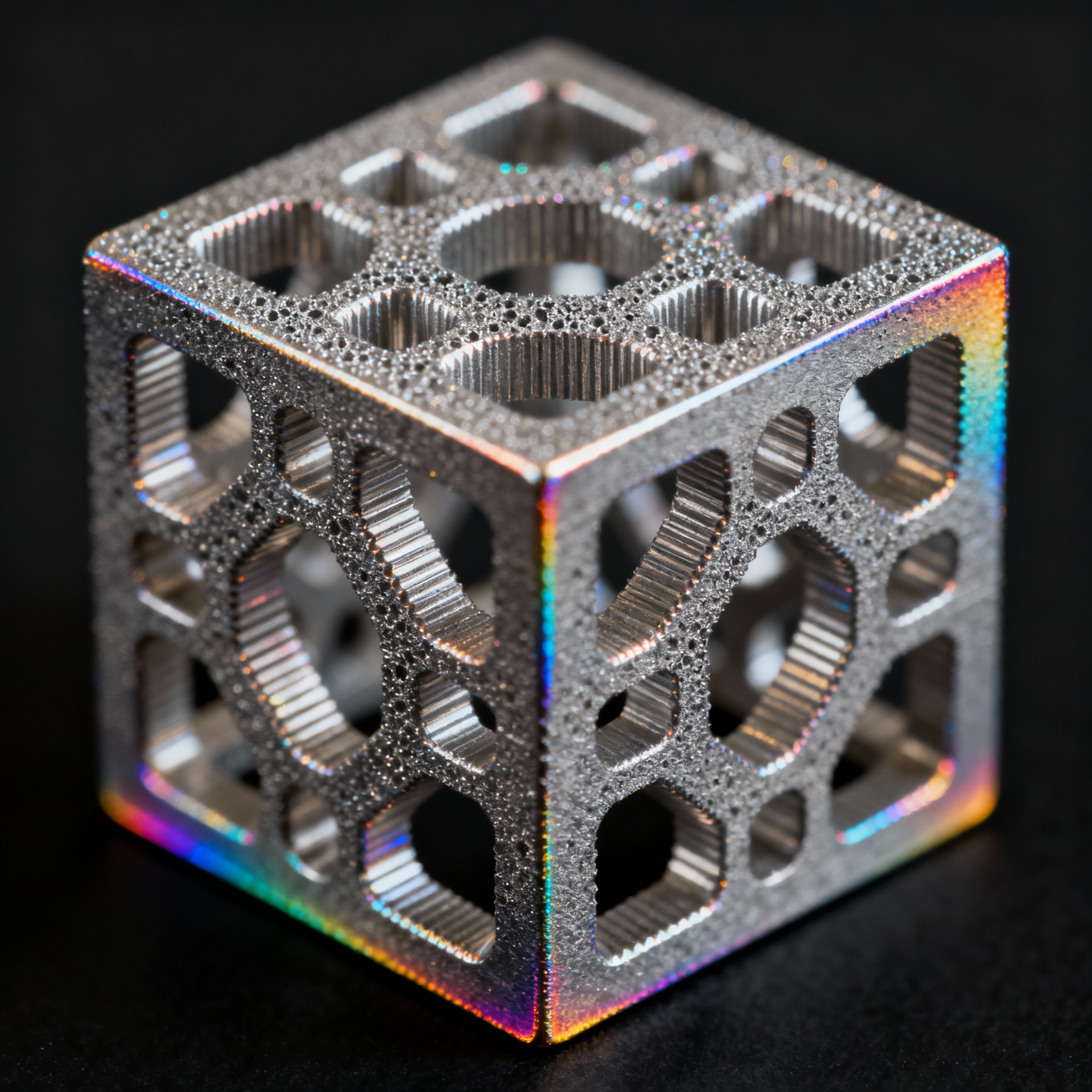
Advances in metal and industrial 3D printing technologies
Innovations in Metal 3D Printing
Metal 3D printing is undergoing a phase of unprecedented innovation: safer, more accessible, and higher-performing solutions are entering the market. The South Korean company MetalPrinting has launched the Gauss MT90, a compact printer that uses metal paste extrusion (PME). This technology eliminates the risks associated with powders, high temperatures, and potential explosions typical of traditional laser welding-based processes.
The Gauss MT90 integrates a Quick Start mode that automatically configures process parameters, allowing printing to start in a few minutes. The system includes a HEPA filter to trap emissions and LED status indicators. It is compatible with SUS 316L, copper, titanium, and aluminum, and thanks to a precision dispensing algorithm, it produces high-resolution components such as heat sinks and electronic elements with lower consumption compared to high-power laser systems.
Meanwhile, Meshy has developed a platform that automates the most complex phases of the workflow, from mesh repair to full-color production. The software adapts geometry to product constraints, suggesting materials, finishes, and printing parameters—including colors and slicing—based on the shape and intended use.
Developments in Industrial Additive Manufacturing
A group from the University of Texas at Austin has presented Holographic Metasurface Nano-Lithography (HMNL), a technique capable of printing chip packages and electronic structures in a single pass, with speed and detail impossible to achieve with traditional lithography. The process exploits ultra-thin metasurfaces that, when illuminated, project holograms into a hybrid resin which solidifies into precise microstructures. The project, funded by DARPA with 14.5 million dollars, involves the University of Utah, Applied Materials, Electroninks, NXP Semiconductors, Northrop Grumman, Bright Silicon Technologies, and Texas Microsintering.
Researchers from Nagoya University have created aluminum alloys optimized for mechanical strength and heat tolerance up to 300 °C, using low-cost, readily available, and recyclable elements. The new compositions are easier to print compared to conventional high-strength alloys, which are often prone to cracking and deformation.
Applications and Industrial Impact
The Meshy system enables moving “from prompt to product” without CAD expertise, generating physical objects from textual descriptions. Founder Ethan Hu states: «We have automated the most difficult parts of the process, from mesh repair to full-color production. Now anyone who can type a prompt can hold a professional-level collectible object in their hand.».
In the automotive and aerospace sectors, new Japanese aluminum alloys are paving the way for lightweight components for compressor and turbine rotors. The aerospace industry, in particular, benefits from materials that combine lightness and thermal resistance.
The partnership between CNPC Powder and Brose transforms steel scrap from the Chinese automotive supplier's production lines into iron powders for additive manufacturing, strengthening the sustainability of the entire supply chain.
Technical challenges and solutions
Researchers from Xiamen University and Berkeley addressed the issue of supports in thermosetting resins by combining direct ink writing and laser polymerization. The beam solidifies the resin immediately upon exiting the syringe, eliminating immersion baths and auxiliary structures and enabling “mid-air” printing.
For aluminum alloys, microstructure control is crucial: metastable phases strengthen the metal, while titanium promotes fine grains and greater ductility. Professor Naoki Takata explains: «Our method is based on established scientific principles regarding the behavior of elements during the rapid solidification of 3D printing and is applicable to other metals.».
Market trends and outlook
By 2026, the defense and aerospace sectors demonstrate that additive manufacturing has surpassed the prototyping phase to enter real and critical applications. The approval of the National Defense Authorization Act (NDAA) in the United States formally recognizes additive manufacturing as critical infrastructure for the Department of Defense, influencing the design, validation, production, and maintenance of components for aviation, ships, and land systems.
Asian manufacturers are no longer limited to desktop models: QBeam, Xi'an Sailong Metal, and JEOL enter the electron beam melting (EBM) market, while Farsoon, E-Plus-3D, and BLT strengthen metal additive manufacturing technologies, competing with traditional Western players.
Conclusions
Innovations in metal and industrial 3D printing are reshaping the manufacturing landscape. Gauss MT90 democratizes metal printing, HMNL revolutionizes semiconductor production, new aluminum alloys solve strength and printability issues, while support-free processes reduce time and waste materials. Circular economy initiatives and the recognition of additive manufacturing as critical infrastructure confirm that the technology is mature: no longer an experimental tool, but a strategic pillar of modern manufacturing.
article written with the help of artificial intelligence systems
Q&A
How does the Gauss MT90 printer from MetalPrinting improve safety compared to traditional laser systems?
It eliminates the use of metal powders and high temperatures, avoiding explosion risks and contact with hazardous materials. The process relies on extruding metal paste, which is more stable and safe.
What is the main advantage of the Meshy platform for users without CAD skills?
Meshy automates the entire workflow, from mesh repair to full-color object generation, allowing a physical product to be obtained starting only from a text prompt.
What role does Holographic Metasurface Nano-Lithography (HMNL) play in the semiconductor sector?
It enables chip packages and electronic structures to be printed in a single pass, with speed and precision superior to traditional lithography, thanks to metasurfaces that project holograms onto hybrid resin.
Why are the new aluminum alloys developed by Nagoya University more suitable for 3D printing?
They are formulated with low-cost, recyclable elements, withstand up to 300 °C, and are less prone to cracking or warping than conventional high-strength alloys.
How does the partnership between CNPC Powder and Brose contribute to sustainability in additive manufacturing?
It turns steel scrap from production lines into reusable iron powders for 3D printing, reducing waste and closing the production loop in a circular economy perspective.
What does the recognition of additive manufacturing in the U.S. NDAA indicate for the future of the sector?
It confirms that the technology is regarded as critical defense infrastructure, moving beyond the prototyping phase and becoming strategic for producing aerospace, naval, and land components.