Can hydrogen really be safe? Yes, if you 3D print it
Hydrogen promises clean propulsion for aircraft and vehicles, but its tiny molecules can seep into welded joints, triggering fractures in metals. Today, 3D printing eliminates these weak points at the root.
- HYDROGEN NOZZLE WITH MULTIPLE FLOW CIRCUITS — 22 April 2026
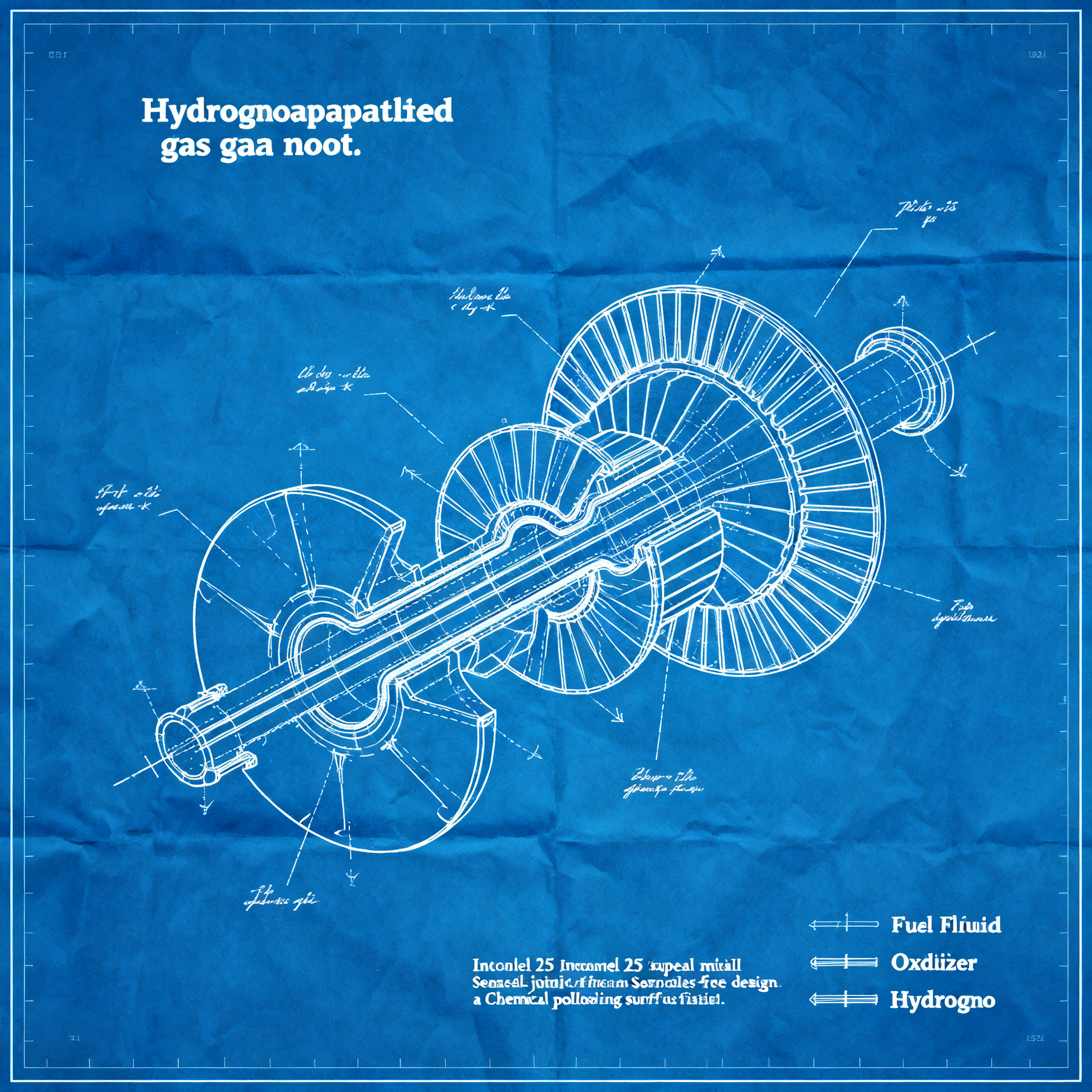
A gas turbine nozzle, made via 3D printing with hydrogen-resistant alloys, solves two critical problems: leaks through joints and metal embrittlement. The component is produced in a single piece, without any welding. The internal surfaces then undergo chemical polishing to minimize hydrogen buildup.
Why is hydrogen still difficult to use?
Hydrogen is a powerful but problematic fuel: small imperfections can cause leaks or serious breaks.
Hydrogen molecules are so minute that they can easily penetrate the welded joints of traditional components. Once inside, they cause leaks and can trigger premature combustion.
The most insidious problem is embrittlement, i.e., the weakening of the metal. Hydrogen accumulates in surface cracks and pores, weakening even normally robust alloys. This phenomenon drastically reduces the useful life of components.
In traditional assembled components, every weld or connection represents a critical point where hydrogen can infiltrate and cause structural failures.
How 3D printing changes the rules
With additive manufacturing, it is now possible to build components without critical welds, using alloys resistant to embrittlement.
The nozzle described in the patent is manufactured entirely using additive manufacturing techniques. Technologies such as laser powder bed fusion or electron beam powder bed fusion allow the part to be created layer by layer, eliminating every joint.
Material choice is fundamental: Inconel 600 or 625, nickel-chromium superalloys already used in the aerospace sector for extreme conditions, offer greater resistance to embrittlement compared to traditional metals.
- Total elimination of welded joints
- Complex geometries impossible with traditional machining
- Surface roughness reduced below 5 µm after chemical finishing
After printing, the internal channels are smoothed via chemical milling. Reagents such as hydrochloric acid or nitric acid remove microscopic irregularities, reducing the surface area available for hydrogen accumulation. Roughness can drop below 20 µm, in some cases down to less than 5 µm.
A controlled surface finish reduces the risk of embrittlement. Fewer cracks equate to fewer hydrogen accumulation points and therefore longer component life.
Production process
- 3D Printing: The component is built as a single block with AM techniques, using alloys compatible with hydrogen.
- Support removal: Support structures created during printing are removed with mechanical processing or EDM.
- Chemical finishing: Internal channels are polished with selected reagents to achieve a roughness below 20 µm.
The nozzle can integrate three distinct flow circuits: one for traditional liquid fuel, one for the oxidizer, and one for hydrogen. This hybrid configuration allows for gradual transitions toward more sustainable fuels.
Thanks to additive manufacturing, it is possible to create complex geometries such as premixing and swirling elements, which are impossible to achieve with traditional methods. These details improve combustion efficiency.
Trade-offs and real limitations
Despite the advantages, this solution is not yet accessible to everyone: costs and material complexity are hindering widespread adoption.
3D printing of superalloys like Inconel 625 requires expensive equipment and specialized expertise. Current production volumes are limited, keeping unit costs high.
Hydrogen-compatible alloys require specific qualifications for use in the AM sector. Not all suppliers can guarantee consistent mechanical properties in printed parts.
| Appearance | Traditional production | 3D printing + finishing |
|---|---|---|
| Welded joints | Multiple | Zero |
| Internal roughness | >30 µm | <5 µm |
| Unit cost | Medium | High (low volumes) |
| Complex geometries | Limited | Unlimited |
Chemical post-processing adds further complexity. Some channels must be temporarily closed during chemical milling to selectively treat only the paths dedicated to hydrogen. This requires precise planning.
The patent does not provide quantitative data on costs or production times. Industrial adoption will depend on the ability to increase production volumes and reduce the costs of special alloys.
The patent does not indicate how much the component life increases compared to traditional solutions, nor does it present cost benchmarks per unit. This information will only emerge with large-scale testing.
Conclusion
The path to reliable hydrogen engines passes through intelligent production. Eliminating joints and controlling surface finish are concrete steps to make hydrogen a truly practical fuel.
3D printing is no longer just rapid prototyping: it has become a tool for solving complex technical problems. In this case, additive manufacturing directly addresses the challenges that have hindered hydrogen adoption for decades.
Economic and logistical barriers remain to be overcome. However, the direction is clear: monolithic components made with special alloys, produced without compromises on geometry and finish.
Follow the developments of this technology in the coming years. It could redefine the future of clean energy in transportation, transforming hydrogen from a promise to an operational reality.
article written with the help of artificial intelligence systems
Q&A
What are the main issues related to using hydrogen as fuel?
Hydrogen presents two critical problems: its ability to penetrate welded joints causing leaks and the embrittlement of metals. Its tiny molecules accumulate in cracks and pores, weakening even normally robust alloys and drastically reducing the lifespan of components.
How does 3D printing solve the joint problem in hydrogen components?
3D printing allows building components in one piece, completely eliminating welds and connections that represent critical hydrogen infiltration points. Techniques like laser powder bed fusion create monolithic structures without vulnerable joints.
What materials are used in 3D printing to withstand hydrogen?
Nickel-chromium superalloys such as Inconel 600 or 625 are used, already employed in aerospace for extreme conditions. These alloys offer greater resistance to embrittlement compared to traditional metals and are compatible with additive manufacturing processes.
What advantages does chemical finishing offer on 3D printed hydrogen components?
Chemical finishing reduces surface roughness to less than 5 µm, minimizing hydrogen accumulation points. This process eliminates microscopic irregularities that could promote embrittlement, significantly increasing component durability and reliability.
What are the current limitations in adopting 3D printing for hydrogen components?
The main limitations are the high costs of specialized superalloys, the need for expensive equipment and specialized skills, and still limited production volumes. Additionally, there is a lack of quantitative data on actual lifespan and real production costs of components.