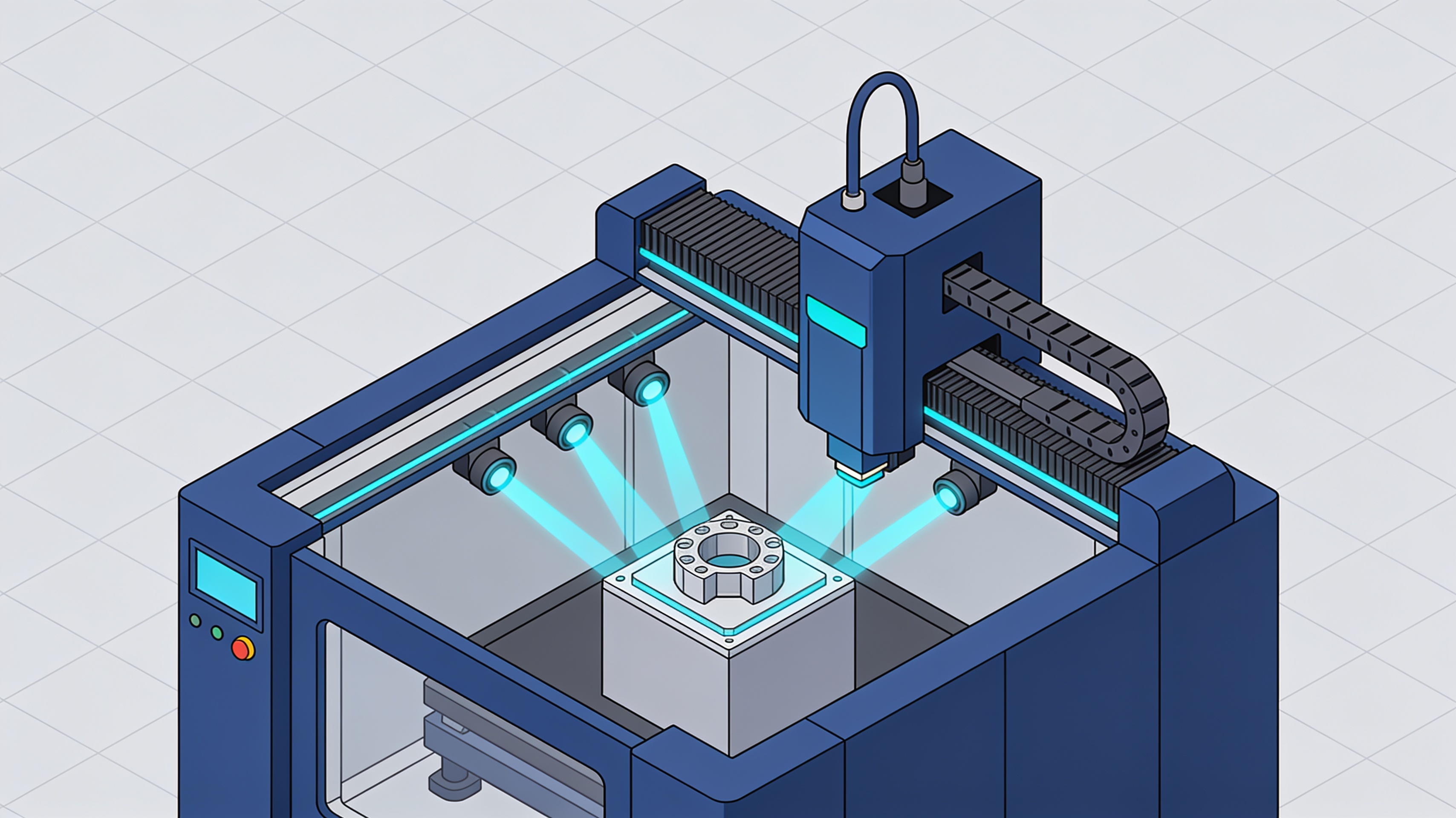
Evology expands metal production with a four-laser EOS M 400-4
Evology Manufacturing, a Wisconsin contract manufacturer specializing in additive manufacturing, has ordered an EOS M 400-4 metal 3D printer to expand production capacity. The investment brings the company's EOS machine fleet to ten units in total: eight for metals and two for polymers.
The announcement of 22 October 2026 clarifies that the system has been ordered but not yet installed. The decision responds to growth in orders in the space sector and to lengthening delivery times on existing EOS M 290 machines.
Production strategy behind the investment
The purchase does not involve a new technology, but a change in operational scale to handle growing volumes.
Chris Keidl, Vice President of Operations at Evology, explained that expansion becomes necessary when delivery times exceed two or three weeks. Growth in the order portfolio requires additional capacity to maintain competitiveness.
The investment coincides with Evology's entry into the EOS Production Partner Network. This network brings together providers that offer production services using EOS technologies, expanding the company's commercial visibility.
- Evology has ordered an EOS M 400-4, bringing its EOS fleet to 10 machines (8 metals, 2 polymers)
- The investment responds to the growth in space orders and extended delivery times
- The company has joined the EOS Production Partner Network
- The machine had not yet been installed at the time of the announcement
Technical specifications of the EOS M 400-4
The system uses four lasers to cover a build volume of 400 × 400 × 400 mm, with overlap zones that require accurate calibration.
The M 400-4 uses LPBF (Laser Powder Bed Fusion) technology, laser melting on a metal powder bed. The process spreads a thin layer of powder on the platform, the lasers selectively melt the areas corresponding to the component cross-section, then the platform lowers to repeat the cycle.
The system is equipped with four ytterbium fiber lasers of 400 W each. Each laser operates over a 250 × 250 mm field with a 50 mm overlap zone between adjacent fields.
The overlap between laser fields requires path assignment strategies and specific calibration procedures to ensure uniformity in the junction zones between the different operating fields.
Implications for industrial production
LPBF technology enables complex geometries but does not eliminate thermal constraints, supports, and subsequent machining.
The process makes it possible to create internal channels, complex walls and geometries that are difficult to obtain by chip removal. However, industrial design must consider part orientation, powder removal, tool accessibility and verifiability of critical surfaces.
Compatible materials include aluminum, steels and nickel superalloys. The main applications concern the aerospace, space and automotive sectors.
Evology's decision reflects a broader trend: the expansion of additive production capacity does not occur only through the adoption of new technologies, but through increasing the number of established systems. This approach reduces qualification risks and makes it possible to leverage skills already acquired on the existing machine fleet.
Joining the EOS Production Partner Network also signals an increasingly business model oriented toward providing certified production capacity, rather than mere technology ownership. For customers, this means access to qualified suppliers with standards verified by the machine manufacturer.
article written with the help of artificial intelligence systems
Q&A
How many EOS machines does Evology own after ordering the M 400-4?
With the order of the EOS M 400-4, Evology reaches ten EOS machines in total: eight for metal production and two for polymers. The investment expands the existing fleet without introducing a new technology.
Why did Evology choose the EOS M 400-4?
The choice responds to the growth of orders in the space sector and to lengthening delivery times on the EOS M 290 machines already in use. According to Chris Keidl, the expansion becomes necessary when lead times exceed two or three weeks.
What are the main technical features of the EOS M 400-4?
The M 400-4 uses LPBF technology with four 400 W ytterbium fiber lasers. The build volume is 400 × 400 × 400 mm, with 250 × 250 mm laser fields and a 50 mm overlap zone between adjacent fields.
Is the EOS M 400-4 already installed at Evology?
No. The October 22, 2026 announcement clarifies that the system has been ordered but not yet installed. The order therefore represents a planned expansion of production capacity.
What is the EOS Production Partner Network and what does it mean for Evology?
It is a network that brings together suppliers offering production services with EOS technologies. Evology's entry coincides with the investment and expands the company's commercial visibility as a contract manufacturer.