Elegoo focuses on 3D model generation: three new tools to overcome the CAD bottleneck
Nexprint introduces Vase Generator, Nameplate Generator, and Text & Image to 3D to allow users to create printable models without 3D modeling skills.
Desktop 3D printers have become faster, more reliable, and more automated in recent years. Auto-leveling, flow calibration, and vibration compensation have reduced technical difficulties. However, one obstacle remains: to print an original object, a three-dimensional model is needed first.
Elegoo is addressing this problem through Nexprint, its platform for sharing and creating 3D models. On September 15, 2026, three new generation tools were introduced.
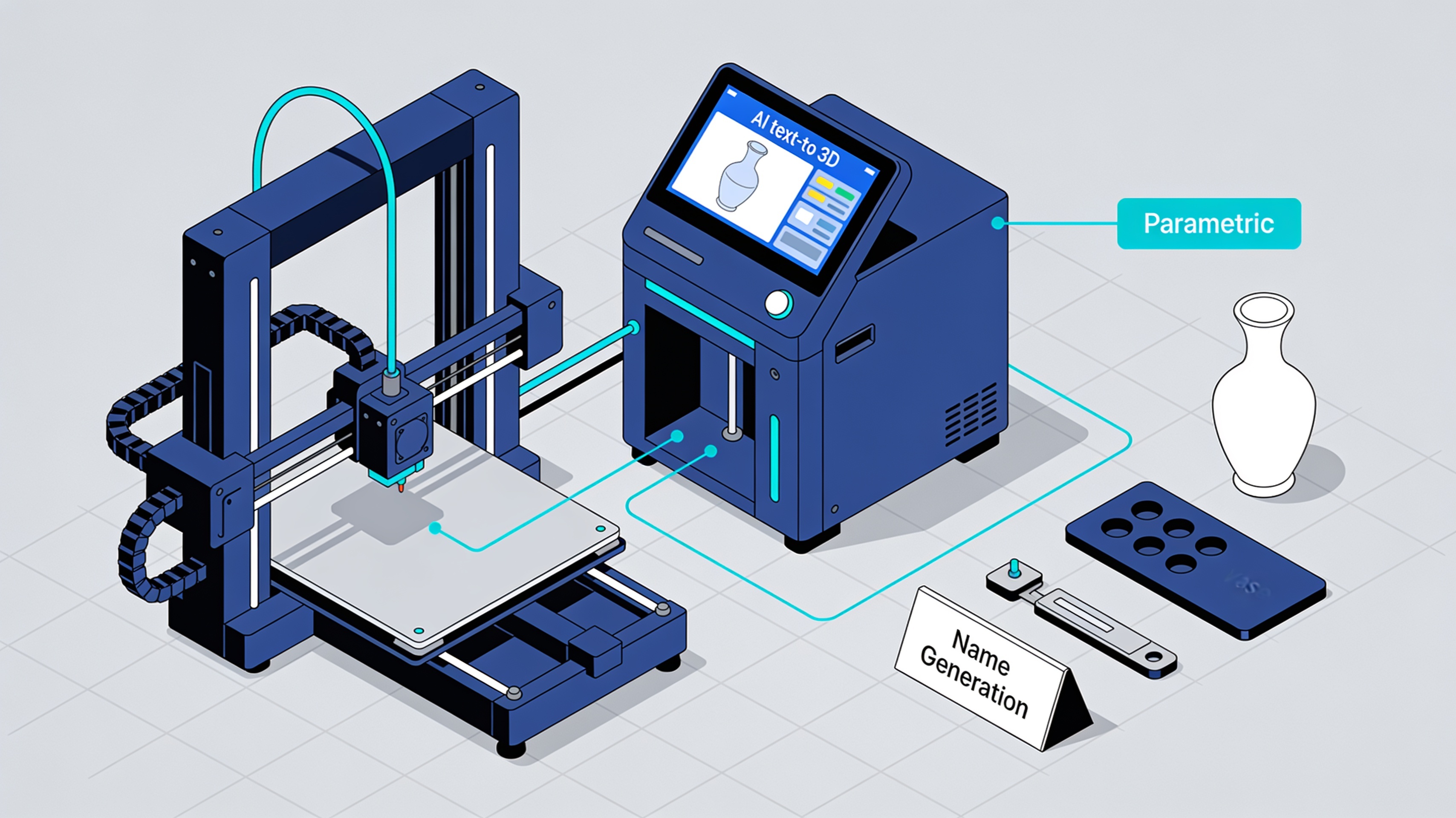
- Vase Generator and Nameplate Generator use traditional parametric modeling
- Text & Image to 3D leverages artificial intelligence to transform text descriptions or images into 3D geometries
- The goal is to shorten the path from idea to printable model without requiring CAD skills
The real bottleneck is no longer hardware
Competition among manufacturers shifts from hardware to the complete workflow, because selling an inexpensive machine does not guarantee that the user will continue to use it.
Those who do not know Fusion, SolidWorks, FreeCAD, or Blender must limit themselves to downloading models designed by others. Repositories such as Printables, Thingiverse, and MakerWorld offer huge libraries of files, but they do not allow you to obtain exactly the object you want.
Nexprint adds an intermediate step: not only finding a model, but generating or customizing one without starting from scratch. This strategy shifts competition from hardware to the complete workflow.
The three tools: parametric and AI-based
Vase Generator and Nameplate Generator are traditional parametric generators, while Text & Image to 3D uses artificial intelligence to create three-dimensional geometries.
The first two tools follow established parametric logics. Vase Generator allows you to create vases and containers by modifying predefined parameters. Nameplate Generator is dedicated to creating custom nameplates and badges.
Text & Image to 3D represents the most innovative approach. This tool uses artificial intelligence techniques to transform textual descriptions or reference images into three-dimensional geometries.
Elegoo has not launched three separate AI generators. The official documentation indicates two parametric generators (Vase and Nameplate) and a single AI tool called Text & Image to 3D, capable of using both text and images as input.
From mesh to print: the simplified process
Text & Image to 3D generates polygonal representations of the surface that can be sent directly to slicing.
The AI-based system produces three-dimensional meshes, that is, polygonal representations of the surface of the desired object. These meshes can be exported in formats compatible with slicing software such as OrcaSlicer.
The process is therefore reduced to three steps: describe or upload an image, generate the mesh, prepare the file for printing. The user does not have to open complex CAD software or know the principles of 3D modeling.
A strategy to keep printers active
Elegoo recognizes that the real problem is not selling printers, but ensuring that users continue to use them over time.
The stated goal is to reduce the path that separates an idea from a printable model. Without this simplification, many buyers of 3D printers end up abandoning them after the first attempts.
Elegoo's strategy is part of a broader context. The manufacturer has also launched the Creator Fund, a one-million-dollar promotional program to incentivize creators on Nexprint.
This move highlights how competition in the desktop 3D printer sector is evolving. It is no longer enough to offer reliable and affordable hardware. A complete ecosystem is needed to accompany the user from idea to physical realization.
Prospects for the maker market
The introduction of accessible AI generation tools could change the balance between repositories of existing models and custom creation.
Platforms like Printables and Thingiverse have democratized access to 3D models. Nexprint attempts to democratize creation itself, not just distribution.
The actual quality of AI-generated models and their printability without manual intervention remains to be verified. Automatic generation of 3D geometries is still an evolving technology, with results varying depending on the required complexity.
Elegoo's approach nevertheless represents a clear signal: the future of consumer 3D printing depends not only on the speed or precision of the machines, but on the ability to make the entire creative process accessible.
article written with the help of artificial intelligence systems
Q&A
What are the three new tools introduced by Elegoo on Nexprint?
The three tools are Vase Generator, Nameplate Generator, and Text & Image to 3D. The first two rely on parametric modeling, while the third uses artificial intelligence.
What is the difference between Elegoo's parametric generators and its AI tool?
Vase Generator and Nameplate Generator use traditional parametric modeling based on predefined parameters. In contrast, Text & Image to 3D leverages AI to create geometries from text descriptions or images.
Who are Nexprint's new model generation tools aimed at?
They are dedicated to users who wish to create original objects without possessing 3D modeling skills or knowledge of complex CAD software like Fusion or Blender.
What types of objects can be created with Vase Generator and Nameplate Generator?
Vase Generator allows creating customized vases and containers by modifying specific parameters. Nameplate Generator is designed exclusively for creating nameplates and badges.
Why is Elegoo shifting competition from hardware to the complete workflow?
The goal is to overcome the bottleneck of model creation, since selling affordable machines does not guarantee their continued use if users cannot produce their own files.