3D custom in the operating room? Here's how it really works
As a system of personalized surgical guides, it is revolutionizing preoperative planning in orthopedic surgeries.
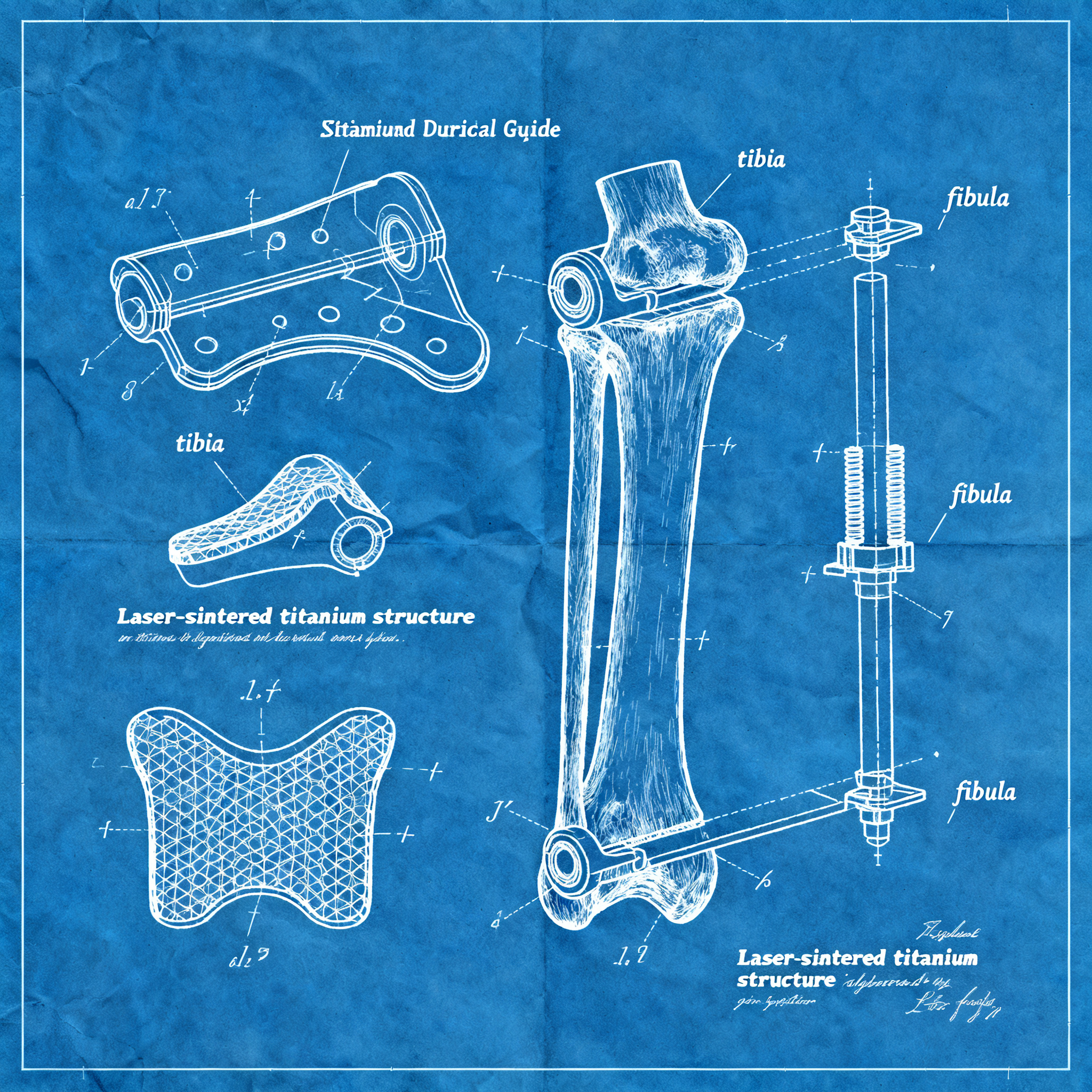
MedCAD has obtained FDA authorization for AccuStride, a comprehensive system that brings personalized surgical planning from CT scan to 3D-printed guide. The workflow now covers the entire lower limb region, from foot and ankle to tibia and fibula. The solution integrates imaging, digital design, and rapid titanium production, with delivery in approximately five days in the United States.
- Comprehensive system from CT scan to 3D-printed titanium surgical guides
- Delivery in 5 days from production in Texas for US hospitals
- Extended coverage to tibia, fibula, foot, and ankle with a holistic approach
- Reduction in operating times and post-surgery complications
From image to model: the first step toward precision
An accurate CT scan is the foundation for obtaining reliable 3D models and designing targeted interventions.
The process starts with a high-resolution CT scan of the patient. The images are uploaded to the digital platform and transformed into 3D models that replicate the specific bone anatomy. These models become the basis for designing custom surgical guides and fixation plates.
MedCAD also produces anatomical models in photopolymer resin. These allow the surgeon to physically visualize the bone geometry before the operation and verify the surgical plan. Production takes place entirely in Texas, ensuring direct quality control.
Digital design: when reality becomes plan
Advanced software allows for simulating the procedure and creating dedicated guides for each patient.
Digital planning transforms images into an executable surgical plan. The surgeon can simulate bone cuts, plate placement, and drilling paths before entering the operating room. Surgical guides transfer these procedural steps directly to the operating field.
A surgeon who used patient-specific anatomical models described the experience as “having the answers to a test before taking it.” Digital preparation reduces cognitive load during the operation and limits ad-hoc decisions, transforming surgery from a craft execution to engineering precision.
AccuStride workflow
- Acquisition: CT scan of the anatomical region of interest uploaded to the platform.
- Planning: Digital design of the intervention with simulation of cuts and fixations.
- Production: 3D printing in titanium of surgical guides and anatomical models in resin.
- Delivery: Shipping to the hospital center in about 5 days from confirmation.
- Execution: Use of guides in the operating room to replicate the preoperative plan.
Rapid production and made-in-US: real clinical advantages
Locally produced titanium 3D printing ensures timelines compatible with clinical needs.
AccuStride surgical guides are made in titanium using laser powder bed fusion (LPBF). Centralized production in Texas allows MedCAD to reach US customers in about five working days. This speed is crucial for clinical adoption, where wait times can influence course and prognosis.
CEO Nancy Hairston emphasizes the holistic approach: “When a part of the lower limb presents problems, significant complications can also manifest in other areas.” AccuStride allows for addressing multiple pathologies in the same anatomical region with coordinated, customized solutions.
Reducing a 3-hour surgery can save up to $15,000 in operating room costs, considering an average rate of $5,000 per hour. The return on investment is immediate and measurable.
Case studies: from theory to tangible results
Concrete examples show how customized planning improves precision and post-operative recovery.
MedCAD has demonstrated the effectiveness of its system in international medical missions. In January 2026, the CEO participated in a mission in Ukraine where customized cranio-maxillo-facial implants were used to reconstruct severe facial trauma. Patients treated six months earlier showed significant recoveries.
The company obtained subsequent FDA authorizations: March 2025 for foot/ankle planning and guides, November 2025 for fixation plates, April 2026 for extension to tibia and fibula. This regulatory sequence builds a complete offering for the lower limbs, covering trauma, complex revisions, and multiple pathologies.
| Component | Technology | Material | Delivery time |
|---|---|---|---|
| Surgical guides | LPBF | Titanium | ~5 days |
| Anatomical models | Photopolymerization | Resin | ~5 days |
| Fixation plates | LPBF | Titanium | ~5 days |
Conclusion
Adopting a 3D model-guided surgical planning workflow means bringing greater safety and efficiency to the operating room. The combination of accurate imaging, digital design, and rapid manufacturing transforms preoperative preparation from an approximate process to an engineered protocol.
The benefits are measurable: reduced surgical times, fewer complications, faster recovery. For healthcare systems, this translates to lower operating costs and greater capacity to manage complex cases.
Want to understand how to integrate this technology into your clinical protocol? Contact a certified provider for a personalized demo.
article written with the help of artificial intelligence systems
Q&A
What is the name of the custom surgical guidance system developed by MedCAD?
The system is called AccuStride. It has been authorized by the FDA and allows customized surgical planning from the lower limbs to the tibia and fibula.
What are the main stages of the AccuStride operational workflow?
The main stages are: CT scan acquisition, digital surgical planning, production of titanium guides and anatomical models, delivery within about 5 days, and execution in the operating room following the predefined plan.
How do custom surgical guides help improve surgery?
Guides increase the accuracy of implant positioning, reduce operating time, and minimize postoperative complications thanks to detailed planning based on the individual patient's anatomy.
What materials are used to produce the guides and anatomical models?
Surgical guides are printed in titanium using laser powder bed fusion (LPBF), while anatomical models are made from photopolymerized resin.
What is the economic impact of using AccuStride in the operating room?
Using AccuStride can reduce a procedure by 3 hours, generating savings of up to $15,000 per procedure, considering an average cost of $5,000 per hour for the operating room.