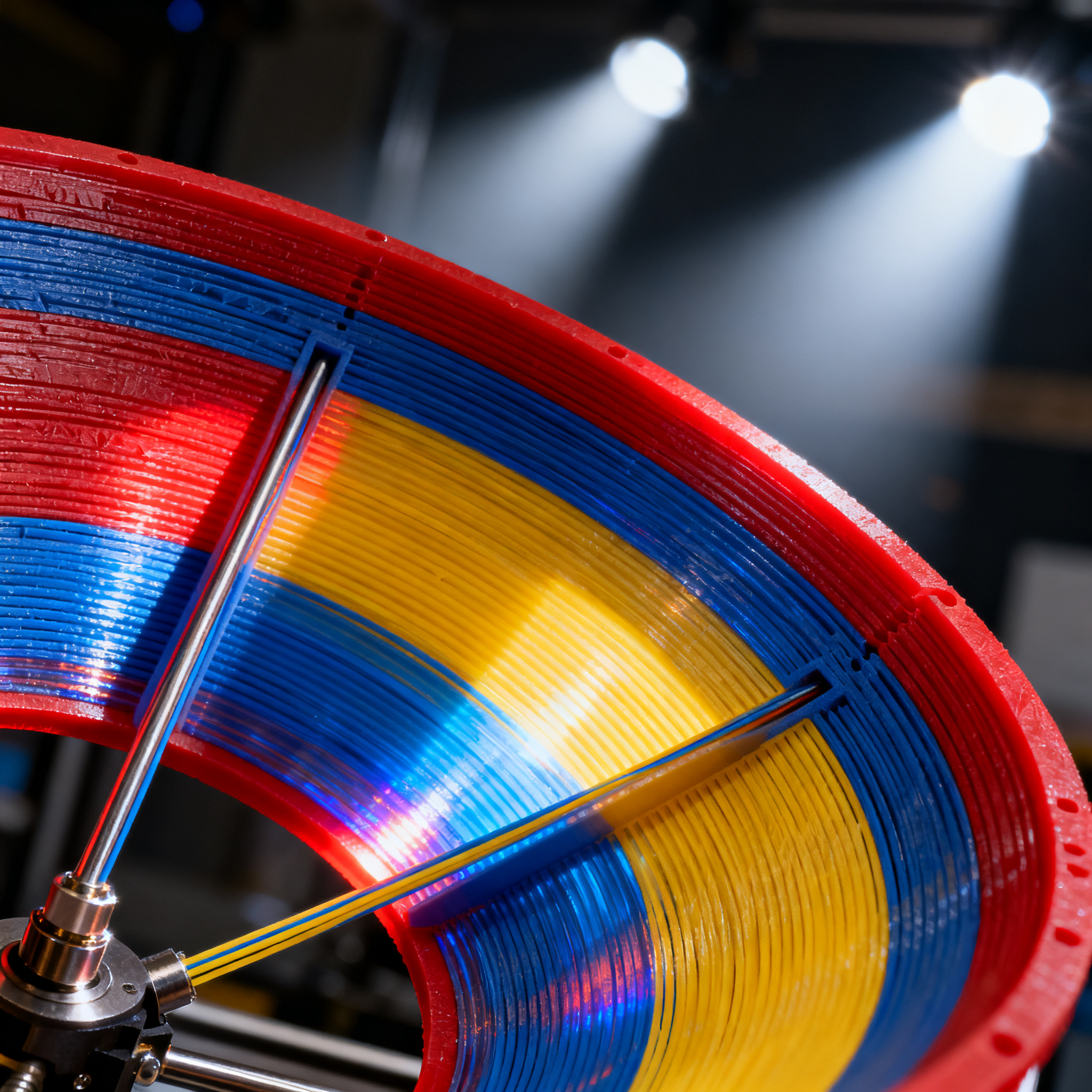
ColorMix: multicolor without multiple extruders?
Printing with dozens of different colors using only a few filaments: this is what ColorMix promises, the new feature just appeared in the development builds of PrusaSlicer. An idea born in the community that now officially enters the Prusa Research slicer.
This article is based on a development version (nightly / pre-release / beta). The features described may be changed, postponed, or removed before the stable release.
PrusaSlicer 2.9.6-beta1 — beta version — 26 May 2026
According to the beta, ColorMix would allow creating “virtual extruders” that optically mix colors by alternating different filaments between one layer and the next. The final effect simulates shades that you have not physically loaded on the printer.
The feature is inspired by FullSpectrum, a community project already implemented in forks of OrcaSlicer and other slicers. Prusa has developed its own implementation based on the Yule-Nielsen mathematical model, publishing the code under the MIT license.
- ColorMix creates “virtual” colors by alternating real filaments between layers
- Works with existing multi-material printers, without additional hardware
- Calibrated on Prusament PLA and Prusa XL, may vary with other setups
- Available in beta from May 26, 2026, stable release likely within the next quarter
How ColorMix works today
ColorMix exploits the overlapping of thin colored layers to create the illusion of new tones, just like halftone in paper printing.
In beta 2.9.6-beta1, it seems that ColorMix works by creating “virtual extruders” directly in the filament panel. Each virtual extruder corresponds to a blend of real filaments in specific proportions.
Once defined, these virtual extruders behave like physical ones. You can assign them to model volumes or use them in multi-material painting. The slicer then takes care of alternating real filaments layer by layer to simulate the desired color.
The underlying mathematical model is Yule-Nielsen, traditionally used in offset printing. According to Prusa, this approach should work with any architecture that swaps filaments per layer, not just their printers.
Layer height becomes crucial. The indicated optimal window is between 0.08 and 0.12 mm: thinner layers reduce the perception of banding and improve visual color blending. With higher layers, the risk is seeing the layering clearly.
| News | Current status | Stable probability |
|---|---|---|
| ColorMix base | Working in beta | High |
| Virtual extruders | Implemented and testable | High |
| Automatic calibration | Manual on Prusa materials | Medium |
| Third-party material support | Not officially validated | Low short-term |
When and how it will arrive in stable
If confirmed in its current form, ColorMix could enter the stable version of PrusaSlicer within the next quarter.
The beta 2.9.6-beta1 was released on May 26, 2026. As this is a first beta, it is likely that other test iterations will follow before the final release.
Prusa has published the ColorMix model under an MIT license, indicating that the company considers the feature sufficiently mature to be shared. This increases the likelihood that it will arrive in stable without substantial changes.
However, current calibrations have been performed exclusively on Prusament PLA with a Prusa XL printer. If this limitation is confirmed, users of other materials or different machines may have to wait for subsequent updates for reliable results.
Dedicated Prusament CMYKW filaments have been announced but not yet released. In the meantime, it is possible to experiment with Prusament Azure Blue, Ms. Pink, and Pineapple Yellow already available, or with any PLA from your own lab.
If it arrives, what changes
ColorMix could make advanced multicolor printing accessible to anyone who already has a multi-material printer, without additional hardware investment.
For those using Prusa XL or other printers with filament switching, the most immediate impact would be the ability to print models with complex gradients and shades using only 3-5 base spools. No more need to load dozens of different colors.
Traditional multi-filament systems in CMYW mode never produce a truly deep black. According to Prusa, the approach with a separate CMYK plus black set (Galaxy Black) would solve this limitation, generating more convincing results.
If calibration were extended to other materials and printers, ColorMix could become a de facto standard for FDM multicolor printing. The open MIT license would facilitate adoption by other slicer manufacturers.
The main risk remains the variability of results. With opaque or slightly translucent materials, the separation between layers remains visible and the color rendering worsens. It is not a strictly “photographic” print, but a system to expand the available color gamut.
Conclusion
ColorMix today represents a promising function but still in the validation phase. The mathematical basis is solid and the beta implementation seems functional, but official calibrations cover only a specific combination of materials and hardware.
If confirmed and expanded to other setups, it could redefine expectations for multicolor printing on standard FDM printers. The open-source approach increases the likelihood that the community will contribute to extending its capabilities.
Do you want to contribute to development? Try the beta 2.9.6-beta1 and report the results obtained with materials or configurations different from Prusament PLA on Prusa XL. Community feedback could accelerate the arrival of calibrations for other setups.
article written with the help of artificial intelligence systems
Q&A
What is ColorMix and what is its main advantage for multicolor 3D printing?
ColorMix is a new feature under development for PrusaSlicer that allows printing with dozens of different colors using only a few base filaments. Its main advantage is the creation of "virtual extruders" that optically mix colors by alternating real filaments between layers, simulating hues not physically present on the printer without requiring additional hardware.
How does ColorMix technically work to generate new shades?
The function exploits the overlap of thin colored layers to create the illusion of new shades, similar to halftoning in paper printing. The slicer alternates real filaments layer by layer according to the Yule-Nielsen mathematical model, and to achieve the best visual blending a layer height between 0.08 and 0.12 mm is recommended.
What are the hardware and software requirements to use ColorMix?
ColorMix works with existing multi-material printers equipped with a per-layer filament change system, such as the Prusa XL, without the need for additional hardware. It is currently available in PrusaSlicer beta 2.9.6-beta1 released on May 26, 2026, and it is sufficient to configure the virtual extruders in the software's filament panel.
What limitations does ColorMix have in the current beta version?
Official calibrations have been performed exclusively on Prusament PLA filaments with the Prusa XL printer, so results may vary with other materials or machines. Furthermore, with opaque or poorly translucent materials the separation between layers remains visible, compromising color rendering and preventing "photographic" printing in the strict sense.
When will ColorMix reach the stable version and under which license is its code distributed?
If confirmed in its current form, the feature should enter the stable version of PrusaSlicer within the next quarter. Prusa has released the ColorMix model under the MIT license, a sign of maturity that facilitates adoption by other slicers and encourages the community to contribute with feedback and calibrations for new materials.