Case Study: OEM

New Frontiers of the Workforce in Additive Manufacturing: Operational Skills at the Center of Industrial Transformation

New Frontiers of the Workforce in Additive Manufacturing: Operational Skills at the Center of Industrial Transformation

The additive manufacturing industry is evolving towards greater maturity, with a focus on specific skills, production, and customer interaction. An increasing number of professionals is changing the job market, making hiring more selective and promoting internal skill development.

Sustainable 3D Printing: Quality vs. Environmental Impact in Recycled Materials

Sustainable 3D Printing: Quality vs. Environmental Impact in Recycled Materials

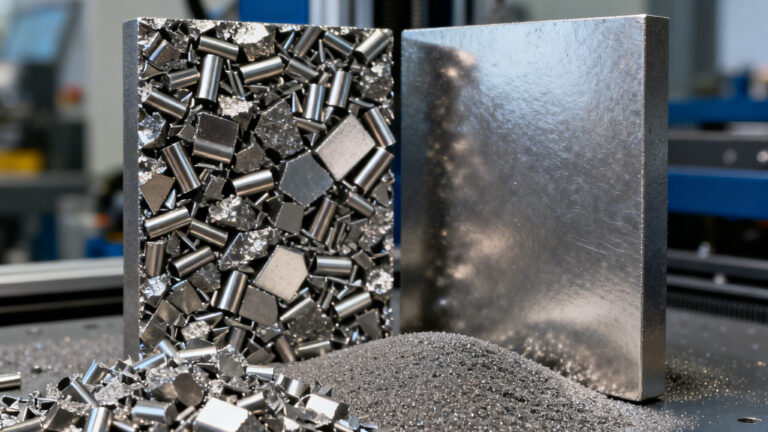
Industrial 3D printing with recycled materials offers environmental benefits but requires balancing between quality, cost, and performance. The use of recycled powders, if well managed, can reduce the carbon footprint without compromising mechanical properties, provided that parameters such as sphericity, oxygen content, and particle size distribution are controlled. Studies show up to 98.71% reduction

3D Printing Implementation for Microfluidic Devices: A Practical Guide to Reducing Costs and Complexity

3D Printing Implementation for Microfluidic Devices: A Practical Guide to Reducing Costs and Complexity

3D printing is revolutionizing microfluidics by enabling the rapid and precise production of complex devices in a single process. Technologies like PolyJet and PµSL allow for the creation of microfluidic chips with micrometer-scale channels, eliminating assembly phases and reducing development costs and times. The integration of advanced design, biocompatible materials, and functional coatings enables

New Investment Criteria for Additive Manufacturing: Operational Excellence Over Speculation

New Investment Criteria for Additive Manufacturing: Operational Excellence Over Speculation

Investors in additive manufacturing are increasingly focusing on operational efficiency and solid business models, leaving technological speculation behind. Businesses with stable contracts, sustainable margins, and the ability to generate real value in the production chain are being rewarded.

Implementing Mass Customization with Additive Manufacturing: A Technical Playbook for Consumer Products

Implementing Mass Customization with Additive Manufacturing: A Technical Playbook for Consumer Products

Mass customization is now possible thanks to additive manufacturing, artificial intelligence, and parametric design. These technologies allow for the production of thousands of customized variants while maintaining efficiency and margins, overcoming the limits of traditional production. The integration of software toolchains and automated processes enables the management of variability without au

How AI is stitching together the engineering workflow with Aibuild OS

How AI is stitching together the engineering workflow with Aibuild OS

Aibuild OS is an AI platform that unifies the engineering workflow, integrating CAD, CAE, and CAM into a single intelligent environment. It eliminates fragmentation between tools, automates complex processes with “Digital Engineers,” and generates 3D models from text or 2D inputs, reducing errors and production times.

Additive Manufacturing Certification for Medical Devices: An Operational Framework for Effective Qualification

Additive Manufacturing Certification for Medical Devices: An Operational Framework for Effective Qualification

The certification of medical devices produced with additive manufacturing requires an operational framework that integrates regulatory requirements from the design phase. This approach, called “design for certification”, reduces delays and late reviews, turning compliance into a competitive advantage. It is fundamental to qualify the 3D printing process with documented proof of rep

Sustainable materials in action: how the industry is implementing bio-based solutions on a large scale

Sustainable materials in action: how the industry is implementing bio-based solutions on a large scale

The industry is implementing bio-based sustainable materials on a large scale, integrating responsible agricultural supply chains, technological innovation and circular economy. Projects such as Pragati, Bio.3DGREEN and Virtucycle demonstrate how sustainability and industrial performance can coexist, thanks to strategic partnerships and standardization.

Part Identification via CAD without ML Model Retraining

Part Identification via CAD without ML Model Retraining

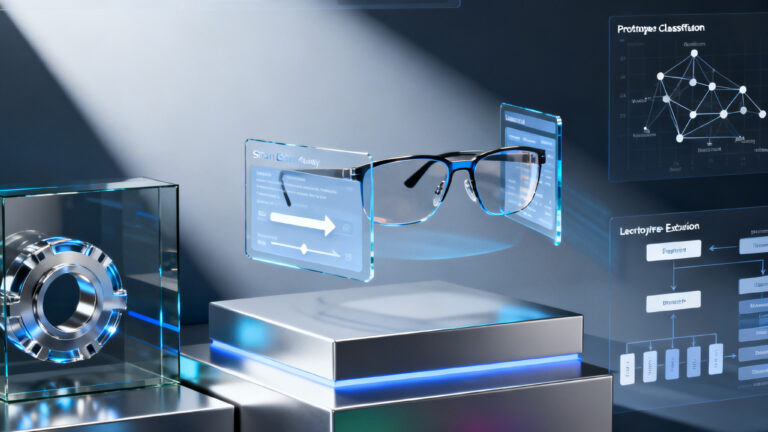
A new innovative method enables the automatic identification of 3D printed parts directly using CAD models, without the need to retrain machine learning models. Developed by KU Leuven, Materialise, and Iristick, the system leverages geometric representations and few-shot learning techniques to classify new parts quickly and efficiently, reducing times and

How Chemical Vapor is Revolutionizing the Post-Processing of 3D Parts

How Chemical Vapor is Revolutionizing the Post-Processing of 3D Parts

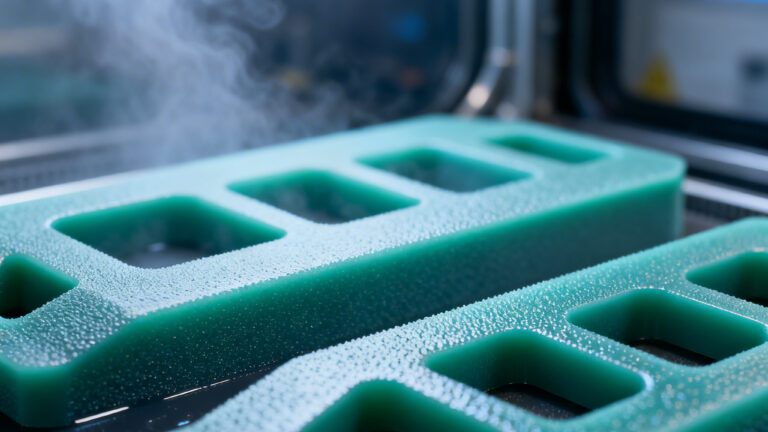
Chemical vapor is revolutionizing the post-processing of 3D parts, offering smooth, waterproof, and repeatable finishes without material removal. Automated technologies like AMT PostPro eliminate production bottlenecks, reduce costs, and improve mechanical properties, making additive production scalable and certifiable for demanding industries.

New Era of Governance: The Evolution of Leadership in the Additive Manufacturing Industry

New Era of Governance: The Evolution of Leadership in the Additive Manufacturing Industry

The Additive Manufacturing Alliance, born from the union of Leading Minds and AM I Navigator, promotes the industrial integration of additive manufacturing through structured governance, standardization, and operational support.

Additive Manufacturing in Production: How Industrial Companies Build Reliable Processes

Additive Manufacturing in Production: How Industrial Companies Build Reliable Processes

The adoption of additive manufacturing in industry requires operational discipline, focus on defined part families, and rigorous process control. Technology alone is not enough: organizational management is needed to ensure reliability and repeatability. Winning applications are born where performance advantages outweigh complexity, such as in aerospace, medical, and tooling. Integration

/