
A 250 kg 3D-printed aluminium curtain welcomes visitors to Design Museum Gent
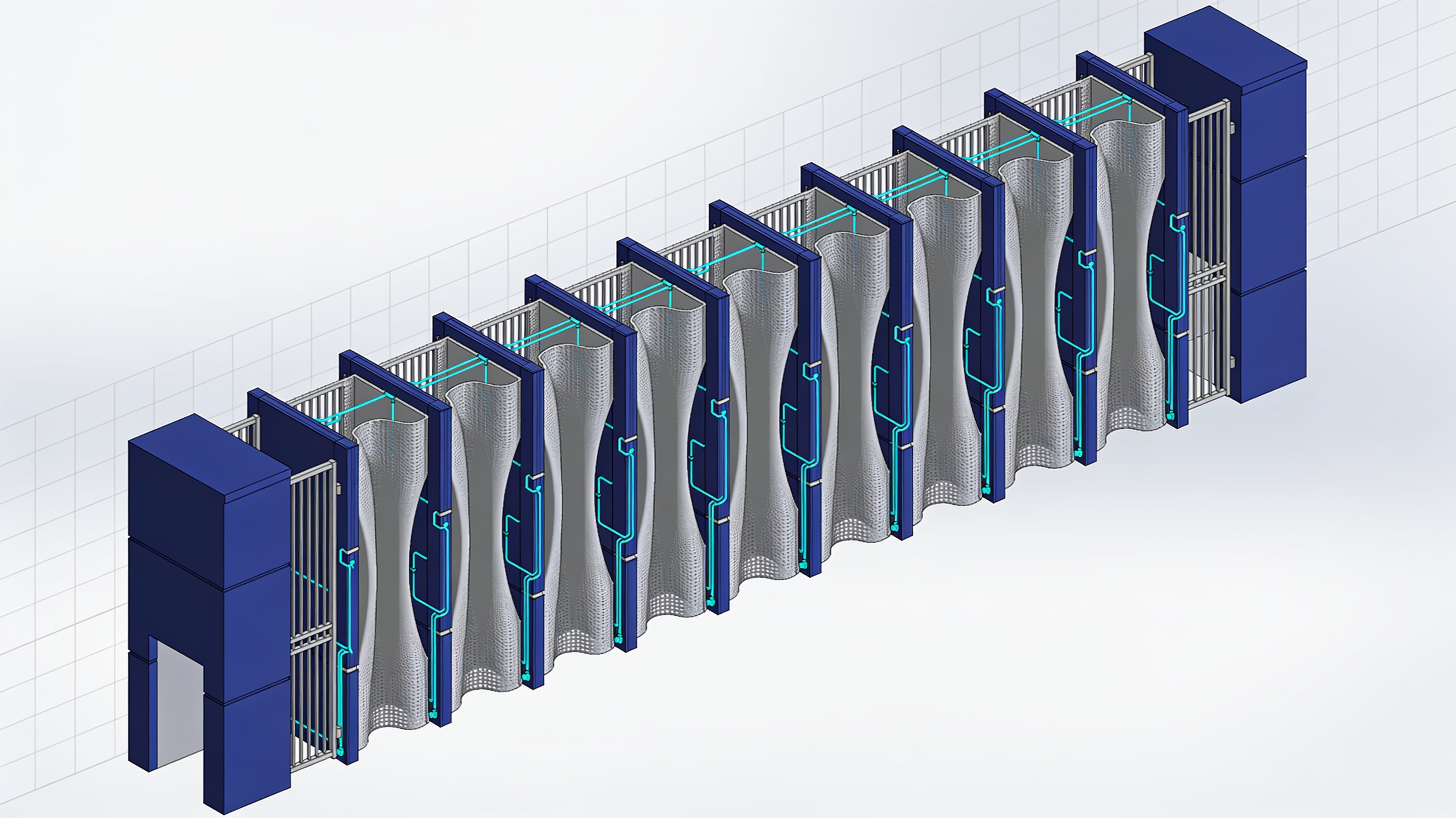
The new main entrance of Design Museum Gent is an architectural gate that seems to defy gravity. Freeze Frame 82.2, designed by the Belgian studio Unfold and made by MX3D ArtLab, uses 250 kg of 3D-printed aluminium to replicate the exact instant when a textile curtain opens, frozen in motion.
The work was installed in the museum's new wing inaugurated on 3 October 2026, at the end of an extensive renovation of the historic complex in Ghent. The undulating surface measures approximately 4 × 4 metres and was produced using Wire Arc Additive Manufacturing (WAAM).
- 250 kg of 3D-printed aluminium using WAAM
- Dimensions: approximately 4 × 4 metres
- 12 elements printed separately and assembled
- Total weight of the complete gate: approximately 360 kg
A hybrid construction between additive and traditional
Freeze Frame 82.2 combines additive manufacturing and conventional construction techniques in a functional architecture.
The 3D-printed portion forms the visible surface of the gate. The load-bearing structure, opening mechanisms, and architectural integration instead belong to a more traditional construction. The complete system reaches 360 kg, including all the functional elements necessary for an operational gate.
Production took place in twelve separate elements, subsequently assembled to form the continuous surface. This subdivision made it possible to manage the size of the work while respecting the volumetric limits of the WAAM robotic cells.
From virtual fabric to aluminum: a creative process based on physics
The shape of the gate does not derive from topological optimization, but from the digital simulation of a fabric in motion.
Unfold built a digital simulation by representing the curtain as a virtual network of elastic elements subjected to simulated physics. The textile surface was set in motion, and the studio selected a single frame from the animation: frame 82.2.
That configuration, with the cloth virtually gathered and still in motion, became the geometry of the physical work. The simulation that generates the form and the structural analysis of the gate are two distinct activities: the first step is a creative process based on digital physics, while stability and buildability were addressed later with the technical partners.
Unlike topological optimization, which seeks the minimum weight under structural loads, Freeze Frame 82.2 uses additive manufacturing to replicate an organic shape generated by physical simulation.
A functional gate that becomes sculpture
The work is not only decorative: it must open and close the museum entrance daily.
During opening hours, the gate is moved against the wall and the undulating surface transforms into a large bas-relief. The choice of the curtain is not purely aesthetic: the new entrance must literally open and close the museum.
The dual nature of the work requires a design that integrates aesthetic and functional requirements. The movement mechanisms must handle 360 kg while maintaining the integrity of the printed surface. The architectural integration was handled by Wuyts, while Denkbar managed the structural stability and Alton provided production consultancy.
WAAM in architecture: scale and complexity
The project demonstrates the maturity of Wire Arc Additive Manufacturing for large-format architectural applications.
MX3D ArtLab used WAAM technology to deposit aluminum layer by layer, building the complex geometry of the frozen curtain. The process makes it possible to create large metal components with geometries that would be difficult or impossible to obtain with subtractive methods.
The division into twelve elements reflects a pragmatic approach to large-scale additive manufacturing. Each component is printed separately, inspected, and then assembled into the final configuration.
The involvement of Siegrid Demyttenaere as curator of the museum's Special Design Projects underscores the importance of the work in the exhibition context. Freeze Frame 82.2 is not only an architectural element, but an integral part of the renewed identity of the Design Museum Gent.
article written with the help of artificial intelligence systems
Q&A
Who designed and built the Freeze Frame 82.2 gate?
The gate was designed by the Belgian studio Unfold and built by MX3D ArtLab. The work was installed in the new wing of the Design Museum Gent.
How much 3D-printed aluminum does the gate contain and what are its dimensions?
The gate uses 250 kg of 3D-printed aluminum via WAAM. The undulating surface measures approximately 4 × 4 meters.
In how many elements was the gate produced and how much does the complete one weigh?
Production took place in twelve separate elements, subsequently assembled. The total weight of the complete gate is approximately 360 kg.
Where does the shape of Freeze Frame 82.2 come from?
The shape derives from a digital simulation that represents the curtain as a virtual network of elastic elements subjected to simulated physics. Unfold selected frame 82.2 of the animation as the geometry of the physical work.
When was the new entrance of the Design Museum Gent inaugurated?
The work was installed in the museum's new wing inaugurated on October 3, 2026. The installation took place at the end of an extensive renovation of the historic complex in Ghent.


