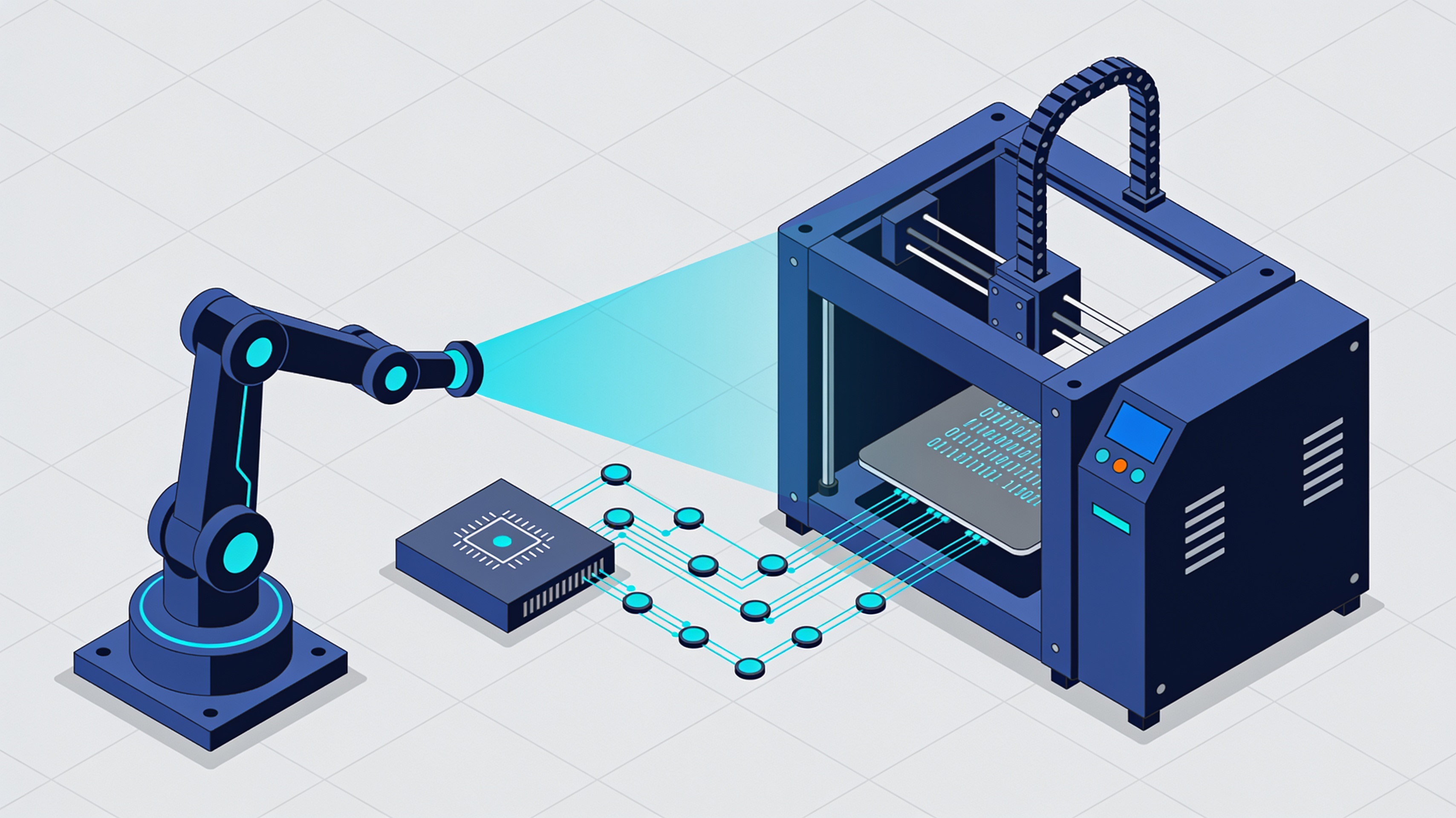
AI hacking comes to 3D printing: 14 vulnerabilities discovered in one week
A researcher has demonstrated how AI can identify security flaws in 3D printer firmware in record time. The Prusa MK4S case marks a turning point for cybersecurity in the additive manufacturing sector.
Vulnerabilities discovered with the help of AI
Yannick Dixken, an independent security researcher, took just one week to identify 14 vulnerabilities in the firmware of his Prusa MK4S printer. He used Anthropic's Claude AI system together with automated testing tools.
The most concerning discovery concerns the possibility of taking control of the printer's main controller through a network attack. To demonstrate the success of the operation, Dixken made the image of Rick Astley appear on the printer's screen.
- 14 vulnerabilities discovered in one week with AI
- 23 individual defects in the Prusa MK4S firmware
- Possible remote control of the main controller
- First documented case of AI hacking in 3D printing
The time factor changes everything
The most relevant aspect is not the discovery itself, but the speed with which it was made thanks to artificial intelligence.
Dixken is an experienced software professional and security enthusiast, but he had little prior experience with printer firmware. With AI assistance, he was able to systematically examine enormous amounts of code, identify suspicious behavior, and develop a working attack.
In the past, discovering obscure firmware vulnerabilities required highly specialized expertise and a major investment of time and energy. These barriers have now fallen thanks to the growing power of AI tools.
Prusa Research’s response
Prusa Research has released Buddy firmware 7.0.0, which fixes the discovered vulnerabilities. The security fixes include command handling in the chat agent and plugins, as well as control over file opening.
The demonstrated attack required control or interception of communications with a service used by the printer. It was not a vulnerability that allowed anyone on the internet to take control of any Prusa machine.
Implications for the industry
This development will force the entire 3D printing industry to rethink its approach to cybersecurity, from manufacturers to end users.
Manufacturers will have to start treating cybersecurity as a fundamental part of product development. Modern firmware handles cloud communications, remote monitoring, cameras, network connections, and automated production systems. All of this is potentially vulnerable.
Companies may have no choice but to use the same AI-based investigation techniques on their own products. Repeated firmware testing before release will likely become an industry standard.
The installed base problem
There is also the question of the vast installed base of 3D printers to consider. A vulnerability discovered in a family of firmware could affect thousands or even millions of machines already operating in the field.
The additive manufacturing sector will need to develop strategies to manage security updates on a large scale. The ability to distribute patches quickly will become an important competitive factor.
Conclusions
The economics of 3D printer hacking have changed radically. What once required weeks of specialized work can now be accomplished in hours with AI systems. The Prusa MK4S case represents only the first documented example of this new reality.
Cybersecurity can no longer be an afterthought in 3D printer design. It must become an integral part of the development process, from initial design to ongoing software maintenance.
article written with the help of artificial intelligence systems
Q&A
How many vulnerabilities did the AI find in the Prusa MK4S firmware?
Yannick Dixken identified 14 vulnerabilities in a single week using Anthropic's Claude AI system together with automated testing tools. The vulnerabilities correspond to 23 individual flaws in the firmware.
What is the most serious vulnerability discovered in the Prusa MK4S?
The most concerning discovery involves the possibility of taking control of the printer's main controller through a network attack. To demonstrate it, Dixken made the image of Rick Astley appear on the printer's screen.
Did Prusa Research fix the firmware vulnerabilities?
Yes, Prusa Research released Buddy firmware 7.0.0 which fixes the discovered vulnerabilities. The fixes include command handling in the chat agent and plugins, as well as control over file opening.
Did the attack on the Prusa MK4S allow anyone on the internet to control the printer?
No, the demonstrated attack required control or interception of communications with a service used by the printer. It was not a vulnerability that allowed anyone on the internet to take control of any Prusa machine.
Why is this discovery important for the 3D printing industry?
It is the first documented case of AI hacking in 3D printing and demonstrates that AI lowers the skill and time barriers needed to find vulnerabilities in firmware. Manufacturers will have to treat cybersecurity as a fundamental part of product development.