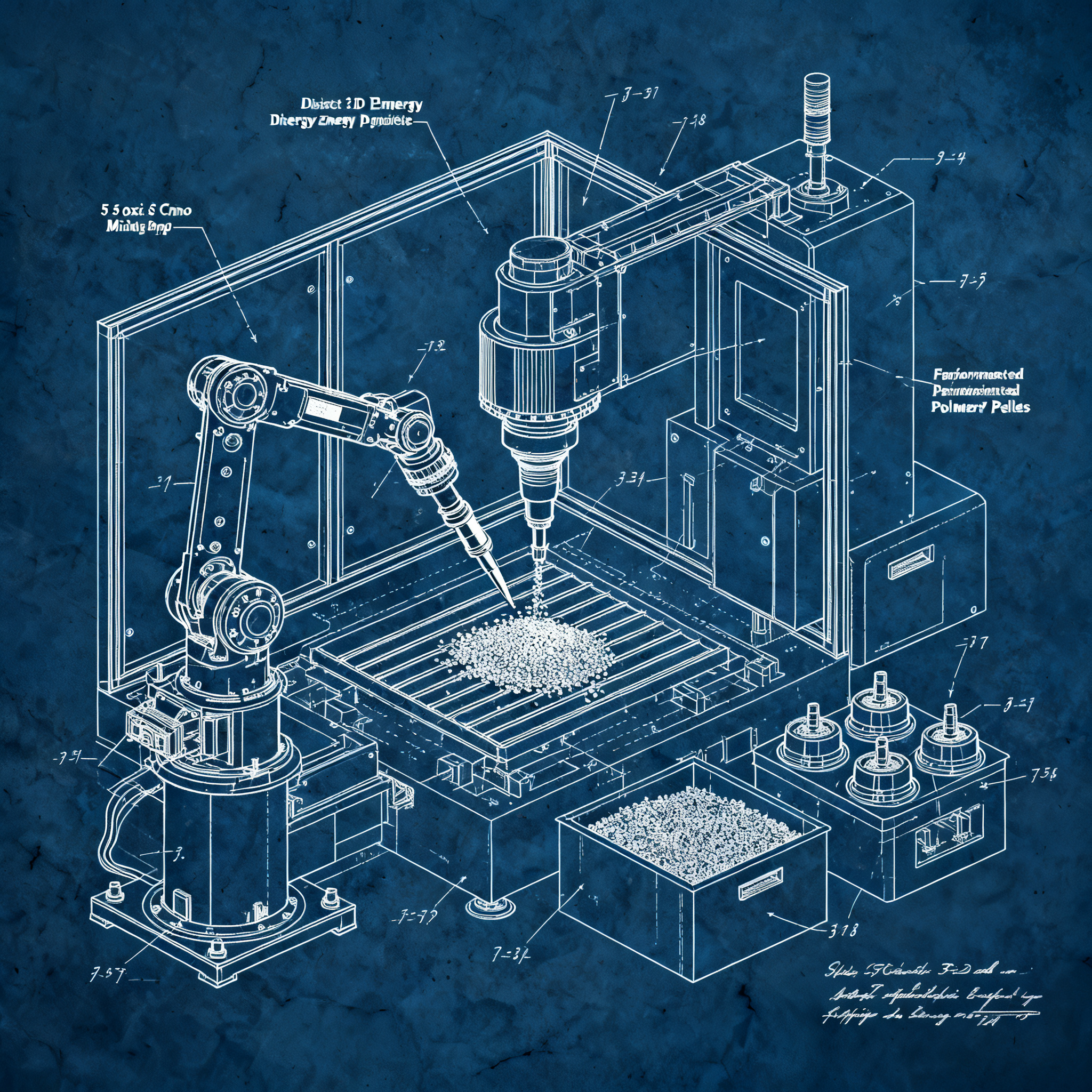
72 hours, not 10 weeks: the plan to integrate CNC and 3D
A process that once took 10 weeks is now completed in 72 hours thanks to the synergy between 3D printing and CNC machining. The hybrid production eliminates intermediate steps, reduces setup errors, and brings precision finishing directly into the additive cycle.
Hybrid setup: how to choose tools and materials
Choosing the right pairing between 3D printer and desktop CNC is crucial to achieve precision and repeatability. The component is built and finished in the same machine reference, eliminating downtime and risk of error.
The value of hybrid production emerges when multiple functions must be combined: material addition, repair, geometries not achievable with standard tools, and tolerance finishing. Moving the workpiece from one machine to another adds time, risks, and setup costs.
DMG MORI ha presentato sistemi LASERTEC DED hybrid e LASERTEC SLM come parte di flussi produttivi automatizzati. L’integrazione di fresatura, tornitura, deposizione laser e scansione 3D riduce i tempi di attraversamento e le lavorazioni esterne.
- Machining in a single machine reference to eliminate positioning errors
- Integrated 3D scanning for in-cycle verification, not just at the end of machining
- Real-time monitoring for documentation and process traceability
The LASERTEC 65 DED hybrid 2 does not replace economical and simple machining. If a component can be milled from solid quickly, hybrid production is not the best choice. Blue laser expands possibilities to copper and reflective metals, while integrated monitoring makes the process suitable for parts where documentation is important.
Other approaches include systems like AMBIT XTRUDE, where a pellet polymer extrusion module is integrated onto a CNC machine and then return to milling. The industrial principle is similar: bringing 3D printing into an already known processing chain.
Industrial cases: halved times with hybrid workflow
Concrete examples show how manufacturing companies are cutting production times thanks to the automation of hybrid processes. The hybrid production market is worth 3.1 billion dollars and reduces material waste up to 97%.
Sheffield Forgemasters has launched a large-scale hybrid system with a CEAD Flexbot printer in an’area of 14m x 8m x 5m. The system uses robotic arms to integrate milling and 3D printing, operating on a fixed table and a rotating one.
The printing capacity reaches 60 kg of fiber-reinforced polymer materials per hour. The system produces complex patterns, the solid shapes that create molds for molten steel in the casting process.
| Parameter | Traditional production | Hybrid workflow |
|---|---|---|
| Cycle time | 10 weeks | 72 hours |
| Waste reduction | Standard | Up to 97% |
| Machine passes | Multiple | Single reference |
The autonomous operation allows personnel to work on complementary activities during shifts. Production continues even outside standard hours, improving efficiency and overall capacity. The new system reduces costs, shortens delivery times for pattern production, and improves delivery times for castings.
The digitalization of skills helps cultivate the next generation of operators and supports more sustainable practices through the reduction of material waste and recycling.
Best practice for l’integration into existing processes
Clear steps to introduce hybrid production without interrupting current production lines. The strategy includes standard components as reliability anchors and customization where needed.
The hybrid model maintains standard actuators as a reliability baseline. The power transmission components – gears, couplings, mounting structures – become customizable without cost or time penalties.
Integration procedure
- Component selection: start from a non-critical component with complex geometry or customization requirements.
- Process validation: verify the complete additive-subtractive cycle on a pilot batch to measure times and quality.
- Gradual scaling: extend the hybrid workflow to other components only after documenting the actual savings.
Multi-axis CNC production technology and additive processes allow producing customized components at near-commodity scale. Customers specify custom gears through digital interfaces, with tooth profiles optimized by AI. Delivery times are measured in weeks, not quarters.
The economic shift is subtle but profound. The ability to specify exact ratios, load profiles, and optimized geometries without catalog compromises opens up new design possibilities. Digital production makes it possible to build hardware at the speed of software.
An advanced hybrid machine does not make sense to replace cheap and simple operations. The value emerges when multiple functions must be combined in a single setup: material addition, repair, thermal channels, coatings, and tolerance finishing.
Accelerate production with strategic choices
The integration of desktop CNC and 3D printing is not just a technological choice, but a strategic one for those who want to accelerate production. The transition from 10 weeks to 72 hours is not theory: it is the result of eliminating intermediate steps and machining in a single machine reference.
Companies that adopt hybrid workflows reduce waste by up to 97% and drastically shorten lead times. The key is to start with high-value components where customization and geometric complexity justify the investment.
Evaluate your first hybrid project: start from a non-critical component and measure the time savings. Hybrid production works best when additive geometry and CNC precision must coexist in the same part.
article written with the help of artificial intelligence systems
Q&A
How much time is saved by switching from traditional production to hybrid CNC-3D?
The process is reduced from 10 weeks to just 72 hours. This is possible by eliminating intermediate steps and working in a single machine reference, avoiding downtime and error risks between different setups.
In which cases is hybrid production truly advantageous compared to traditional machining?
Hybrid production is indicated when it is necessary to combine multiple functions in a single setup, such as material addition, repair, complex geometries not achievable with standard tools, or tolerance finishing. However, it is not worthwhile for simple and economical components that can be quickly milled from solid.
What are the key elements for an effective hybrid setup?
The fundamental elements are machining in a single machine reference to eliminate positioning errors, integrated 3D scanning for verification during the cycle, and real-time monitoring for documentation and traceability. These factors ensure precision, repeatability, and consistent quality in the process.
How is hybrid production integrated into existing processes without interrupting production lines?
The strategy consists of selecting a non-critical component with complex geometry, validating the complete additive-subtractive cycle on a pilot batch, and gradually scaling to other components only after documenting the actual savings. Standard components are also maintained as reliability anchors, customizing only where necessary.
What benefits did Sheffield Forgemasters achieve with the large-scale hybrid system?
Sheffield Forgemasters implemented a CEAD Flexbot system over an area of 14m x 8m x 5m with robotic arms that integrate milling and 3D printing. The system produces complex patterns for casting with a capacity of 60 kg of reinforced polymeric materials per hour, reducing costs, delivery times, and improving operational efficiency even outside standard hours.