Withstanding the test of time: how 3D printing is reinventing high-performance materials from patents
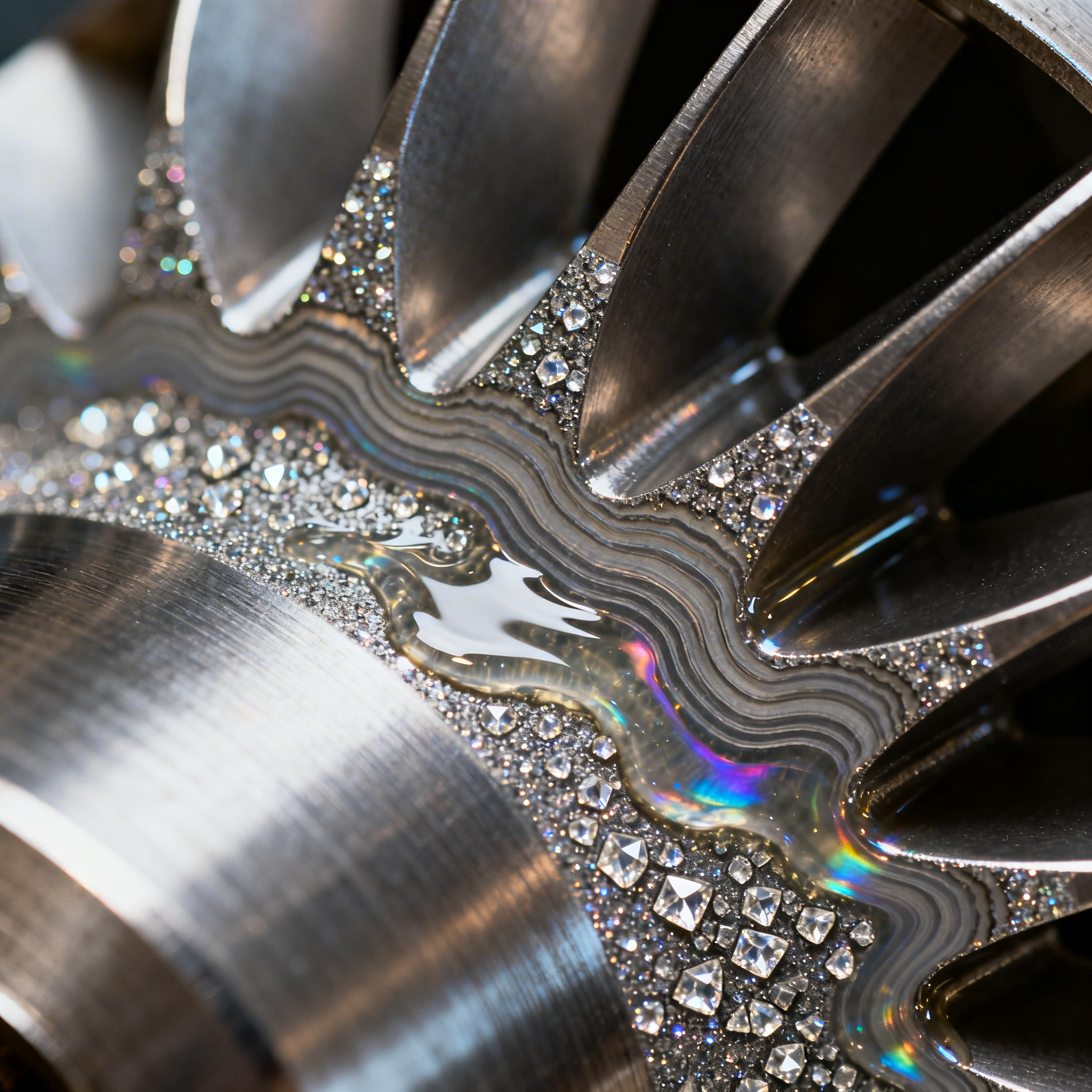
Printing a metal component that is already armored against wear, without the need for coatings or subsequent treatments: this is the promise of a new additive manufacturing technique that generates composite materials directly during the printing process, transforming metal powder into a matrix reinforced with ceramics while the laser melts the material.
Patents cited
What problem does it solve
Metal components intended for extreme environments today require expensive and lengthy surface treatments to resist abrasion; this technology integrates them directly at the printing stage.
When producing turbine blades, engine components, or parts subject to intense wear, the base metal is not enough. A protective coating is needed, typically applied using techniques such as thermal deposition or electrodeposition. These additional steps lengthen production times, increase costs, and introduce complexity into the supply chain: specialized suppliers, dedicated equipment, and additional quality controls are required.
The described patent addresses the problem at its root: instead of printing a component and then coating it, the technology generates a metal matrix reinforced with a ceramic phase directly during material melting. The system controls the deposition of metal powder and the laser energy so as to trigger an in situ chemical reaction, which produces the ceramic-metal composite (metal matrix composite) in the molten pool itself. The result is a component that comes out of the printer already endowed with wear-resistance properties, without the need for further processing.
The idea in 60 seconds
During 3D printing, an in situ chemical reaction occurs that generates a metal matrix reinforced with ceramics, eliminating the need for external coatings.
The heart of the technology lies in the simultaneous control of two variables: the composition of the deposited metal powder and the energy supplied by the laser. A computerized management system coordinates a powder dispensing device and an energy source (typically a laser) to create the ideal conditions so that, in the molten pool, a chemical reaction occurs that generates a ceramic phase dispersed in the metal matrix.
In practice, while the laser melts the powder layer by layer, reactive elements present in the mixture react with one another, forming hard ceramic particles (such as carbides, nitrides, or oxides) that distribute uniformly throughout the metal. This process, called in situ reaction, occurs at high temperatures and in very short times, taking advantage of the extreme conditions of laser melting.
The advantage over traditional composites is twofold: the ceramic particles are extremely fine and homogeneously distributed (because they form directly in the melt), and the bond between the ceramic phase and the metal matrix is much stronger than that obtainable with coatings applied subsequently. There are no weak interfaces or risks of delamination, because everything is formed together.
What really changes (tangible improvements)
The components are harder and more resistant right from production, with fewer post-printing interventions and lower operating costs.
The first tangible benefit is reduced production times. Eliminating post-coating steps means cutting days or weeks from the production cycle, depending on the complexity of the component. For a company that produces turbines or aerospace components, this translates into higher throughput and greater flexibility in responding to orders.
On the cost side, savings are achieved on multiple fronts: no equipment for thermal deposition, no consumables for coatings, no transport to specialized external suppliers. The supply chain is simplified, also reducing the risks of delays or quality problems related to external processing.
The quality of the final component improves: the patent indicates that the resulting composite material has higher hardness and wear resistance than an untreated metal. The ceramic particles, being generated in situ, have nanometric or submicronic dimensions and are uniformly distributed, ensuring homogeneous mechanical properties throughout the volume of the part. This reduces the risk of weak points or localized defects.
Another relevant aspect concerns repeatability: computerized control of the process makes it possible to precisely replicate the reaction conditions, reducing variability from one batch to another. This is crucial in sectors such as aerospace, where every component must meet very strict specifications.
Finally, there is a less obvious but important advantage: the ability to grade the material properties within the same component. By locally varying the powder composition or the laser parameters, it is possible to create zones with different concentrations of ceramic phase, optimizing wear resistance only where needed and maintaining greater ductility elsewhere.
Esempio in azienda / sul mercato
A hypothetical industrial use concerns the production of turbine blades with integrated abrasion resistance, reducing both production and maintenance times.
Let us imagine a company that produces components for aeronautical turbines. Today, a nickel alloy blade is 3D printed, then sent to a specialized supplier for the application of a ceramic coating resistant to oxidation and wear. The component returns to the company for final inspections and assembly. The complete cycle can take 4-6 weeks.
With in situ reaction technology, the same blade is printed directly with the integrated ceramic phase. The cycle is reduced to 1-2 weeks: printing, heat treatment (if necessary), inspections, and assembly. No shipments, no waiting for available slots at the coating supplier.
In terms of maintenance, blades with integrated composite could last longer before requiring replacement, because the ceramic phase is distributed throughout the thickness of the critical zone, not only on the surface. If a traditional coating can wear or chip, exposing the underlying metal, an in situ generated composite maintains its properties even after a certain degree of surface wear.
Another scenario concerns components for the oil & gas sector, such as valves or nozzles exposed to abrasive fluids. Here erosion resistance is fundamental, and the ability to directly print components with optimized tribological properties opens the way to complex geometries (for example, internal channels with reinforced surfaces) that are difficult to obtain with traditional methods.
In the automotive sector, especially for racing applications or high-performance electric vehicles, components such as gears or supports could benefit from this technology, combining lightness and wear resistance in a single production process.
Trade-offs and limitations
Although it offers immediate advantages, the stability of mechanical properties over the long term and the repeatability of the process remain critical issues to monitor.
The in situ reaction is a complex process, influenced by multiple variables: exact powder composition, particle size distribution, process atmosphere, laser scanning speed, power, scanning strategy. Small variations in one of these parameters can alter the reaction kinetics and therefore the amount, size, and distribution of the ceramic phase.
The patent does not provide details on how to ensure process stability on a large scale. In a real production environment, factors such as residual moisture in the powder, material degradation after multiple recycling cycles, or fluctuations in laser power could introduce variability. Real-time monitoring systems (for example, thermal or spectroscopic sensors) will be needed to verify that the reaction occurs correctly at every point of the component.
Another unknown concerns the long-term stability of the mechanical properties. In situ generated composite materials could be subject to aging phenomena, grain growth, or phase transformations during operation at elevated temperatures. It is not clear from the available sources whether thermal fatigue tests or accelerated aging tests have been conducted to validate durability over time.
On the post-processing side, even if coatings are eliminated, heat treatments may still be necessary to stabilize the microstructure or relieve residual stresses. Moreover, the presence of hard ceramic particles could make final mechanical machining more difficult (for example, grinding or drilling), requiring special tools and increasing finishing costs.
Finally, there is the issue of characterization: every new combination of metal and ceramic phase requires in-depth testing to determine mechanical properties, corrosion resistance, and fatigue behavior. This slows the introduction of new variants and limits flexibility in the short term.
Reality check: what is needed to reach production
Scaling this technology will require advanced machinery and rigorous control processes, factors that will slow its widespread adoption.
Taking this technology from the patent stage to industrial production requires significant investments in hardware and know-how. 3D printers will need to be equipped with powder delivery systems capable of handling reactive mixtures, possibly with multiple hoppers to vary the composition in real time. Laser sources with precise power control and monitoring systems will be needed to verify the temperature of the melt pool and the presence of the ceramic phase.
The metal powder supply chain will have to adapt: producing stable reactive mixtures, with controlled composition and uniform particle size, is not trivial. Reactive elements such as titanium, aluminum, or silicon can oxidize easily, requiring inert atmospheres during powder production and storage. This increases costs and introduces logistical constraints.
On the qualification front, every critical application (aerospace, medical, nuclear) requires rigorous certifications. It will be necessary to demonstrate that components produced with in situ reaction meet industry standards, which entails extensive and costly test campaigns. Current regulations do not explicitly cover this class of materials, so a dialogue with regulatory bodies may be necessary to define new qualification protocols.
Personnel training is another critical factor: operating these machines requires expertise in metallurgy, materials chemistry, and process control. It is not enough to know how to program a 3D printer; one must understand the thermodynamics of in situ reactions and be able to interpret real-time monitoring data.
Finally, there is the question of economic scalability: for small volumes or very high value-added components (such as parts for satellites or racing engines), high costs are justifiable. But for mass applications, such as automotive components, a further reduction in powder, energy, and machine maintenance costs will be needed before the technology becomes competitive with traditional methods.
This technology represents an important step toward more high-performance components that are less dependent on secondary treatments. The ability to generate composite materials directly during printing opens up new scenarios in terms of design and property optimization, but the path toward large-scale industrial adoption still requires significant developments in process control, material qualification, and cost reduction. It is worth it for those seeking efficiency and longevity in strategic fields such as aerospace and automotive, where every gram saved and every hour of maintenance avoided have a measurable economic impact.
article written with the help of artificial intelligence systems
Q&A
What is the main advantage of the new 3D printing technique described in the patent?
The metallic component already comes out wear-resistant thanks to a ceramic matrix generated in situ, eliminating the costly and lengthy post-print coating treatments.
How does the ceramic phase form during printing?
A computerized system coordinates the powder composition and laser energy to trigger an in situ chemical reaction that produces carbide, nitride or oxide particles dispersed in the molten metal.
For which industrial applications is this technology most advantageous?
It is ideal for turbine blades, aerospace components, oil & gas valves and high-performance gears, where wear resistance and complex geometries are required.
What are the main challenges to overcome to bring the technology into production?
Machinery with real-time laser control and sensors, stable reactive powders, inert atmospheres, regulatory certifications and personnel specialized in metallurgy and materials chemistry are needed.
How does the production cycle of a turbine blade change with this technique?
The cycle is reduced from 4–6 weeks to 1–2 weeks: external coating shipments and waiting times are eliminated, and wear resistance is integrated throughout the entire thickness, not just on the surface.