Xact Metal opens its 3D printers to Dyndrite LPBF Pro software
Xact Metal has entered a strategic partnership with Dyndrite Corporation to integrate LPBF Pro software into its metal additive manufacturing systems. The agreement aims to offer users advanced toolpath control and new process development possibilities.
Advanced toolpath control for laser melting
The collaboration brings unprecedented programming capabilities to laser path control, including parametric curves and advanced welding functions.
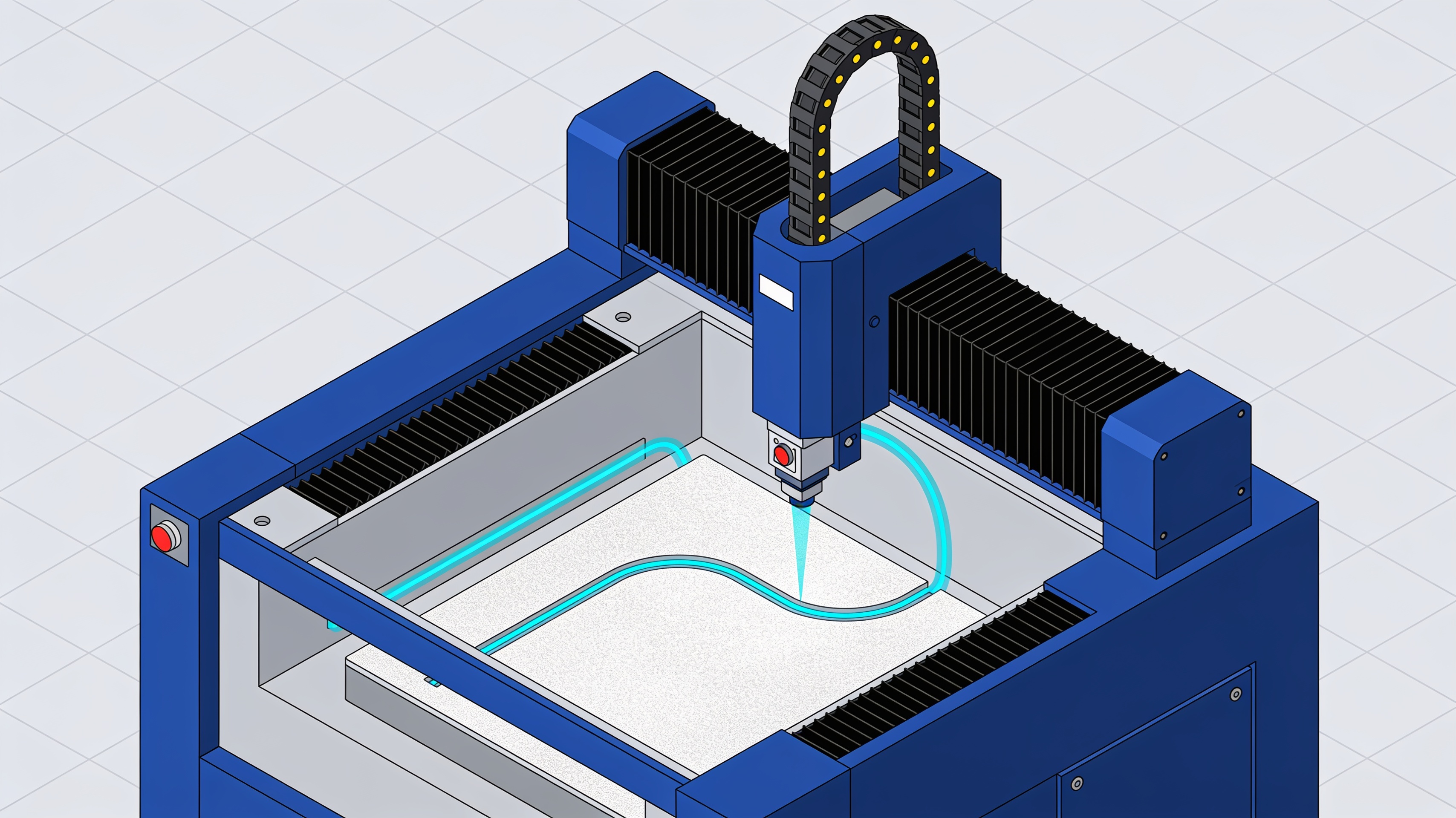
The integration of Dyndrite LPBF Pro gives Xact Metal printer users full control over the laser and scan board. The software allows programming every aspect of the toolpath, going beyond traditional linear movements.
New features include arcs, Bezier curves and wobble, as well as delay and skywriting settings. Users can now program processes such as stir welding, power ramping and parametric curves.
- Advanced toolpath control with arcs, Bezier curves and wobble
- Complete programming of the laser and scan board
- Stir welding and power ramping functions
- Customizable delay and skywriting settings
Benefits for metal additive manufacturing
The partners promise significant improvements in terms of time, surface quality, and the ability to print complex geometries.
Xact Metal and Dyndrite cite several expected advantages from the integration. Print times are reduced, while surface finish improves significantly.
The system allows low-angle geometries to be printed consistently. Porosity and defects decrease, as does wear on the optical subsystem.
File sizes are also reduced. Users will be able to tackle applications previously considered “unweldable” in the LPBF process.
An open platform for innovation
Xact Metal chooses to open its hardware platform to give customers freedom for experimentation and process development.
“We are opening our platform because we believe customers should have the freedom to get everything possible from their machines,” said Juan Mario Gomez, CEO of Xact Metal. The company, a pioneer of the low-cost LPBF market, is betting on the openness of the system as a competitive advantage.
The integration represents what the partners call “a commercial first in the LPBF sector” with regard to complete process control. Users can customize printing strategies based on specific parts, materials, and production requirements.
Metal additive manufacturing process that uses a laser to selectively melt layers of metal powder. Precise control of the laser path is essential for the quality of the final part.
A long-term collaboration
The partnership stems from a year of joint work and reflects a shared vision on the openness of 3D printing systems.
Harshil Goel, founder and CEO of Dyndrite Corporation, emphasized how the agreement represents the culmination of a year of collaboration. “For over nine years, my team and I have been working with OEMs to open up their systems,” Goel said.
Dyndrite’s CEO highlighted how Xact Metal has expressed, since the introduction of its first printer, the desire to open the platform. The unprecedented access granted by Xact Metal to hardware control represents a unique opportunity for process developers.
The partnership aims to expand the boundaries of laser powder bed fusion, giving users advanced tools for developing new applications. Opening the platform could accelerate innovation in the metal additive manufacturing sector.
article written with the help of artificial intelligence systems
Q&A
What toolpath control features does Dyndrite LPBF Pro offer on Xact Metal printers?
LPBF Pro allows programming every aspect of the toolpath, going beyond traditional linear movements. It includes arcs, Bezier curves, wobble, delay and skywriting settings, as well as processes such as stir welding, power ramping and parametric curves.
What production benefits do Xact Metal and Dyndrite promise from the integration?
The partners report reduced printing times, better surface finish and the ability to consistently print low-angle geometries. Porosity, defects and wear on the optical subsystem are also reduced, with smaller file sizes.
Why did Xact Metal choose to open up its hardware platform?
According to CEO Juan Mario Gomez, opening the platform gives customers the freedom to get everything possible from their machines. The company, a pioneer of the low-cost LPBF market, sees opening the system as a competitive advantage.
What kind of applications become possible with this integration?
The integration makes it possible to tackle applications previously considered 'unweldable' in the LPBF process. Users can also customize printing strategies based on specific parts, materials and production requirements.
What does it mean that the integration represents a commercial first in the LPBF sector?
According to the partners, it is a commercial first in terms of full process control in LPBF machines. The integration of LPBF Pro gives users complete control over the laser and scan board.