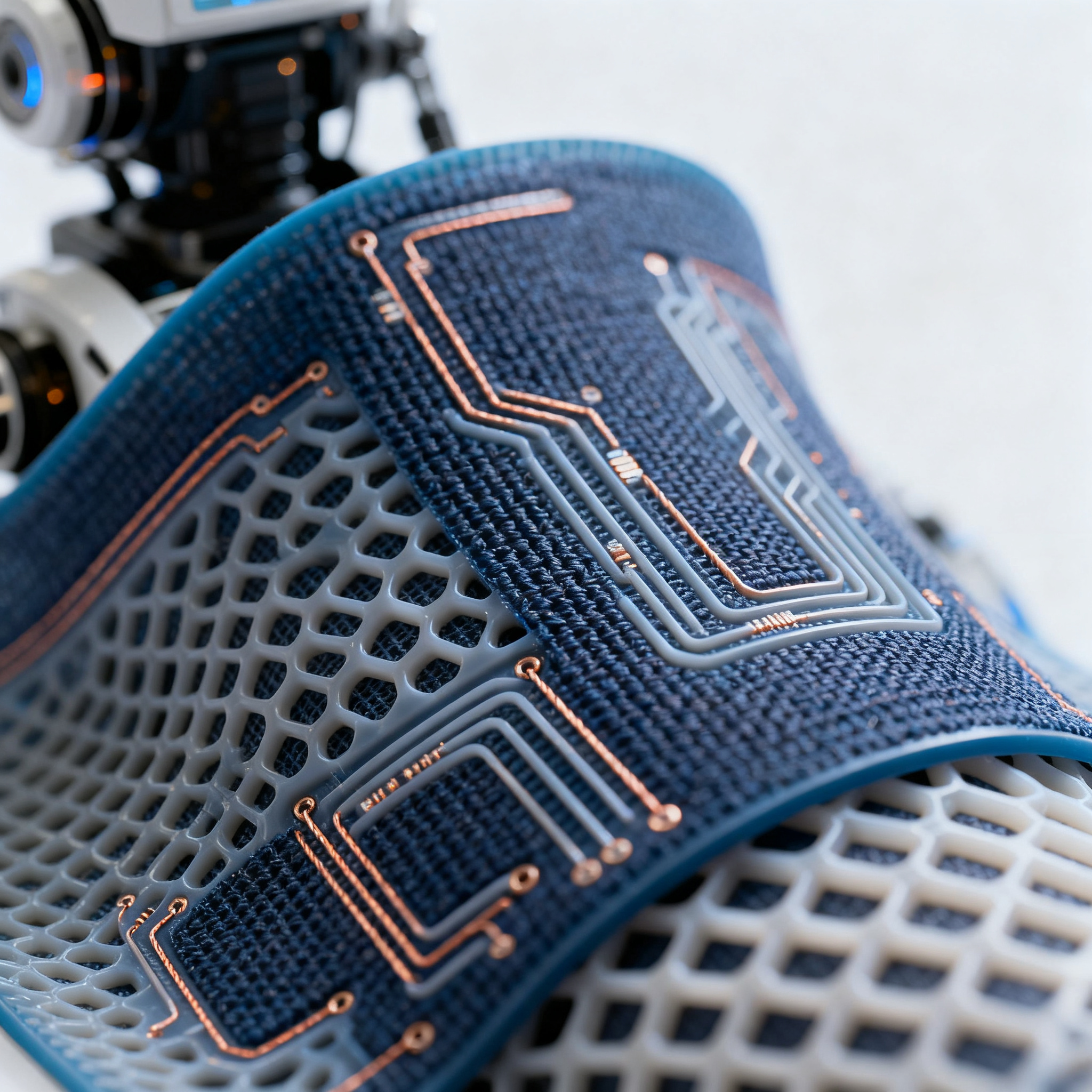
The smart skin that protects robots in space
The European Space Agency has launched a €1.65 million project to develop a 3D-printed “smart skin” intended for the robotic arms of future lunar and Martian missions. The system, called Smart Skin for Exploration Cobots, integrates thermal protection, sensors, and wiring into a single flexible coating.
The project aims to overcome the limitations of traditional multilayer insulation (MLI) systems, designed for static surfaces, by creating adaptable protection for moving robotic components.
What Smart Skin is and why it is revolutionary
Smart Skin is a multifunctional coating built around a 3D-printed scaffold. It mounts on robotic arms and performs four functions simultaneously.
The system represents a change in approach compared with traditional solutions. Space robots have so far used MLI materials for thermal protection, but these coatings only work on fixed surfaces. A robotic arm moves, bends, rotates, and is exposed to abrasive dust and extreme temperature swings.
- Thermal and dust protection against temperatures from -150°C to 120°C
- Flexible transfer of power and data through integrated wiring
- Distributed sensors for detecting collisions and anomalous pressures
- Interfaces for human-machine interaction with astronauts
The Danish Technological Institute leads the project with a consortium that includes Admatis (Hungary), PIAP Space (Poland), and Redwire Space Europe (Luxembourg). The expected duration is two years, with the goal of delivering two functional solutions tested under simulated space conditions.
Materials and design architecture
The 3D-printed structure acts as a scaffold to integrate advanced polymers, printed electronics, and e-textiles into a flexible but controlled system.
3D printing makes it possible to create complex geometries that follow the movements of the robotic arm without compromising protection. Admatis develops the thermal protection, while PIAP Space and Redwire Space Europe provide the actual robotic arms used in ESA lunar missions.
Printed electronics and e-textiles play a central role. These technologies make it possible to distribute sensors and conductive tracks on flexible surfaces. E-textiles follow folds and movements better than rigid solutions, reducing bulk and weight.
The main challenge is bringing flexible electronics into space. The system must withstand radiation, vacuum, mechanical fatigue, and ensure adhesion between different layers. The printed structure serves to bring order to a system that must remain flexible but controlled.
Sensors and electronic integration
The sensors distributed in the skin allow the robot to perceive contacts, impacts, and environmental conditions, making safe collaboration with astronauts and the prevention of damage to delicate instruments possible.
A space robot can be controlled remotely, execute autonomous sequences, or collaborate with humans. In all cases, perception of the environment is essential. Cameras and LIDAR provide important information, but they are not enough to understand what happens on the surface of the arm.
A sensorized skin detects contacts, abnormal pressures, or conditions that suggest a risk of collision. For a robot working alongside an astronaut, this capability reduces the risk of dangerous movements. For a robot operating on a lunar base or near a satellite, it can prevent damage to solar panels, antennas, or fragile components.
The project also touches on the theme of HRI (Human-Robot Interface). A skin can become a physical interface, with signals or sensitive surfaces that allow the astronaut to understand the robot's status and interact more immediately.
The advantage of printed electronics lies in the distribution of function: not a single sensor at one point, but a surface that actively participates in the robot's behavior.
Space testing and industrial prospects
The system will be tested in thermal chambers and space environmental simulations to validate durability, dust protection, and reliability of the integrated sensors during repeated movement cycles.
The project builds on a pilot phase already completed successfully. The robotic arms provided by the partners are the same ones currently under development for ESA lunar missions, ensuring that the protection is designed taking into account real dimensions, joints, and requirements.
Tamás Bárczy, CEO of Admatis, commented: “Applying an advanced protection system could lead to building robotic arms from commercial components. This can create a cost-effective way to provide new solutions for customers in many space domains, from deep space missions to orbital servicing to lunar colonization.”
| Appearance | Traditional MLI | Smart Skin |
|---|---|---|
| Application | Static surfaces | Moving parts |
| Functions | Thermal insulation only | Thermal, sensors, wiring, HRI |
| Adaptability | Limited | Configurable for different arms |
The work will be interesting to follow on three points: the durability of the covering after repeated cycles, the effectiveness of dust protection on the joints, and the reliability of the integrated sensors. If these aspects are validated, the technology could become a useful element for the robots that ESA plans to use in orbit, on the Moon, and on Mars.
The Smart Skin represents a step toward more intelligent and resilient space robots. The technology also has potential applications for habitats, autonomous vehicles, and orbital maintenance systems. For additive manufacturing, the project demonstrates a concrete use of 3D printing in a complex system that integrates flexible materials, printed electronics, thermal insulation, and space robotics.
Do you want to learn more about next-generation technologies for space automation? Subscribe to our newsletter.
article written with the help of artificial intelligence systems
Q&A
What is the Smart Skin for Exploration Cobots and what is its main purpose?
The Smart Skin is a multifunctional 3D-printed coating designed for robotic arms in lunar and Martian missions. Its purpose is to integrate thermal protection, sensors, and wiring into a single flexible solution, overcoming the limitations of traditional multilayer insulation systems designed for static surfaces.
What are the four integrated functions of the smart skin?
The four functions are: thermal and dust protection against temperatures from -150°C to 120°C, flexible transfer of power and data through integrated wiring, distributed sensors to detect collisions and abnormal pressures, and interfaces for human-machine interaction with astronauts.
Why are traditional MLI systems unsuitable for robotic arms and how does the Smart Skin overcome them?
Traditional MLI systems are designed for static surfaces and do not adapt to the movements, bending, and rotations of robotic arms, which are also exposed to abrasive dust and thermal shocks. The Smart Skin overcomes these limitations by being a flexible and adaptable coating, made with 3D-printed geometries that follow movements without compromising protection.
Who leads the project and which partners are part of it?
The project is led by the Danish Technological Institute with a consortium that includes Admatis from Hungary, PIAP Space from Poland, and Redwire Space Europe from Luxembourg. The expected duration is two years, with the goal of delivering two functional solutions tested in simulated space conditions.
What materials and technologies are used to create the flexible structure?
The structure is based on a 3D-printed scaffold that serves as a framework to integrate advanced polymers, printed electronics, and e-textile. These technologies allow sensors and conductive tracks to be distributed on flexible surfaces that follow folds and movements better than rigid solutions, reducing bulk and weight.
How do the distributed sensors in the skin improve safety and interaction with astronauts?
The sensors allow the robot to perceive contacts, impacts, and environmental conditions directly on the arm's surface, improving situational awareness that cameras and LIDAR cannot guarantee alone. This capability reduces the risk of dangerous movements near astronauts and prevents damage to fragile components, also serving as a physical interface for more immediate interaction.