
VBN Components launches Vibenite 500: 3D-printed pure tungsten with density over 99.7%
The Swedish company VBN Components has introduced Vibenite 500, a pure tungsten-based material for additive manufacturing via electron beam powder bed fusion (PBF-EB). The material achieves a relative density greater than 99.7% and a hardness of approximately 400 HV2, according to data reported by the company.
The launch represents the result of a fifteen-month development program, financially supported by the Swedish Energy Agency. VBN has already begun deliveries to the first customers, focusing on applications requiring high-temperature resistance and radiation shielding.
- Relative density: >99.7%
- Hardness: ~400 HV2
- Process: PBF-EB (electron beam melting)
- Target applications: high temperatures and radiation shielding
The challenges of tungsten in additive manufacturing
Tungsten offers exceptional properties for extreme applications, but it is precisely these characteristics that make it difficult to machine using traditional and additive techniques.
Tungsten has the highest melting point among pure metals, high density, and exceptional thermal resistance. These properties make it ideal for extreme operating environments and for radiation shielding.
However, these same characteristics create significant manufacturing obstacles. The material is susceptible to brittle fracture and requires complex thermal and mechanical processes. Producing intricate geometries with conventional methods entails high costs, especially for small channels, thin walls, or limited batches.
In additive manufacturing, strong thermal variations during melting can generate residual stresses and defects. The choice of technology and process parameters therefore becomes crucial.
The advantage of the PBF-EB process
The electron beam process operates under vacuum conditions with preheating of the powder bed, characteristics useful for handling refractory materials such as tungsten.
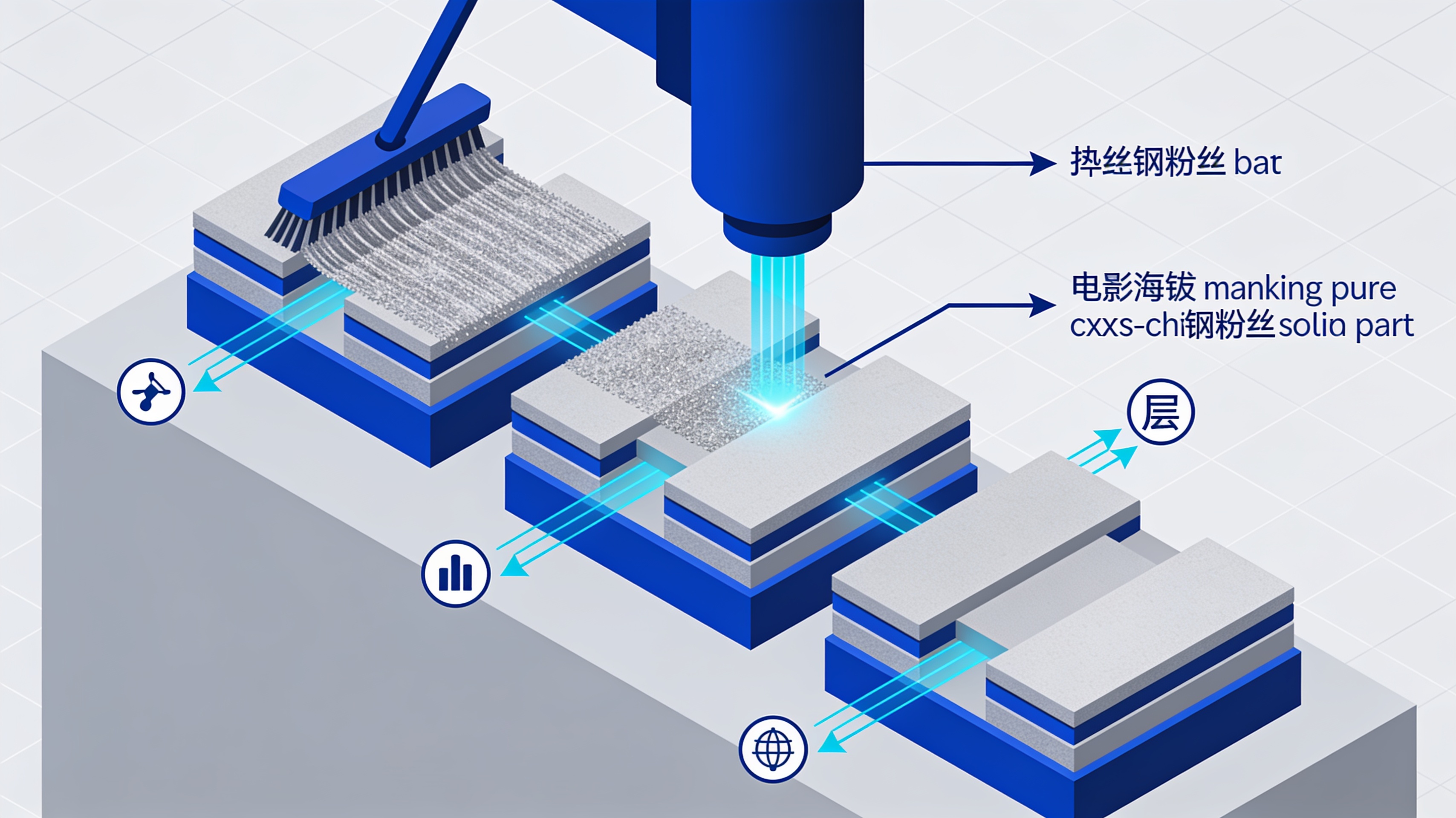
Vibenite 500 was developed specifically for the PBF-EB process, in which an electron beam selectively melts the metal powder distributed on the build plate. The process operates in a vacuum environment and involves significant preheating of the powder bed.
These conditions can facilitate thermal management of difficult-to-machine materials, reducing thermal gradients and residual stresses. The density above 99,7% achieved by VBN Components indicates effective control of the consolidation process.
The PBF-EB process differs from laser processes (PBF-LB) in its use of an electron beam as the energy source, the vacuum environment, and generally higher process temperatures. These characteristics can reduce residual stresses in refractory materials.
Applications in development: shielding and high temperatures
VBN has started customer deliveries and is testing applications in the field of radiation shielding, where tungsten offers advantages over traditional alloys.
The company has confirmed the start of component deliveries to the first customers, although without providing a complete list of commercial applications or the qualification criteria adopted. The main applications concern sectors that require high-temperature resistance and radiation shielding.
Ulrik Beste, technical manager at VBN Components, mentioned comparative tests with reference sintered alloys such as B777 Grade 3, used for shielding applications. Pure tungsten offers superior shielding properties thanks to its higher density compared to alloys.
The possibility of creating complex geometries through 3D printing could open up new design opportunities. Integrated cooling channels, optimized lattice structures, and shapes impossible to obtain with traditional machining become feasible.
Industrial prospects
The launch of Vibenite 500 represents a concrete step toward the industrialization of pure tungsten 3D printing. Performance data remain mainly those declared by the manufacturer, and it will be necessary to wait for independent validations and large-scale applications to fully evaluate the material's potential.
The support of the Swedish Energy Agency suggests a strategic interest in technologies that can find application in high-criticality sectors. The availability of a qualified material and reliable suppliers represents a key element for industrial adoption.
Additive manufacturing of tungsten remains a technically challenging field, but the progress demonstrated by VBN Components indicates that industrially viable solutions are emerging.
article written with the help of artificial intelligence systems
Q&A
What is Vibenite 500 by VBN Components?
Vibenite 500 is a new pure tungsten-based material for additive manufacturing, developed by the Swedish company VBN Components. It achieves a relative density above 99.7% and a hardness of approximately 400 HV2, according to data reported by the company.
Which 3D printing process uses Vibenite 500?
Vibenite 500 was developed specifically for the PBF-EB process, namely electron beam powder bed fusion. This process operates under vacuum with preheating of the powder bed, conditions that are useful for handling refractory materials such as tungsten.
For which applications is 3D-printed pure tungsten intended?
VBN Components focuses on applications that require high-temperature resistance and radiation shielding. Tungsten has the highest melting point among pure metals and a high density, characteristics that are ideal for extreme operating environments.
How long did the development of Vibenite 500 last and who funded it?
The development program lasted fifteen months and was financially supported by the Swedish Energy Agency. VBN has already begun deliveries to its first customers.
Why is tungsten difficult to process with additive manufacturing?
Tungsten is prone to brittle fracture and requires complex thermal and mechanical processes. In additive manufacturing, strong thermal variations during melting can generate residual stresses and defects, making the choice of technology and process parameters crucial.


