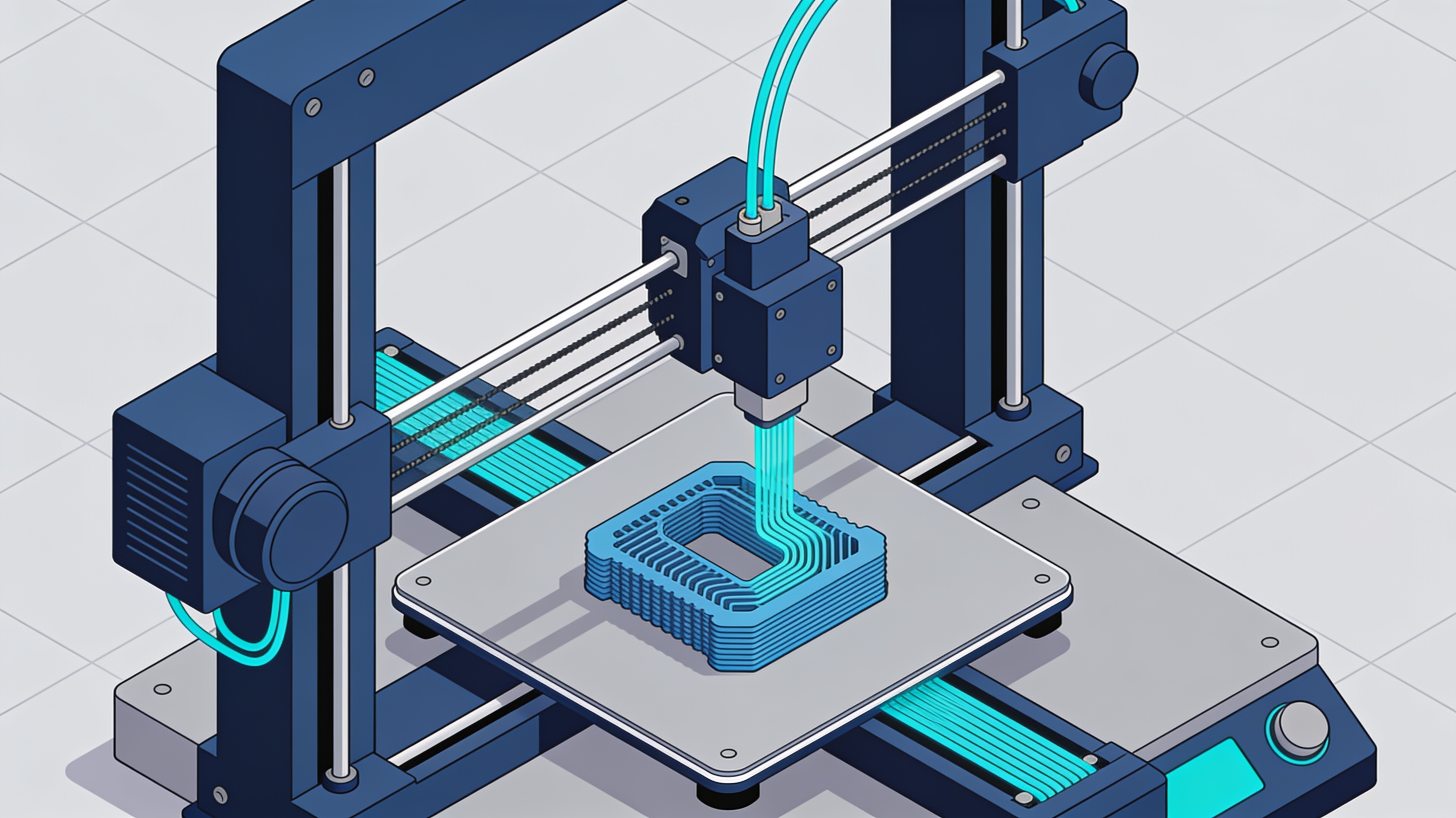
New Mexico State University: teachers in 3D printing school
New Mexico State University has completed the first edition of the AMPD program, dedicated to training K-12 teachers on additive manufacturing. L’initiative, organized by the DREAM Research Center, involved teachers from schools in southern New Mexico to bring digital design and 3D printing into classrooms.
The course is not limited to the use of printers. It aims to integrate digital design, production, mathematics, computer science, and problem solving into a single educational experience.
- AMPD program for K-12 teachers on additive manufacturing
- Organized by the DREAM Research Center at the Aggie Innovation Space
- Focus on CAD design, slicing, and practical printing
- Goal: integrate 3D printing into daily school activities
A practical journey from idea to object
The AMPD workshop combines theory and practical exercises, guiding participants through all stages of additive manufacturing.
The activities took place in the Aggie Innovation Space, the university laboratory equipped with 3D printers, CAD software, electronics, and prototyping tools. The instructors followed the entire process: from digital design to physical production.
The hybrid format distributed the lessons over several days. Each participant designed three-dimensional objects, prepared the files, and directly managed the printers.
The stages of the production process
The course broke down 3D printing into clear steps, from CAD modeling to file preparation for printing.
Training procedure
- Digital modeling: Creation or modification of 3D geometries via CAD, verification of surface closure and dimensional compatibility with the printers.
- Slicing: Division of the model into layers and generation of machine instructions, with definition of layer height, infill, temperatures, speed, and supports.
- Physical printing: Direct management of printers and quality control of produced components.
The slicing phase often represents the biggest challenge for beginners. An incorrect choice of parameters can cause warping, detachment from the build plate, uneven surfaces, or supports that are difficult to remove.
The slicing software converts the 3D model into G-code, the language that controls the printer's movements. Parameters such as extruder temperature, deposition speed, and infill percentage directly affect quality and production times.
From the university lab to school classrooms
The ultimate goal is to transfer these skills to schools, integrating additive manufacturing into existing educational curricula.
The AMPD program was designed by the DREAM Research Center, a research center dedicated to distributed additive manufacturing. The center operates in collaboration with the University of New Mexico, New Mexico Institute of Mining and Technology, and Navajo Technical University.
Among the participants are Tajkirah Wallace, a support teacher at Chaparral High School, and Vishal Kapoor, a math teacher at Desert Pride Academy. The project is coordinated by Satyajayant Misra, head of the DREAM Research Center.
Perspectives for STEM education
Teacher training represents the first step to spread additive manufacturing in New Mexico secondary schools.
The initiative is part of a broader context of spreading digital production technologies in education. Distributed additive manufacturing finds applications in the aerospace, medical, energy, and defense sectors.
Bringing these skills into K-12 schools means preparing students for the technical professions of the future. 3D printing becomes a cross-curricular teaching tool, applicable to mathematics, physics, design, and computer science.
The training model developed by New Mexico State University could be replicated in other institutions. Access to equipped laboratories and support from university researchers are key elements for the program's success.
article written with the help of artificial intelligence systems
Q&A
What is the AMPD program organized by New Mexico State University?
The AMPD program is a training initiative dedicated to K-12 teachers on additive manufacturing. Organized by the DREAM Research Center, it aims to bring digital design and 3D printing into classrooms in southern New Mexico.
What specific skills do teachers acquire during the course?
Participants learn to integrate digital design, manufacturing, mathematics, and problem-solving. The curriculum covers the entire process, from CAD modeling to slicing and the practical management of 3D printers.
Where were the hands-on activities of the AMPD workshop held?
The exercises took place at the Aggie Innovation Space, a university lab equipped with 3D printers, CAD software, and prototyping tools. Here, teachers transformed their digital designs into physical objects.
Why is the slicing phase considered critical in the training process?
Slicing represents a major challenge because incorrect parameters can cause warping or detachment from the build plate. Proper definition of layer height, infill, and supports is essential for the quality of the printed part.
What is the ultimate goal of the initiative for the involved schools?
The goal is to stably integrate 3D printing and digital design into daily school activities. The course provides teachers with the tools to teach these technologies directly in their own classrooms.