NIST studies the behavior of non-Newtonian fluids to improve ceramic 3D printing
Researchers at the National Institute of Standards and Technology are analyzing ketchup-like flow behavior to solve consistency issues in ceramic additive manufacturing. The goal is to standardize measurements of the rheological properties of ceramic materials.
The problem of variability in ceramic materials
Technical ceramics offer exceptional performance, but their 3D printing presents unique challenges related to fluid behavior.
3D printing of technical ceramics such as alumina and zirconia is gaining ground in critical industries. These materials offer wear resistance, electrical insulation, and high-temperature performance.
Applications range from aerospace to electronics, from medical implants to dental applications. The main problem lies in the difficulty of controlling material flow during the printing process.
- High-temperature aerospace components
- Electrical insulators for electronics
- Medical implants and dental prostheses
- Wear-resistant components
Printing methods and non-Newtonian behavior
The two main approaches to ceramic printing share a common challenge: controlling the flow of materials that behave like ketchup.
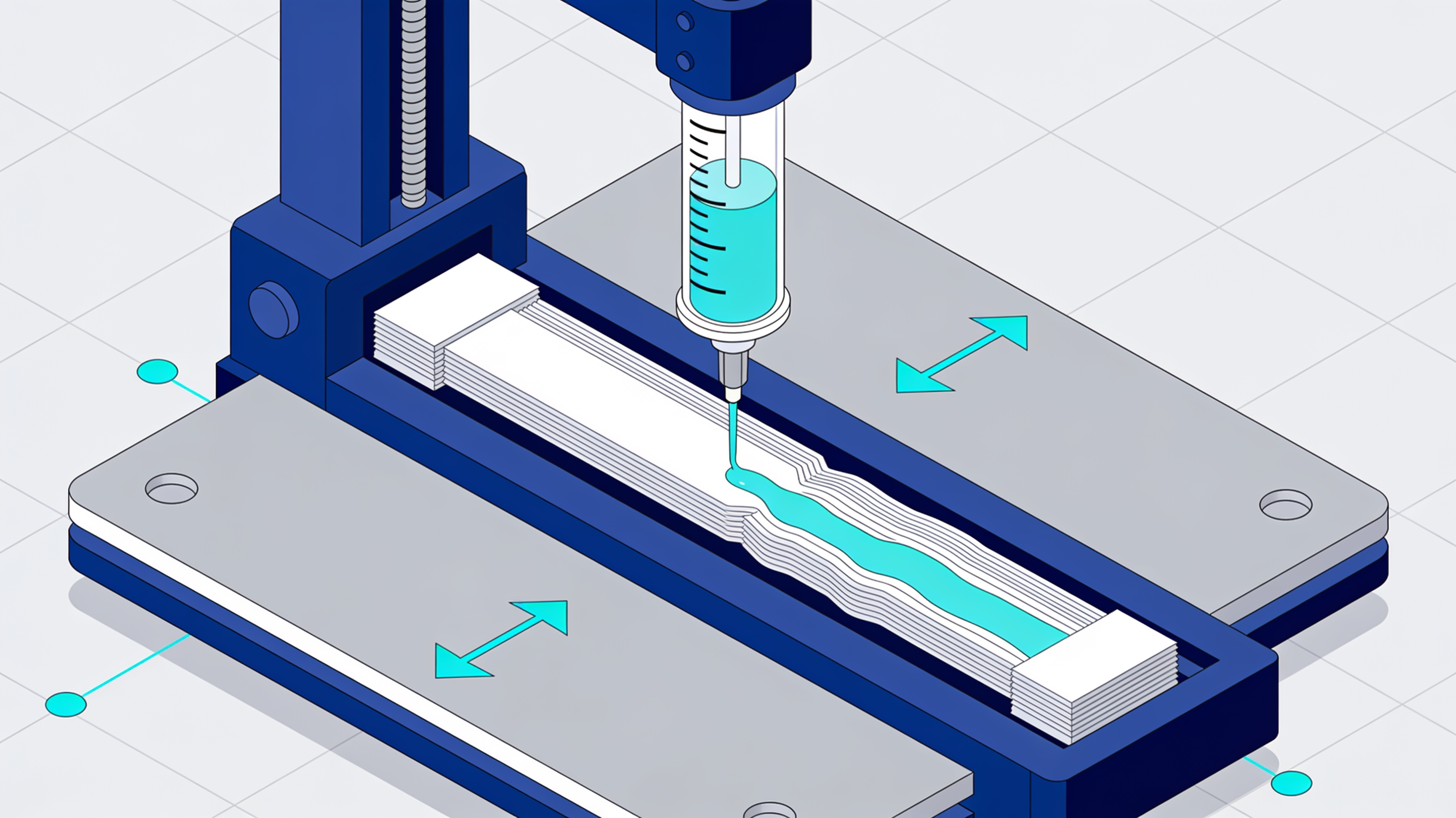
The most common method involves extruding a ceramic suspension through a nozzle, layer by layer. An alternative approach uses photopolymer resins loaded with ceramic particles, printed using MSLA or DLP processes.
Ceramic suspensions are non-Newtonian fluids. They resist movement until sufficient force is applied, then suddenly flow easily. This is exactly the behavior of ketchup squirting out of the bottle.
NIST research on ceramic rheology
Russell Maier and the NIST team are addressing measurement difficulties that compromise the reproducibility of manufacturing processes.
NIST research scientist Russell Maier is measuring these complex flow properties with greater accuracy. Ceramic suspensions are extremely sensitive materials.
Water-based formulations gradually dry during testing, altering viscosity. The materials also exhibit a form of “memory,” taking time to recover after being disturbed.
Even simply loading a sample into the test instrument can alter its behavior enough to affect the results. Some suspensions slip against the measuring plates instead of deforming normally, introducing additional errors.
Materials whose viscosity changes based on the applied force. Unlike water or honey, they resist movement up to a critical threshold, then suddenly flow. This behavior complicates both measurement and control of the printing process.
The importance of standardization
Reliable rheological measurements are essential to ensure consistent quality in ceramic additive manufacturing.
To characterize these materials, researchers use rheometers, instruments that measure the force required to make a material flow. Reliable rheological data are crucial because manufacturers depend on them to verify the quality of incoming materials.
Printing parameters must be calibrated before production begins. If measurements vary from laboratory to laboratory, the resulting printed parts can also vary.
The role of NIST is to establish measurement standards that ensure consistency across different laboratories and manufacturers. This standardization work is essential for the industrial maturation of the technology.
Implications for the industry
Understanding rheological behavior paves the way for more controllable and repeatable processes in ceramic additive manufacturing.
Minute-by-minute variations in material properties can compromise a precision 3D printing process. The sensitivity of ceramic suspensions requires much more rigorous measurement and control protocols than traditional plastic materials.
The development of standardized reference ceramic materials will allow manufacturers to calibrate their equipment and develop reliable printing parameters. This represents a fundamental step toward large-scale industrial adoption of ceramic 3D printing.
NIST research demonstrates how even seemingly simple everyday phenomena, such as pouring ketchup, hide scientific complexities relevant to advanced manufacturing technologies.
article written with the help of artificial intelligence systems
Q&A
What is the main goal of NIST research on ceramic 3D printing?
The goal is to standardize measurements of the rheological properties of ceramic materials to solve consistency issues. Researchers analyze ketchup-like flow behavior to improve repeatability in additive manufacturing.
Why are ceramic suspensions defined as non-Newtonian fluids?
They are defined this way because they resist movement until sufficient force is applied, then suddenly flow easily. This behavior is comparable to ketchup that comes out of the bottle only after being shaken or squeezed.
What are the main application sectors for 3D-printed ceramics?
Applications range from aerospace to electronics, including high-temperature components and electrical insulators. They are also used in the medical field for implants and dental prostheses, as well as for wear-resistant components.
What specific challenges do researchers encounter during rheological measurements?
Water-based formulations tend to dry out during testing, altering viscosity, while materials show a 'memory' that delays recovery after being disturbed. Even simply loading the sample can change the fluid's behavior, introducing errors.
What 3D printing methods for ceramics are analyzed in the study?
The study considers extrusion of ceramic suspension through a nozzle layer by layer as the most common method. An alternative approach using photopolymer resins loaded with ceramic particles in MSLA or DLP processes is also analyzed.