
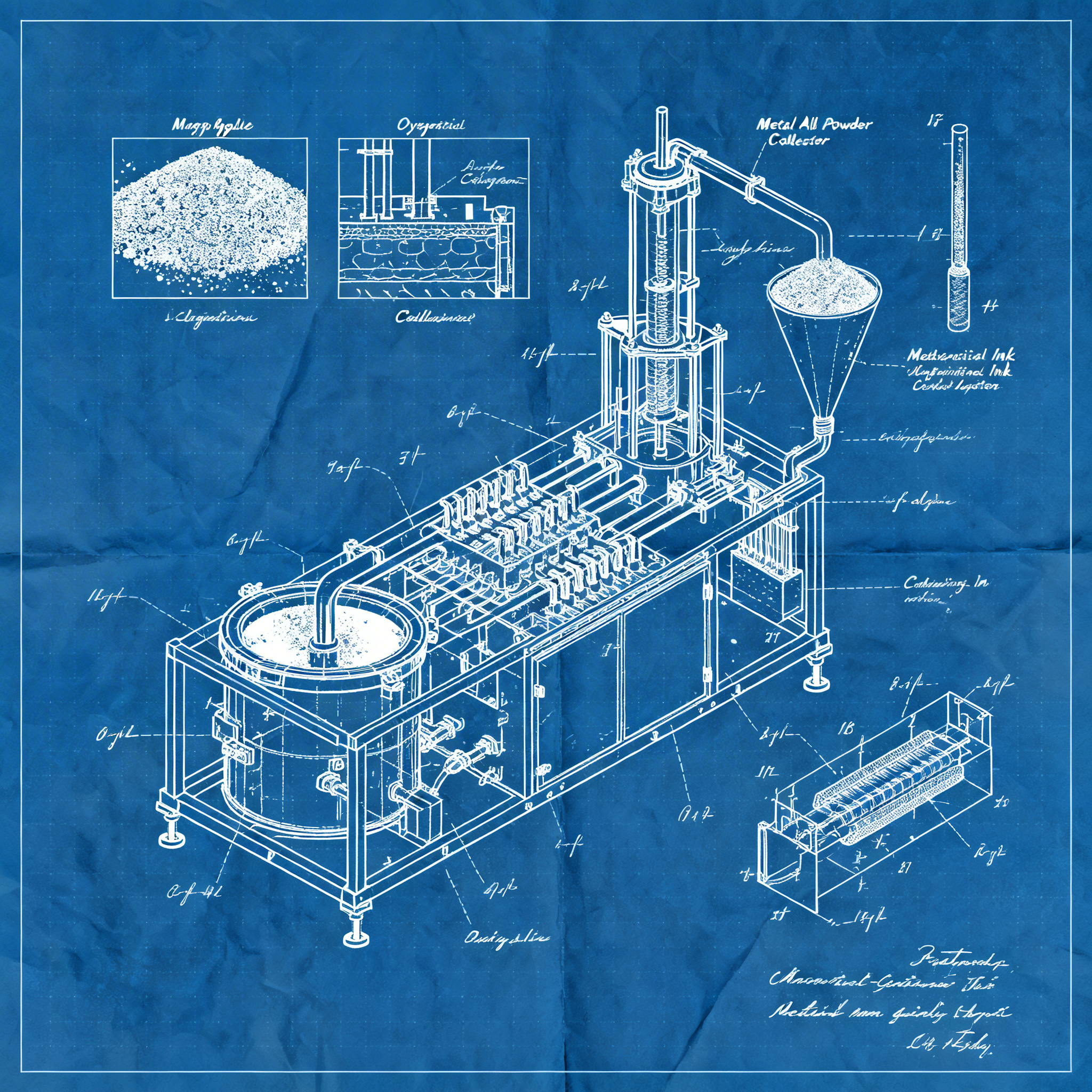
How to Transform Lunar Regolith into Printable Electronic Components
Turning lunar dust into printed circuits: here's how the project that could revolutionize manufacturing in space works.
A project supported by the European Space Agency (ESA) is demonstrating how lunar soil can be converted into conductive materials for 3D printing electronic components. Led by the Danish Technological Institute in collaboration with the British company Metalysis, the €155,000 project aims to drastically reduce dependence on Earth-based supplies, paving the way for autonomous production of functional electronic systems directly on the Moon or Mars. The technology is based on an electrochemical process that extracts oxygen from lunar regolith, leaving behind conductive metallic residues that can be turned into inks and powders for additive manufacturing.
What Is Lunar Regolith and Why It Is Important
Lunar regolith, the layer of dust and rock fragments covering the Moon's surface, represents a fundamental resource for in-situ production, containing up to 45% of chemically bound oxygen.
Lunar regolith is composed of very fine, abrasive particles formed over billions of years through meteorite impacts. This “lunar dust” contains approximately 40-45% oxygen, a vital element for rocket propulsion and life support, as well as a mixture of oxides of silicon, aluminum, iron, and other metals. The chemical composition of regolith varies depending on lunar regions: samples from the Apollo missions showed significant differences between highland areas and lunar mare regions.
The importance of regolith as a resource stems from a simple economic equation: transporting a single kilogram of material into space requires about 15 kilograms of fuel. Christian Dalsgaard, senior consultant at the Danish Technological Institute, emphasizes that “there is a huge advantage in being able to use local materials available on the Moon, for example to repair critical parts.” This logic of in-situ resource utilization (In-Situ Resource Utilization, ISRU) represents a fundamental pillar for sustainable space exploration and for the creation of permanent extraterrestrial bases.
Extraction of Oxygen and Metal Alloys: The Metalysis Process
Metalysis's patented technology uses molten salt electrolysis to separate oxygen from regolith, simultaneously producing pure metal alloys with conductive properties.
The process developed by Metalysis is based on an electrochemical method called molten salt electrolysis. Lunar regolith (or its simulant) is immersed in a calcium chloride electrolyte heated to temperatures between 800 and 1,000 degrees Celsius. When an electrical voltage is applied between the electrodes, oxygen is released at the anode, separating from the mineral structure of the regolith and leaving behind a mixture of metallic elements.
“Our process was originally designed as an alternative method for titanium production,” explains Dr. Ian Mellor, CEO and chief scientist at Metalysis. “The technology is applicable to nearly 50 elements of the periodic table and is feedstock-agnostic, so it can process lunar regolith. Our immediate focus on Earth concerns high-charge tantalum powders and aluminum-scandium alloys for the electronics sector.”
Metalysis has been collaborating with ESA and the UK Space Agency since 2019 on various initiatives focused on lunar regolith. For this specific project, the company provides simulated, deoxygenated lunar soil for the experiments. The metal residues obtained after oxygen extraction, previously considered mainly for structural uses such as construction or repairs, are now being examined for their electrical conductivity properties as a secondary function.
From Powder to Ink: Preparing Materials for 3D Printing
The metal alloys extracted from regolith are processed into conductive inks and powders suitable for additive printing, opening new possibilities for extraterrestrial electronics manufacturing.
Once the oxygen has been extracted, the remaining metal alloy mixture has conductive properties that make it valuable for electronic applications. The Danish Technological Institute, leveraging its expertise in the synthesis of conductive materials, is converting this lunar soil byproduct into digitally printable materials: inks for printed electronics and powders for conductive 3D printing.
Before regolith can be used for electronics production, the simulated lunar soil must be finely milled using hard grinding balls to achieve suitable particle size and consistency. Once processed, the conductive fraction can be formulated into inks for printed electronics or powders for conductive 3D printing. Both material forms are intended for additive manufacturing workflows that could be replicated in lunar environments.
“The project’s main innovation consists of converting the conductive part of lunar soil, also called regolith, into a digitally printable material,” says Christian Dalsgaard. “This opens up completely new opportunities for extraterrestrial production of electronics for future space missions.” The research team plans to demonstrate additive manufacturing using conductive inks and powders derived from the deoxygenated regolith simulant, focusing on producing simple conductive structures that illustrate functional performance and manufacturability.
3D Printing of Electronic Circuits in an Extraterrestrial Environment
The ability to print electronic components directly on the Moon faces unique technical challenges related to extreme environmental conditions, from abrasive dust to temperature swings.
Andreas Weje Larsen, a 3D printing specialist at the Danish Technological Institute, explains the project’s practical goal: “In this way, we produce conductive inks and powders and test that they can be used to additively manufacture a piece of conductive wire. By doing this, we demonstrate that the conductive powder can be used, for example, to manufacture antennas directly on the Moon.”
Potential applications include the maintenance of planetary robotic systems, electrical installations inside habitats, and the construction of communication infrastructure. Local production capability would allow systems to be repaired or adapted without resupply missions, improving mission autonomy and resilience. Possible applications include repairing planetary robots, electrical installations in habitats, and even building communication networks on the Moon and Mars.
However, lunar conditions present significant challenges. Regolith dust is extremely abrasive, the temperature range is wide, and vacuum combined with low gravity require material handling systems different from terrestrial printers. Parallel research has shown that material adhesion to the substrate changes significantly when printing on steel, glass, or ceramic, and that only some combinations form crystalline structures sufficiently stable from a thermal and mechanical standpoint.
Terrestrial Validation and Future Prospects
Tests conducted on Earth with regolith simulants are demonstrating the feasibility of the concept, paving the way for future operational applications on the Moon and beyond.
The project, structured as a proof of concept, aims to demonstrate that deoxygenated regolith can be used to manufacture components such as antennas or conductive wires directly on the lunar surface. The intent is to first prove the concept on Earth so that it can be replicated on the Moon. The Danish Technological Institute and Metalysis will produce conductive raw materials from deoxygenated simulated regolith and demonstrate their use for printed electronics.
The tests focus on producing simple conductive structures that illustrate functional performance and manufacturability using processes compatible with lunar deployment. The €155,000 funding is intended to inform future research initiatives focused on the use of in-situ resources for electronics manufacturing.
This project is part of a broader context of research into space manufacturing. ESA has described research into production in the space environment as “crucial for self-sufficiency, enabling astronauts to manufacture essential parts, repair equipment, and create tools on demand, without relying on costly resupply missions.” In 2024, ESA already deployed a metal 3D printer on the International Space Station, developed by Airbus and its partners, which produced several samples in prolonged microgravity, later returned to Earth for mechanical and microstructural testing.
The ability to transform lunar resources into functional components represents a crucial step toward the self-sufficiency of space bases. With NASA’s Artemis program aiming for a sustained human presence on the Moon by the end of the decade, technologies like this could make the difference between settlements dependent on costly Earth resupply and truly autonomous colonies. Discover how this technology could influence future human settlements in space and follow the developments of a sector that is transforming science fiction into engineering reality.
article written with the help of artificial intelligence systems
Q&A
What is the main objective of ESA's project on lunar regolith?
The main objective is to convert lunar regolith into conductive materials for 3D printing electronic components. This would enable autonomous production in space, reducing dependence on Earth supplies.
How does the Metalysis process work to extract oxygen from regolith?
The process uses molten salt electrolysis: regolith is immersed in heated calcium chloride and subjected to electrical voltage. Oxygen separates at the anode, leaving behind a conductive metal alloy.
Why is lunar regolith considered an important resource for space exploration?
Regolith contains up to 45% oxygen and useful metals, essential for in-situ resource utilization (ISRU). Using it drastically reduces transportation costs from Earth, where each kilogram requires about 15 kg of fuel.
What are the practical applications of the developed 3D printing technology?
Applications include repairing planetary robots, constructing antennas, electrical systems in habitats, and communication infrastructure. This enhances the autonomy and resilience of space missions.
What challenges does 3D printing electronic circuits on the Moon present?
Challenges include abrasive dust, thermal excursions, vacuum conditions, and low gravity. Additionally, material adhesion to the substrate varies depending on surface type, affecting structural stability.


