Does the factory of the future build with 3D concrete?
A new factory in the United Kingdom is transforming the traditional approach to producing structural concrete elements thanks to large-scale 3D printing.
In North Lincolnshire, Forge I will open by June 2026, a facility dedicated to the robotic production of 3D-printed concrete components. The structure, developed by Hyperion Robotics in collaboration with LKAB Minerals, represents a paradigm shift: it is no longer about individual experimental projects, but a continuous production line for elements such as foundations and infrastructure.
The first confirmed client is Costain, a British contractor that will use approximately 90 3D-printed pipe support bases in the East Coast Cluster project on Teesside, dedicated to carbon capture. The facility will be visitable on June 23, with live demonstrations of the printing of complete foundation units.
A robotic facility for 3D concrete printing
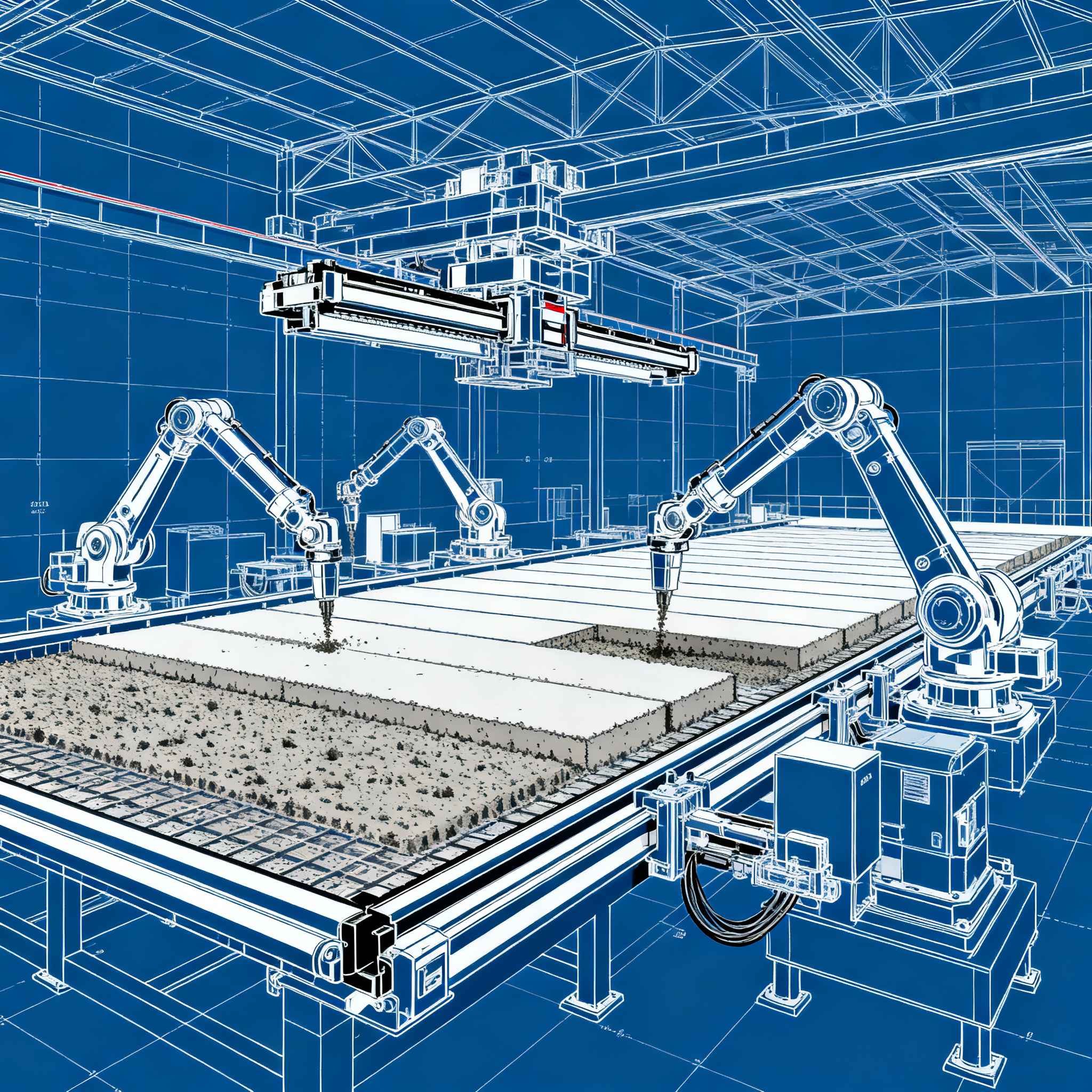
The factory automates the production of complex structural elements with high precision and repeatability.
Instead of pouring concrete into traditional formwork, Forge I uses robots to deposit the material layer by layer. This process eliminates waiting times for formwork dismantling and allows for rapid design changes without additional costs for new formwork.
The difference compared to other 3D printing projects in construction lies in the industrial approach. While many initiatives focus on single implementations or material tests, the goal here is to produce the same components in series, with constant quality control and the ability to scale volumes when necessary.
- Expected opening: June 2026 in North Lincolnshire
- Production: series foundations and infrastructure elements
- First project: 90 CO₂ pipeline bases on the Teesside
- Partners: Hyperion Robotics, LKAB Minerals, Costain
Traditional materials, revolutionary processes
The use of low-impact environmental formulations maintains compatibility with existing regulations while accelerating production and installation.
LKAB Minerals will provide mineral inputs for low-carbon concrete. Working with materials already known to the construction sector facilitates the adoption of the technology. As Hyperion pointed out, “everyone in the construction sector understands concrete and there are already standards in force.”.
This approach avoids reinventing construction from scratch. Existing materials and regulations are maintained, changing only the production method. 3D printing also allows for material use optimization, reducing waste compared to traditional techniques.
Concrete production represents a significant source of global CO₂ emissions. Integrating low-carbon formulations with digital and robotic processes responds to the growing demand to reduce the sector's environmental footprint.
Operational advantages in the industrial field
Environmental control and predetermined production cycles reduce weather-related delays and increase logistical efficiency.
Moving production from the construction site to the factory offers concrete advantages. Controlling environmental conditions eliminates delays due to bad weather, a recurring problem on traditional construction sites. Quality becomes more uniform and predictable.
| Appearance | Traditional production | Forge I |
|---|---|---|
| Environment | Open construction site | Controlled factory |
| Weather dependency | High | None |
| Design changes | New formwork required | Digital update |
| Quality control | Variable | Constant |
Automation also responds to the shortage of specialized labor that afflicts the sector. By moving part of the work from construction sites to machines, the dependence on qualified field operators is reduced. The repeatability of robotic processes guarantees high standards even on large volumes.
The integrated industrial model also allows for better logistics planning. Components are produced in advance according to defined schedules and transported to the construction site when necessary, reducing downtime and optimizing installation phases.
Forge I demonstrates how the integration between robotic automation and consolidated materials can offer concrete solutions to the structural problems of construction: slowness, unpredictability, waste, and labor shortage. The factory-based approach transforms 3D printing from an experiment into a scalable industrial process.
Discover other industrial applications of additive manufacturing in the construction sector.
article written with the help of artificial intelligence systems
Q&A
When will the Forge I facility open and where?
Forge I will open by June 2026 in North Lincolnshire, United Kingdom. It will be open to the public on June 23 with live demonstrations.
What is the main innovation introduced by Forge I compared to other 3D printing construction projects?
Forge I represents a shift from experimentation to industrial production, featuring a continuous line for 3D printing structural components in series, ensuring quality control and scalability.
What advantages does robotic 3D printing offer in producing concrete elements?
It eliminates waiting times for formwork removal, allows quick design modifications without additional costs, and reduces material waste through precise placement.
How does Forge I contribute to environmental sustainability?
It uses low-carbon concrete formulations and robotic processes that reduce waste, addressing the growing demand to lower emissions in the construction sector.
What are the operational benefits of factory production compared to traditional construction sites?
Constant environmental control, elimination of weather-related delays, greater quality consistency, and improved logistics planning thanks to early component production.