Blue Origin Northstar: over 65% 3D printed, but the figure should be interpreted with caution
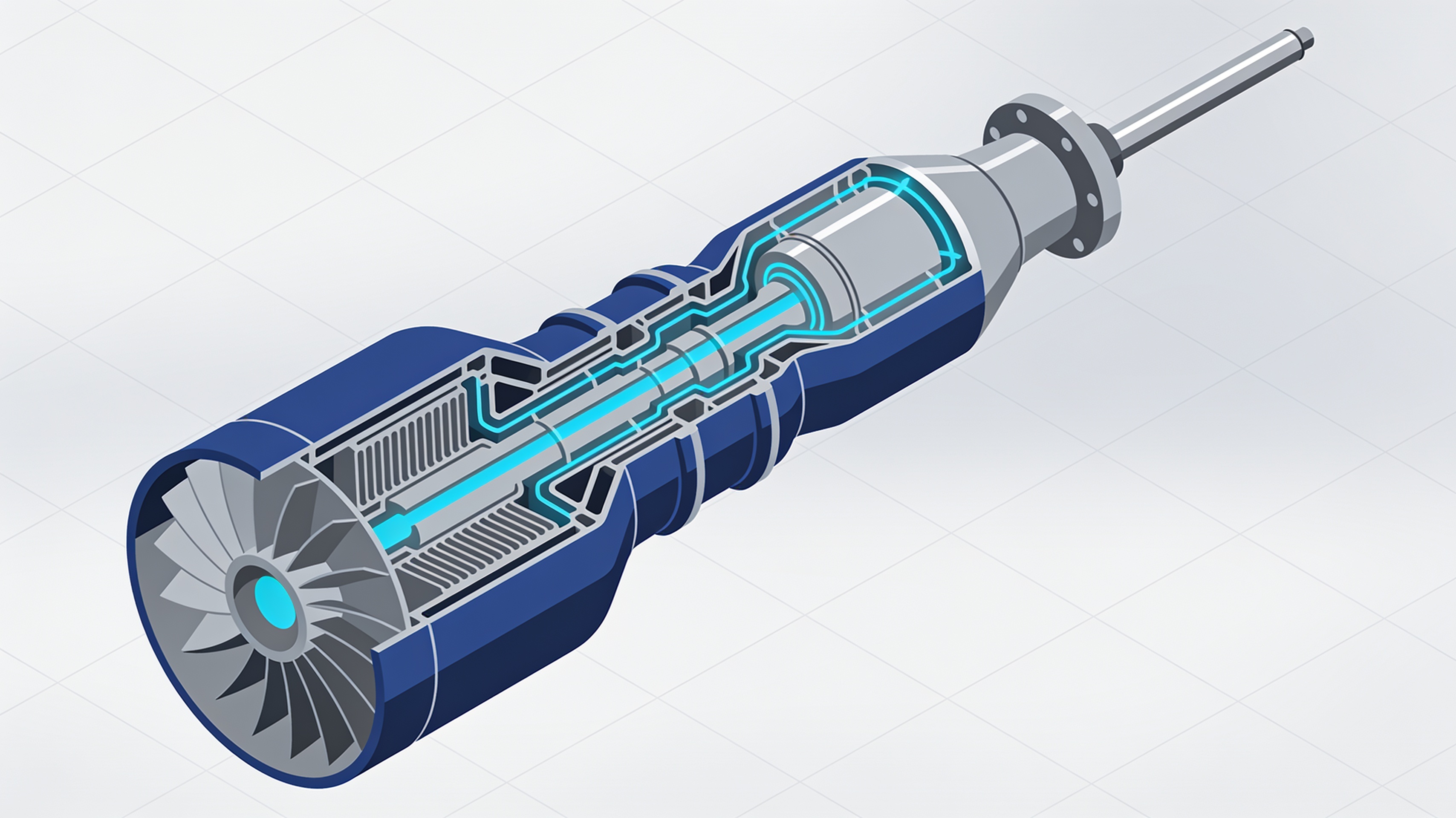
Blue Origin has presented Northstar, a new engine for the first launch stage with over 65% made via additive manufacturing. The stated numbers are impressive: 715,000 pound-force of thrust, 30% lower mass and 50% fewer components than the BE-4. But what do these figures really mean?
The engine uses liquid oxygen and liquefied natural gas, with a single-shaft turbopump architecture and oxygen-rich staged combustion. The stated performance exceeds that of the BE-4, the company's reference engine with 640,000 pound-force of thrust.
Three interconnected claims
The data on 3D printing percentage, mass reduction and number of components should not be read separately: they are the result of integrated design choices.
Blue Origin presents three claims that appear linked to each other. An engine does not become lighter simply by changing the production method. Mass reduction requires a design that exploits the possibility of integrating channels, connections and structures in shapes inaccessible to conventional machining.
Even the 50% reduction in the number of parts does not necessarily coincide with a reduction in the functions performed. It depends on integrating multiple elements into a single body and simplifying assembly.
- Thrust: 715,000 pound-force (vs 640,000 for the BE-4)
- Over 65% made with additive manufacturing
- Mass 30% lower than the BE-4
- 50% fewer components
The problem of the unspecified metric
The expression “over 65%” remains ambiguous without knowing what exactly it measures: mass, volume, number of components, or another criterion.
The 65% figure does not by itself define the process used. It could refer to the number of components, a share of mass, volume, or an internal criterion for accounting for manufacturing.
Blue Origin does not provide in public material the list of parts produced additively, the processes used, or the alloys selected. It would not be justified to turn the figure into “65% of printed mass” or to attribute a specific technique without confirmation to turbopumps, combustion chambers, and manifolds.
The company highlights its large-format additive manufacturing capabilities. This information indicates the strategic role of additive manufacturing in the project, but it does not allow reconstruction of the actual production chain.
The data come from a company press release, not from published drawings, bills of materials, or independent test results. For a rigorous technical in-depth analysis, it is necessary to distinguish engineering-plausible advantages from verified details of Northstar.
Why rocket engines are ideal candidates for AM
Liquid rocket engines have technical characteristics that make additive manufacturing particularly advantageous compared with conventional processes.
A liquid rocket engine includes fluid passages, feed systems, fasteners, and interfaces subject to high thermal gradients. Conventional production requires channels produced through multiple operations and complex assemblies.
Additive manufacturing makes it possible to integrate complex geometries into single components. This approach reduces joints, potential leaks, and the need for welds in critical areas.
Implications for the industry
Northstar's presentation confirms a trend already observed in other space programs: additive manufacturing is becoming a primary production technology, not only for prototypes. The scale of the project and the stated percentages indicate significant investments in production capacity.
However, the lack of public technical details limits the ability to assess actual progress relative to the state of the art. Other engine manufacturers have published more specific data on processes, materials, and test results.
The news deserves attention because the three statements are connected. They represent a systemic approach to design, where additive manufacturing does not simply replace existing processes but enables architectures that were previously impractical.
article written with the help of artificial intelligence systems
Q&A
What are the figures declared by Blue Origin for the Northstar engine?
Blue Origin declares for Northstar a thrust of 715,000 pound-force, over 65% achieved through additive manufacturing, a mass 30% lower and 50% fewer components compared to the BE-4. The BE-4, the company's reference engine, has a thrust of 640,000 pound-force.
What exactly does the 'over 65% additive' figure mean?
The percentage does not specify what it measures: it could refer to the number of components, a share of the mass, the volume, or an internal accounting criterion. Blue Origin does not provide the list of printed parts, the processes used, or the alloys selected, so it is not correct to interpret it as '65% of the mass printed'.
Why should the three figures on 3D printing, mass, and components be read together?
The three statements are interconnected: an engine does not become lighter just by changing the production method, but mass reduction requires a design that exploits the integration of channels, connections, and structures in shapes inaccessible to conventional machining. The 50% reduction in parts also depends on integrating multiple elements into a single body and simplifying assembly.
What propellants and architecture does the Northstar engine use?
Northstar uses liquid oxygen and liquefied natural gas, with a single-shaft turbopump architecture and oxygen-rich staged combustion. The declared performance exceeds that of the BE-4.
What is the source of the data and what are the limitations?
The data come from a company press release, not from design publications or detailed technical documentation. Blue Origin does not make public the list of additively manufactured parts, the processes used, or the alloys selected, so it is not possible to reconstruct the actual production chain.